


Imari Pattern Wall Dish
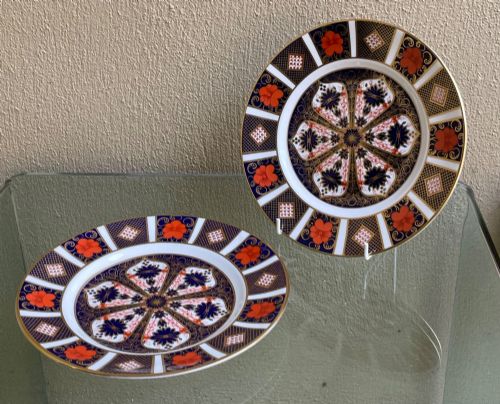
An imari pattern wall dish brings a rich palette of iron-red, cobalt blue and gold leaf into a room, joining centuries of ceramic trade between East and West.
Imari Pattern Wall Dish
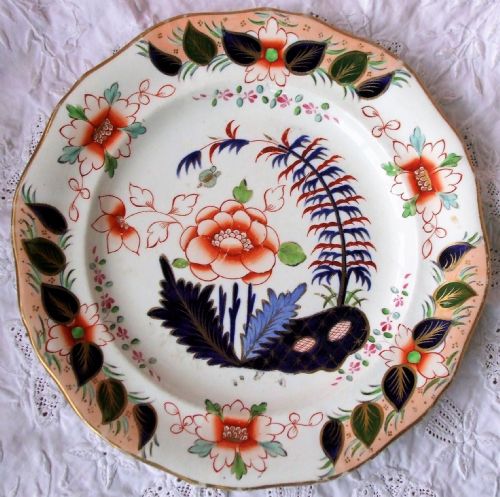
When you search for an imari pattern wall dish, you encounter a crossover of traditions spanning from late seventeenth-century Japanese porcelain to nineteenth-century English ironstone and stoneware. The items appearing here most often take the form of antique Japanese plates from around nineteen hundred, alongside English responses by makers such as John Davenport, John Ridgway and Royal Crown Derby.
These pieces function primarily as decorative chargers and plates designed to be hung or displayed on furniture. The styles range from strict Edo period Japanese wares to Victorian chinoiserie interpretations and Chinese export variants, showing diverse regional approaches to the distinctive palette.
What varies in quality
Quality separates by the precision of the hand-painted brushwork and the vibrancy of the enamel colours. Crisp definition in the cobalt blue underglaze and rich application of gold leaf indicate superior craftsmanship.
The choice of body material also dictates standard, moving from sturdy ironstone and stoneware to delicate translucent porcelain. Form matters too, with unusual shapes, scalloped edges and octagonal profiles commanding closer attention.
Materials range from ironstone and stoneware to fine porcelain, accented with enamel, glaze, gilt and gold leaf.
John Davenport of Longport·Flight Barr and Barr·John Ridgway·Royal Crown Derby·Mason
The Imari Pattern Wall Dish Glossary
- Imari Style
- A decorative ceramic aesthetic characterised by a palette of cobalt blue, iron-red and gold, originating in Japan and copied across Europe. English factories adapted the scheme during the Georgian and Victorian eras.
- Ironstone
- A dense, durable type of ceramic developed in the nineteenth century as a tough alternative to porcelain. It accepts enamels and gilding readily while resisting daily wear.
- Overglaze
- Pigments applied on top of a fired glaze before a final lower-temperature fix. This technique allows for bright iron-reds and gold leaf details.
- Aka-e
- Japanese terminology for red-painted ware, describing the dominant iron-red pigment used in early imari pieces. It forms the warm tonal foundation of the pattern.
- Porcelain
- A vitrified ceramic material made from kaolin, fired at high temperatures to achieve a white, impermeable body. Japanese and English variations provide the standard canvas for these dishes.
Imari Pattern Wall Dish: Frequently Asked Questions
How do I hang a wall dish?
Displaying a plate safely requires a coated wire hanger that grips the rim without putting pressure on the ceramic body. Ensure the wall fixing is secure enough to carry the weight of ironstone or porcelain.
Position the dish at eye level where the cobalt blue and gold leaf catch ambient light. Avoid hanging pieces in direct sunlight to protect the iron-red enamels.
Are these dishes safe for food?
Antique imari pattern dishes are primarily intended for display rather than dining. Older overglaze enamels and gold leaf can wear down with frequent use and washing.
Gentle dusting with a soft cloth keeps the surface clean without risking the glaze. Keep them away from dishwashers and harsh abrasives entirely.
How do I spot Japanese imari?
Japanese imari pieces often feature fine porcelain bodies with traditional motifs like dragons, kylin or black ship decoration. The potting frequently includes subtle variations from hand-forming.
English imari pattern wares usually employ ironstone or bone china and bear factory marks on the reverse. Look closely at the weight and clay consistency to distinguish the origin.
What is the age range here?
The selection spans from the late seventeenth century through the Georgian and Victorian periods up to the mid-twentieth century. Early examples include Arita porcelain dishes from around sixteen eighty.
Nineteenth-century English ironstone plates and early twentieth-century Japanese exports make up the majority of the available forms. Each era brings a distinct weight and enamel texture.