




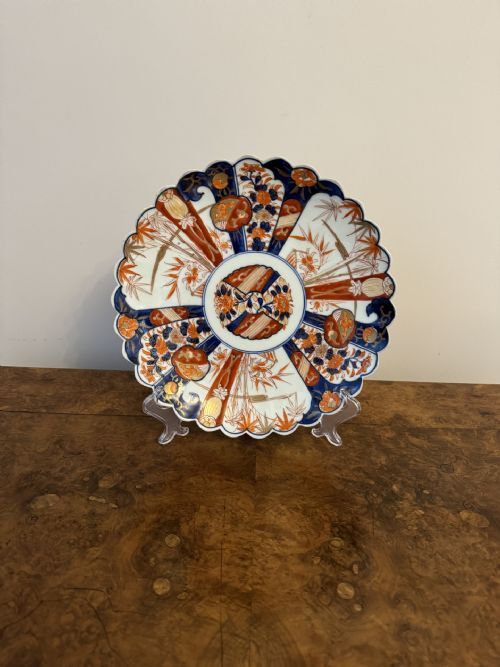


Imari Floral Display Platter
An imari floral display platter brings vibrant palettes of cobalt underglaze and gilt porcelain to walls and sideboards.
Imari Floral Display Platter
An imari floral display platter is a large decorative dish intended for prominent placement in a room, drawing the eye with complex patterns.
The pieces appearing on this page span the nineteenth century into the early twentieth century, taking forms such as round chargers, square plates, and scalloped edge dishes.
Originating predominantly from Japanese traditions alongside examples influenced by Chinese export and Victorian chinoiserie, these platters serve as striking focal points.
How these platters were made
Potters shaped porcelain and ceramic bodies by hand, applying cobalt underglaze pigments before the initial firing to build foundational blue motifs.
Enamel colours and gold leaf or gilding were layered on top during subsequent firings, creating the rich textural contrast characteristic of the style.
Materials recorded across the inventory include porcelain, ceramic, enamel, gold leaf, and cobalt underglaze.
What varies in quality
Quality rests upon the precision of the hand-painted floral and bird designs, where crisp brushwork distinguishes superior examples from standard production.
The richness of the gilt and enamel application, alongside the sheer scale of the porcelain body, separates ordinary dishes from high-end display chargers.
John Ridgway
The Imari Floral Display Platter Glossary
- Charger
- A large decorative plate or platter traditionally used for display rather than dining. These pieces measure considerably wider than standard dinner plates.
- Cobalt Underglaze
- A blue pigment applied directly to the raw ceramic body before glazing and firing. This technique ensures the colour remains permanently sealed beneath a glossy surface.
- Gilding
- The application of gold leaf or powdered gold onto the ceramic surface. It highlights specific design elements and adds metallic warmth to the composition.
- Meiji Period
- A historical Japanese era spanning from eighteen sixty-eight to nineteen twelve. Many decorative platters on this page originate from these years.
Imari Floral Display Platter: Frequently Asked Questions
How do I hang a heavy charger?
Large platters require robust, adjustable wire hangers that distribute weight evenly across the entire rim without putting pressure on a single point.
Ensure the mounting hardware is securely fixed into wall studs to support the substantial weight of nineteenth-century porcelain.
Can I use these platters for food?
These pieces are intended primarily as decorative display items rather than functional tableware for serving meals.
Historic enamel and gilt surfaces can wear down or absorb moisture from food over time.
How do I clean an antique plate?
Dust the surface gently with a soft, dry cloth to remove everyday particles without disturbing the delicate enamel layers.
Avoid soaking the ceramic in water or using harsh chemical cleaners that might damage the historical gilding.
What defines the imari colour palette?
Traditional imari pieces rely heavily on a combination of deep cobalt blue and iron red, contrasted against bright white porcelain.
Painters then accent these primary tones with generous applications of gold leaf or gilt details.