







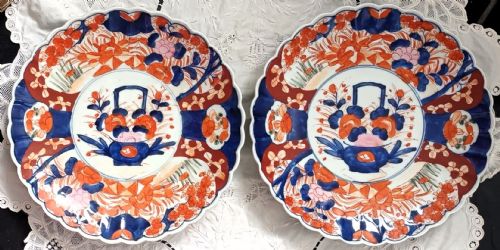
Imari Display Plates
Imari display plates bring together rich palettes of cobalt blue and iron red on porcelain, offering a striking focal point for interior display.
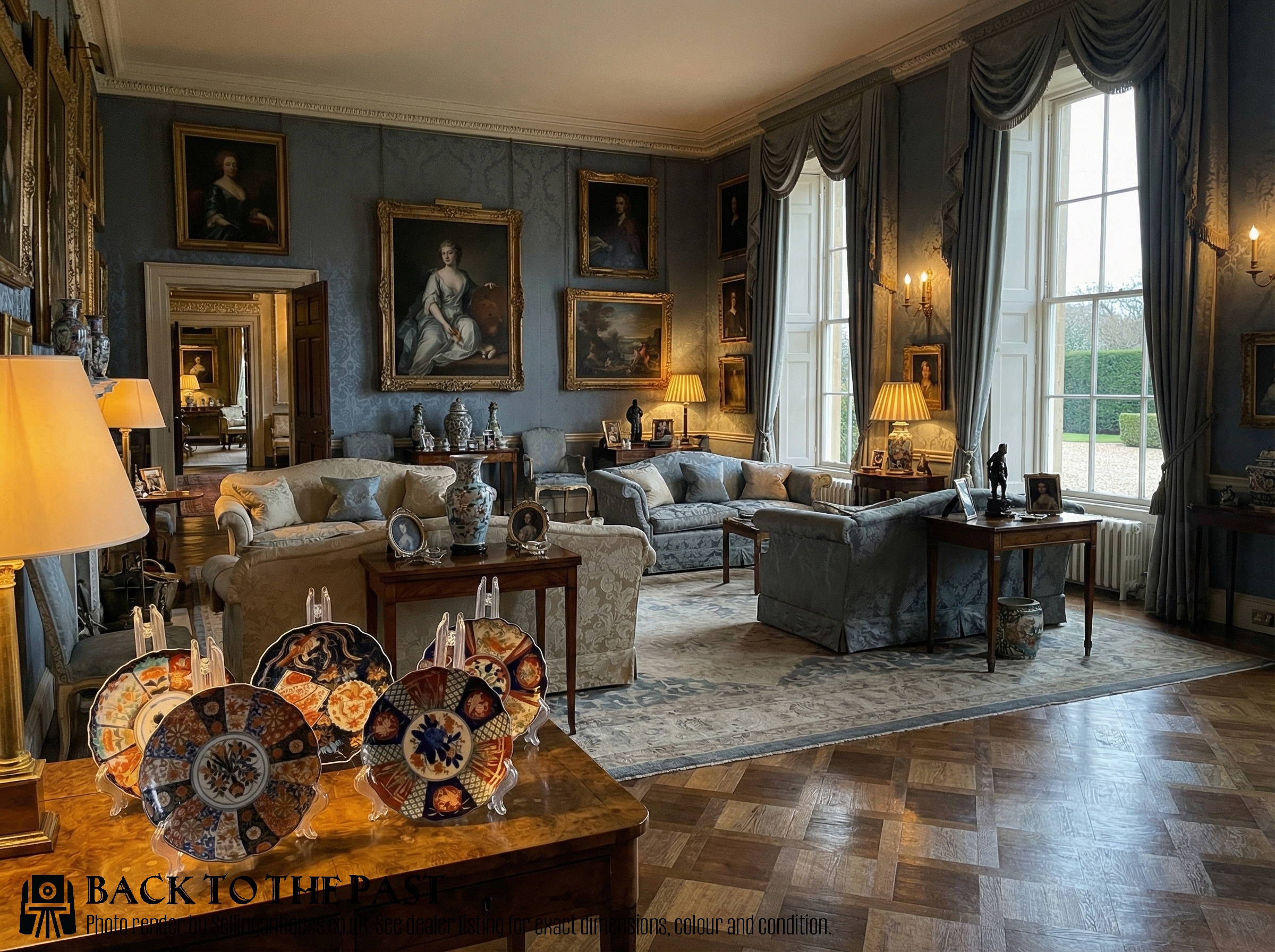
Imari Display Plates
Imari display plates encompass decorative chargers, dishes, and dessert services created across the eighteenth, nineteenth, and twentieth centuries. When searching for imari display plates, a buyer encounters Japanese exports from the Edo and Meiji periods alongside English adaptations from the Georgian and Victorian eras.
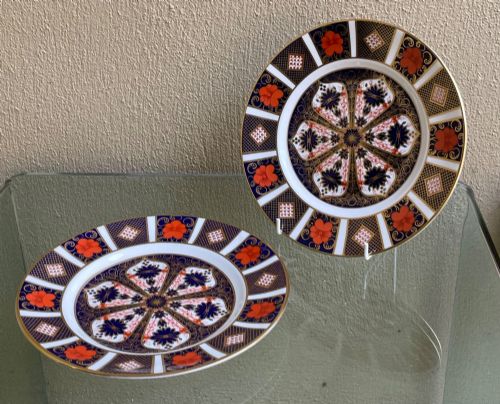
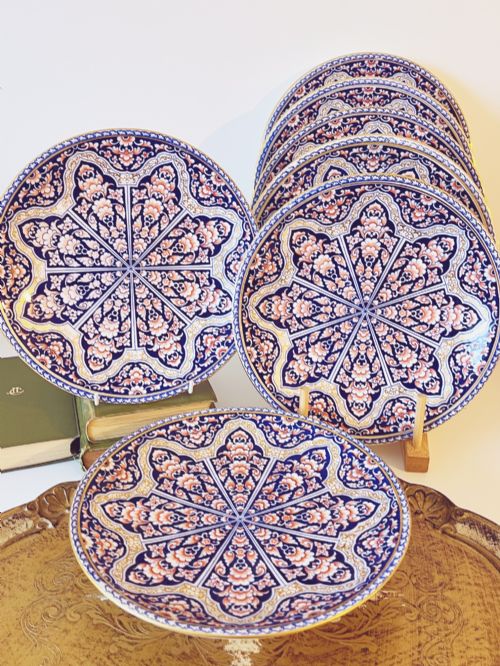
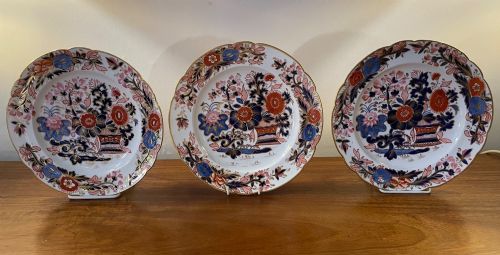
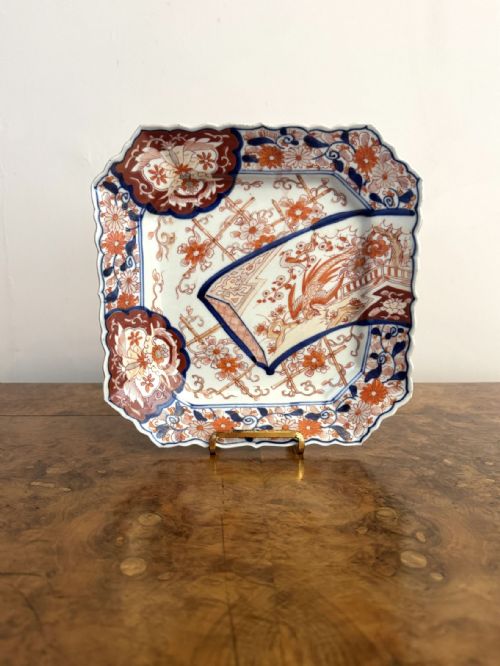
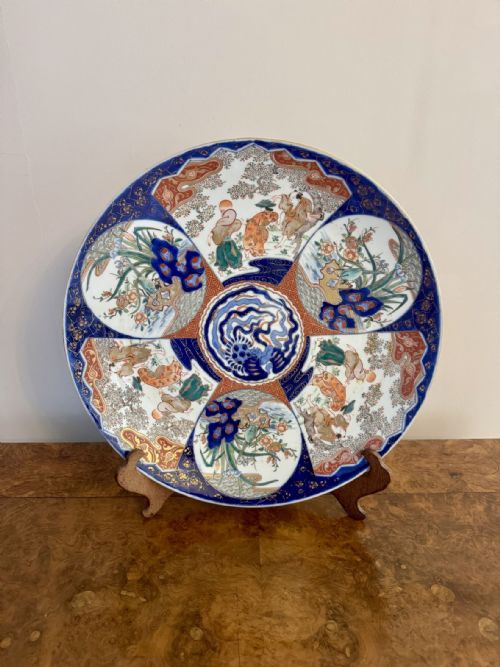
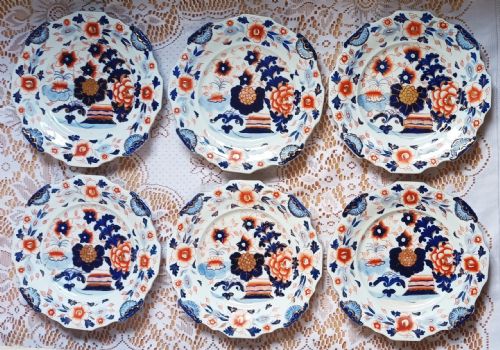
The selection ranges from large wall-hung chargers depicting the Seven Lucky Gods or exotic birds to sets of porcelain and ironstone plates featuring the characteristic Japan pattern. Japanese Meiji examples and English bone china services from firms like Royal Crown Derby dominate the forms available on this page.
Materials and construction methods
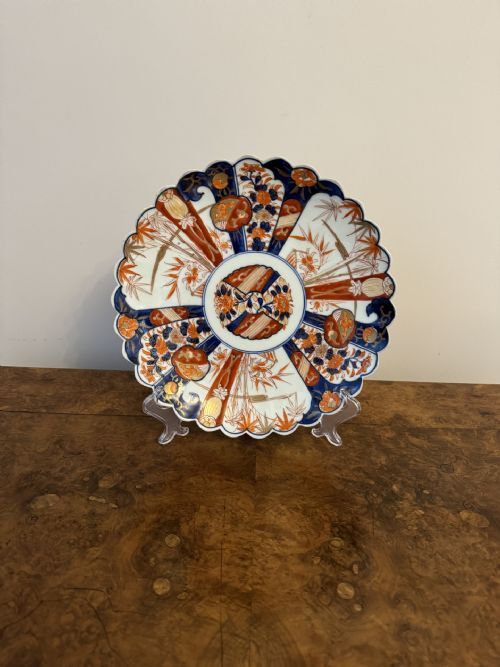
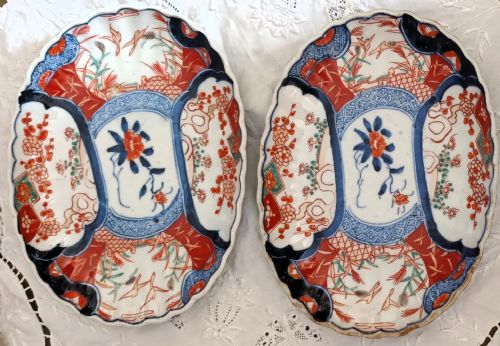
Potters shaped these pieces from ceramic, porcelain, bone china, and ironstone, applying underglaze blue and overglaze enamel colours. Artisans then added highlights in gold leaf and gilt to catch the light across scalloped, square, hexagonal, and circular edges.
Firing techniques evolved from eighteenth-century kilns to nineteenth-century industrial methods, while hand-painting remained central to the application of floral, bird, and mythical motifs. Makers combined glaze layers to achieve the signature depth seen on Japanese Arita wares and Staffordshire earthenware.
Listings feature porcelain, ironstone, and bone china enhanced with enamel, glaze, and gold leaf across multiple centuries.
Assessing quality and craftsmanship
Quality rests upon the precision of the hand-painted brushwork and the vibrancy of the enamel and gilt pigments used across the surface. Pieces featuring complex pictorial scenes, such as deities or exotic birds, demonstrate superior artisanal skill compared to simpler geometric borders.
The crispness of the porcelain paste and the uniformity of the glaze separation distinguish finer Japanese export chargers and English dessert services from standard domestic wares. Greater weight, finer potting, and well-preserved gold leaf elevate certain plates above standard production.
Royal Crown Derby·Flight Barr And Barr
The Imari Display Plates Glossary
- Imari palette
- A decorative scheme defined by the use of underglaze cobalt blue, iron red, and supplementary gold. This colour combination originated in Japan before being adopted by European potteries.
- Charger
- A large decorative plate intended for display on a wall or sideboard rather than for dining use. These pieces often feature elaborate pictorial designs.
- Ironstone
- A heavy, durable type of ceramic developed in the nineteenth century as a robust alternative to porcelain. English makers utilised it for durable tableware.
- Comport
- A raised dish or bowl used as the centrepiece in a dessert service. They frequently accompany sets of matching plates.
- Meiji period
- The era in Japanese history spanning from 1868 to 1912, known for prolific porcelain exports. Pieces from this time often display intricate bird and floral motifs.
Imari Display Plates: Frequently Asked Questions
How do I hang an imari display plate on the wall?
Utilise a coated wire plate hanger that grips the rim securely without scratching the porcelain. Ensure the wall fixing matches the weight of larger chargers.
Position the plate at eye level where the cobalt blue and gold leaf catch natural light. Avoid hanging pieces in direct sunlight to protect the iron red enamels.
How do I tell Japanese imari from English imari?
Examine the base and body of the ceramic to identify the paste, as Japanese pieces often use finer porcelain while English makers relied on bone china or ironstone.
Look for provenance marks, reign dates, or factory stamps on the underside. English pieces from the Georgian and Victorian eras frequently imitate traditional Japanese export styles.
What is a dessert service?
A dessert service comprises a matching set of plates and a central raised comport used for serving fruit or sweets in the nineteenth century. These collections provided a unified table presentation.
Individual plates from a broken service often survive as cabinet or display pieces. They retain the characteristic imari palette applied across matching forms.