
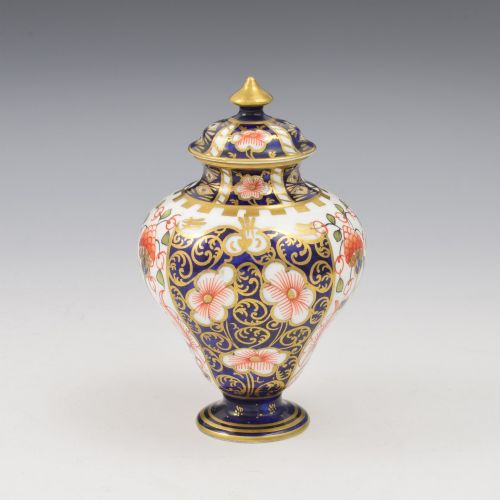
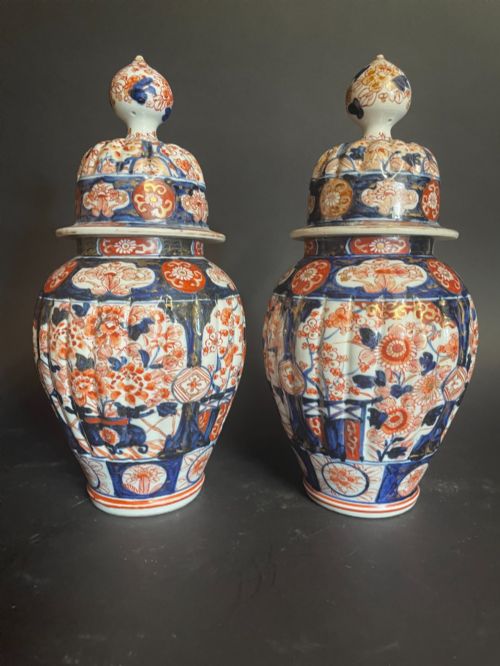
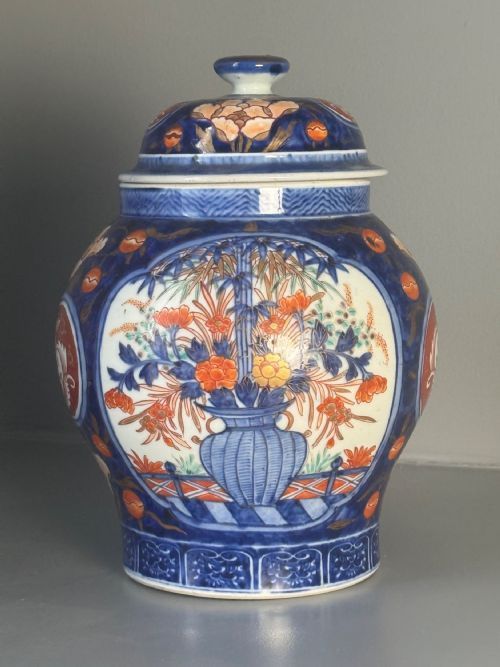


Imari Covered Urn
An imari covered urn brings together ironstone, porcelain and rich glaze, offering a bold focal point for a room.
Imari Covered Urn
An imari covered urn sits at the intersection of Japanese export traditions and European ceramic innovation, taking the form of lidded vases, ginger jars, pot pourri vessels and koros. When buyers search for an imari covered urn, they encounter pieces ranging from eighteenth-century Arita porcelain to nineteenth-century English ironstone adaptations.
The versions most commonly met on this page span the nineteenth century, encompassing Japanese Meiji period examples alongside British interpretations from factories like Mason's, Spode and Royal Crown Derby. Forms vary from octagonal baluster shapes to simple lidded jars, often accompanied by matching covers.
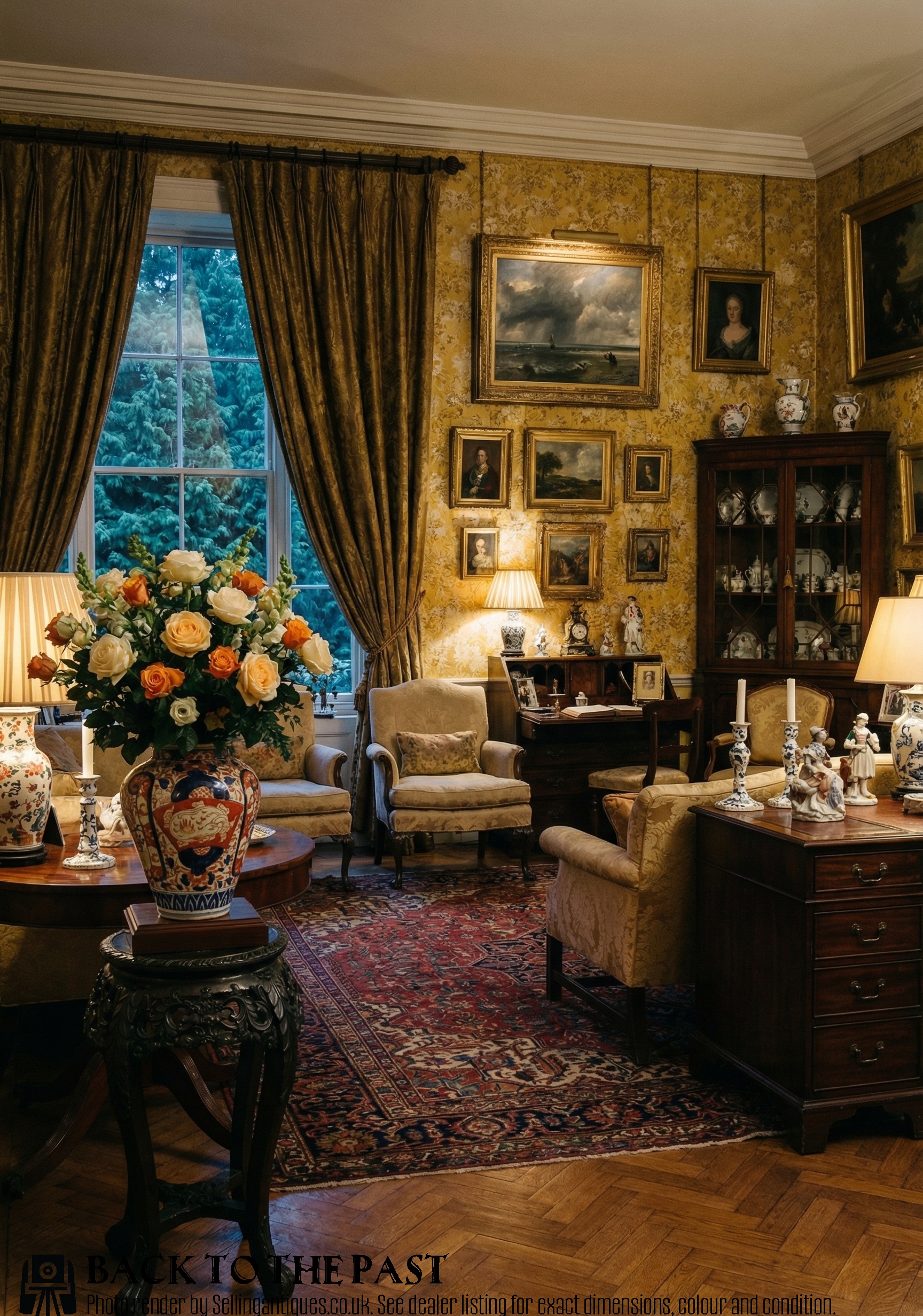
Originating in Japanese kilns before inspiring European potteries, these vessels serve primarily as decorative mantel or table pieces. Their distinctive palette makes them instantly recognisable within any interior scheme.
How They Were Made
Potters built these vessels using porcelain, ceramic and ironstone bodies, shaped on the wheel or moulded into octagonal baluster profiles. Artisans then applied underglaze blue, enamel colours and gold leaf to create the dense surface patterns characteristic of the style.
Firing took place in kilns designed to set the heavy glazes and secure the gilding onto the ceramic body. Many items received rich gilding highlights and enamel details after the initial glaze firing to complete the palette.
Listings feature periods spanning from the seventeenth century through to the Edwardian era, incorporating porcelain, ironstone, enamel and gold leaf.
What Varies in Quality
The standard of painting separates ordinary production from superior examples, with finer pieces exhibiting crisp brushwork in the cobalt blue and enamel detailing. The precision of the gilding and the depth of the glaze further distinguish standard commercial output from exceptional studio work.
Structural proportion and the crispness of moulded elements, such as octagonal panels or fitted covers, dictate the overall balance of the vessel. Heavier, well-balanced ironstone or porcelain bodies retain their presence better over centuries of handling.
Royal Crown Derby·Spode·Masons Ironstone·Flight Barr And Barr
The Imari Covered Urn Glossary
- Imari palette
- A traditional colour scheme dominated by underglaze blue, iron red and supplementary gilding. This combination originated in Japanese export wares before being adopted by European potteries.
- Arita
- The Japanese town and surrounding region famous for producing porcelain wares for export. Many pieces sharing this origin date from the Edo period.
- Koro
- A traditional Japanese incense burner fitted with a pierced cover. These ceramic vessels often feature three legs and decorative handles.
- Ironstone
- A heavy, durable type of ceramic developed in Britain as a robust alternative to porcelain. Factories like Mason's utilised this material for large decorative vases and jars.
- Baluster
- A vertical architectural form featuring a rounded lower body tapering towards the neck. This silhouette frequently defines the profile of lidded jars and vases.
Imari Covered Urn: Frequently Asked Questions
How were imari covered urns used?
These vessels served primarily as decorative garnitures on mantelpieces, sideboards and large tables in formal rooms. Some smaller variants, such as pot pourri pots and koros, held dried flowers or burning incense to fragrance domestic spaces.
Over time, their role shifted towards pure display as households collected matching pairs and large floor vases to showcase wealth and taste.
How do I tell Japanese imari from English imari?
Japanese examples usually employ a finer translucent porcelain body with hand-painted iron red and cobalt blue underglaze decoration from the Edo and Meiji periods. English versions often utilise heavier ironstone or ceramic bodies created by factories such as Mason's or Royal Crown Derby.
Examining the foot rim and the tone of the paste reveals whether the piece originated in Arita or a Staffordshire pottery.
What periods do these pieces date from?
The listings span from the seventeenth century through to the early twentieth century, taking in both Edo period Japanese exports and Victorian or Edwardian British revivals. Eighteenth-century examples often display crisp Arita porcelain qualities.
Later nineteenth-century pieces frequently reflect the massive demand for Japanese aesthetics during the Meiji era alongside domestic ironstone production.
How do I care for an imari covered urn?
Dust these porcelain and ironstone vessels gently with a soft, dry brush to protect the delicate enamel and gold leaf surface decoration. Avoid using water or chemical cleaners, which can damage exposed gilding and historic glazes.
Place the urn away from direct sunlight and areas subject to sudden temperature fluctuations to preserve the ceramic body and its fitted cover.