






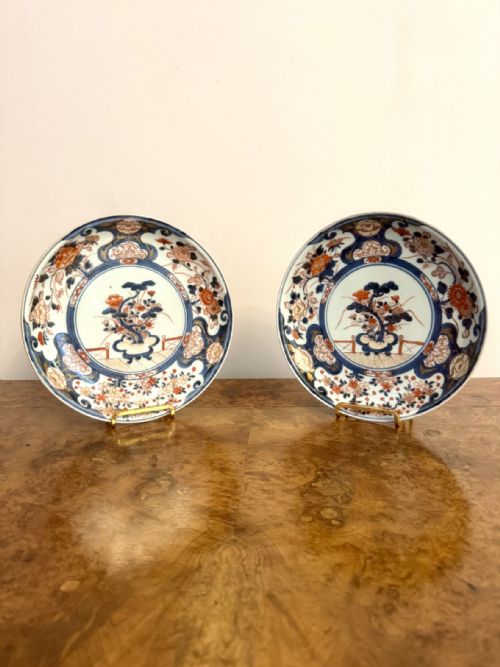
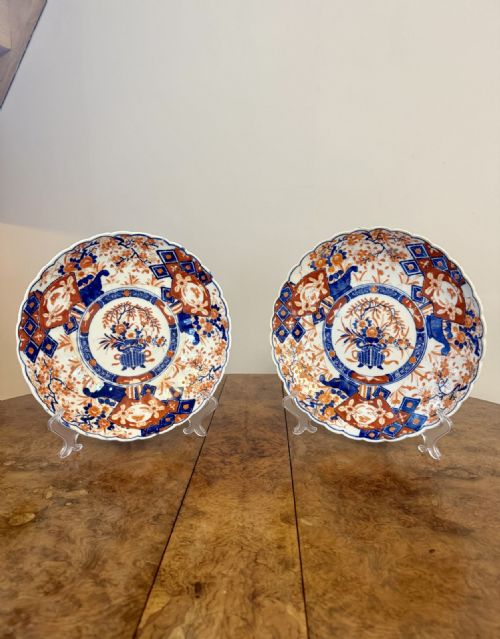
Imari Cobalt Iron Red Plate
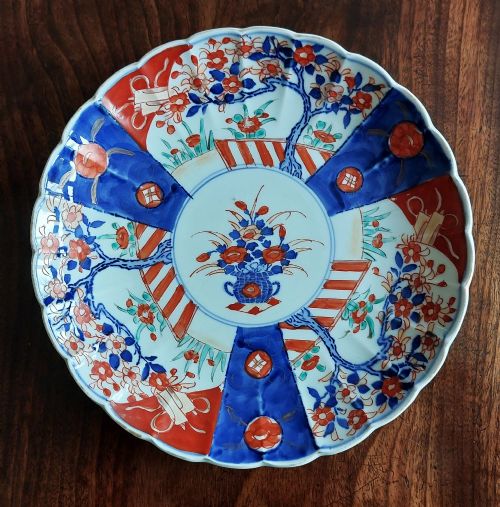
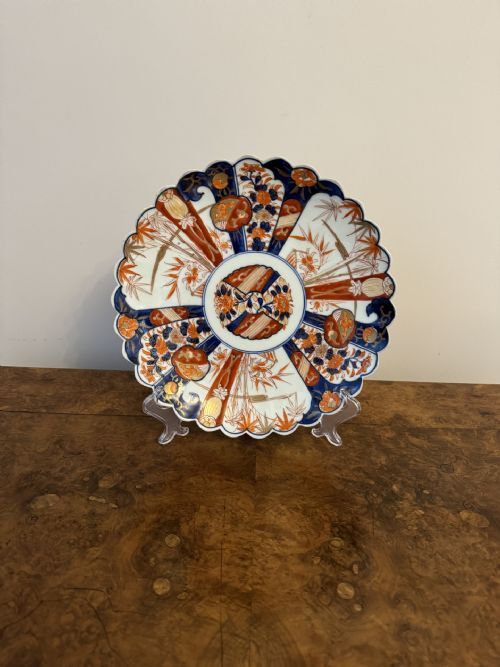
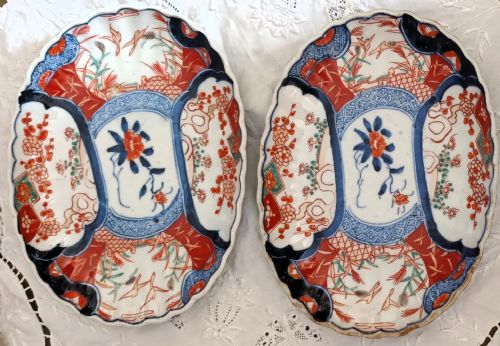
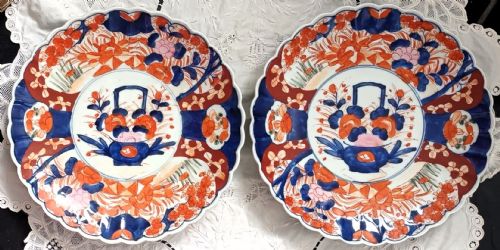
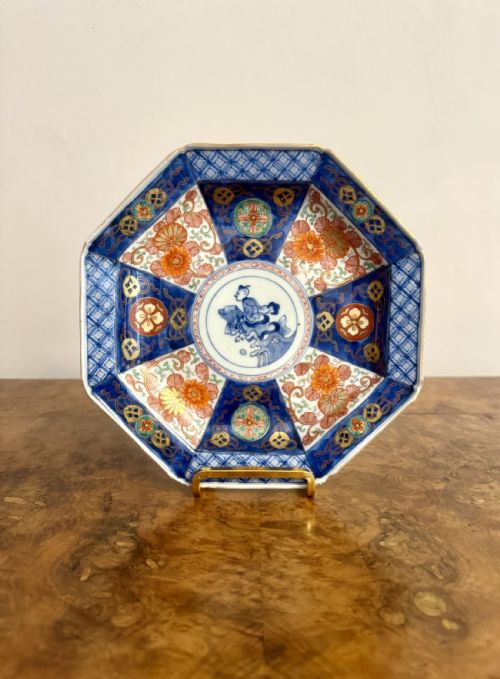
An imari cobalt iron red plate brings together deep blue, brilliant iron red, and gilding on porcelain from the Japanese Meiji period and the nineteenth century.
Imari Cobalt Iron Red Plate
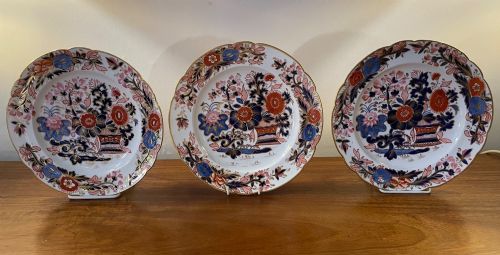
An imari cobalt iron red plate is a ceramic vessel created for decorative display, coming to us primarily from the Meiji period, the broader nineteenth century, and Victorian times. These pieces take the form of chargers, deep dishes, and square or scalloped plates.
The most common examples on this page hail from late nineteenth-century Japan, produced during the Meiji era in porcelain. Alongside these, buyers encounter English Staffordshire pieces painted in the distinct Imari palette.
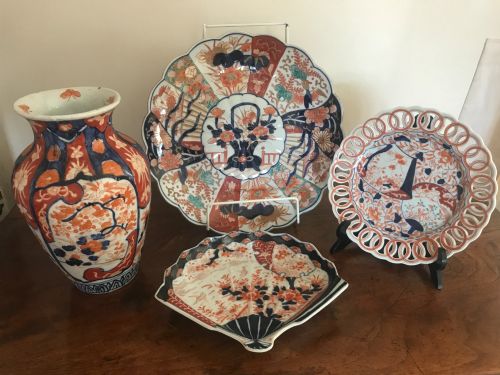
Makers shaped these plates in various geometries, including hexagonal rims, ribbon borders, and traditional round chargers. They serve equally as wall plates or centrepieces on cabinet shelves.
Measures of quality
Quality rests upon the crispness of the cobalt underglaze painting and the preservation of the gold leaf and iron red enamel. Pieces with sharp brushwork and minimal rubbing to the surface display superior artistic execution.
The complexity of the moulding dictates distinction, moving from simple round platters to intricate scalloped edges, hexagonal rims, and square plates. Heavier chargers and large decorative plates require greater technical skill in the kiln to prevent warping.
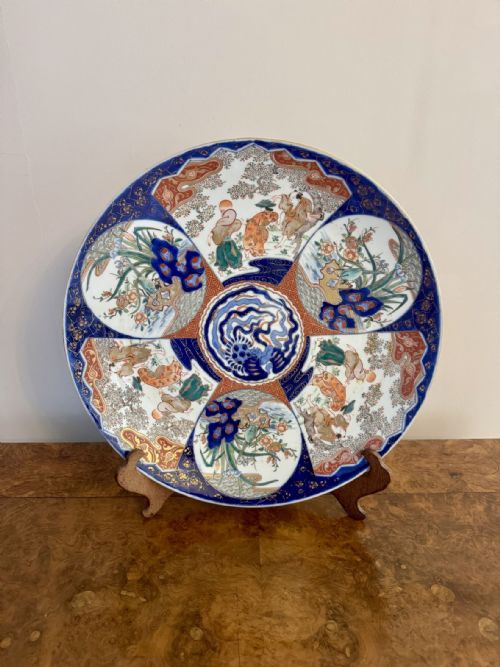
Several plates feature the Seven Lucky Gods, proving that even a dinner service requires divine intervention when stacked.
The Imari Cobalt Iron Red Plate Glossary
- Imari palette
- A traditional decorative scheme utilising cobalt underglaze blue, iron red enamel, and supplementary gilding. This palette originated in Japan and was later copied by European potteries.
- Meiji Period
- The era in Japanese history spanning from 1868 to 1912, noted for prolific porcelain production intended for export. Pieces from this time frequently display intricate hand-painted bird and deity motifs.
- Charger
- A large decorative plate or platter designed primarily for display on a wall or sideboard rather than for dining use. These items often measure twelve inches across or greater.
- Staffordshire
- A regional English pottery designation for ceramic wares produced in the county of Staffordshire. Some nineteenth-century factories in this area adopted the Imari colour scheme on earthenware plates.
Imari Cobalt Iron Red Plate: Frequently Asked Questions
How do I hang an imari charger on the wall?
Heavy chargers require a secure spring-loaded wire hanger that grips the rim evenly without putting pressure on hairline fractures. Ensure the wall fixing engages a solid stud or uses a proper masonry plug.
Display them away from direct sunlight to protect the iron red enamel and gold leaf details from fading over decades.
Were these plates used for dining?
Most large examples and chargers served a decorative function on walls, cabinets, or sideboards rather than holding food. Their heavy gilding and enamel work meant they were treated as display pieces.
Smaller plates occasionally saw service at the table, though their survival in quantity suggests careful preservation from the nineteenth century onward.
How do I clean antique porcelain safely?
Dust the surface gently with a soft, dry brush to remove particles without disturbing the overglaze enamel. Avoid soaking pieces with gilt or enamel decoration in water.
If washing is necessary, use lukewarm water with mild soap, rinse briefly, and dry immediately with a lint-free cloth.
How do I tell Japanese Imari from English copies?
Japanese Meiji pieces typically employ a fine porcelain body that feels dense and rings clearly when tapped gently. English Staffordshire alternatives are often earthenware ceramics with slightly thicker rims and different weight distributions.
Examine the foot ring at the base, where Japanese factories left clean, unglazed clay exposed.