



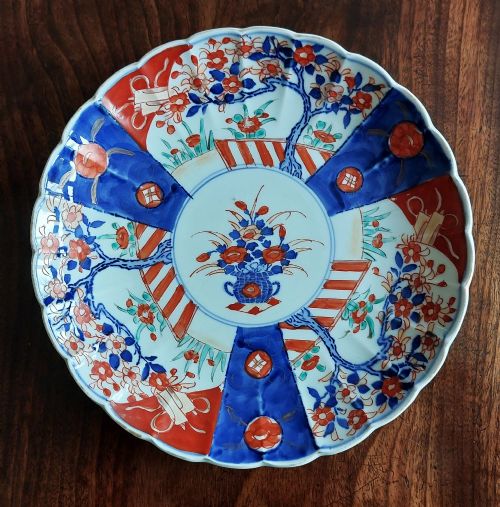
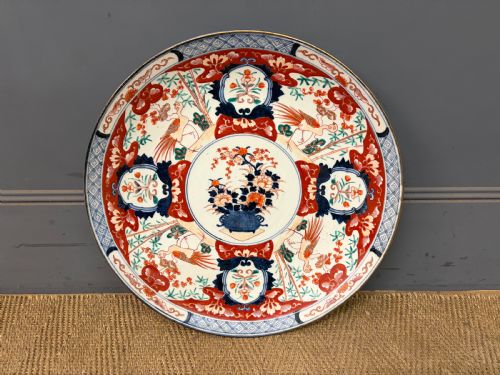
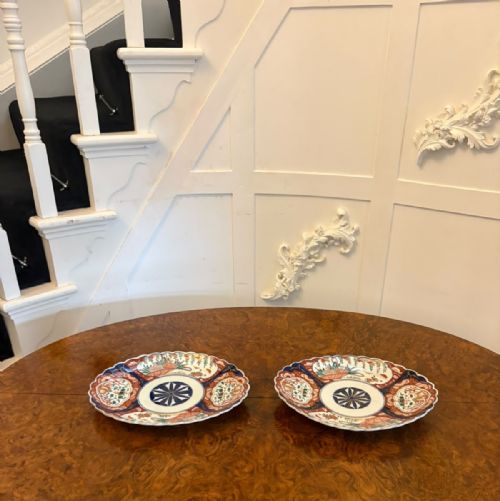


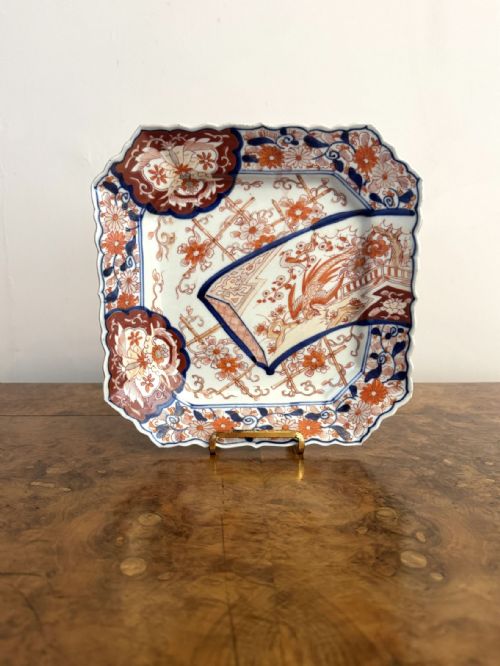

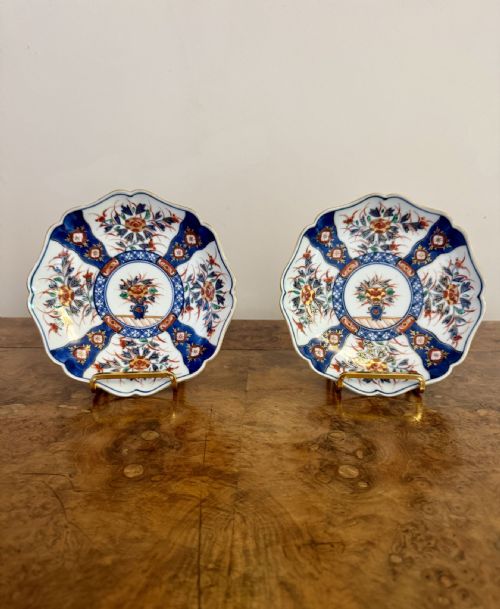
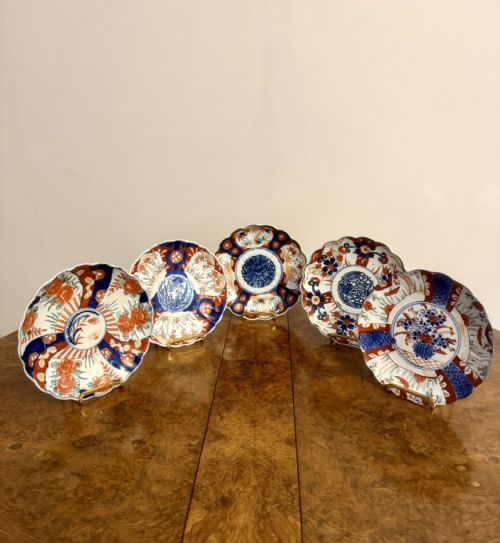
Imari Ceramic Wall Dish
These imari ceramic wall dish pieces combine rich cobalt underglaze with vibrant enamel panels to bring historic East Asian and English decorative arts to interiors.

Imari Ceramic Wall Dish
When you search for an imari ceramic wall dish, you encounter decorative chargers, wall plates, and display dishes spanning the nineteenth century through the early twentieth century. The selection includes Japanese Arita works alongside Chinese export examples and English interpretations.
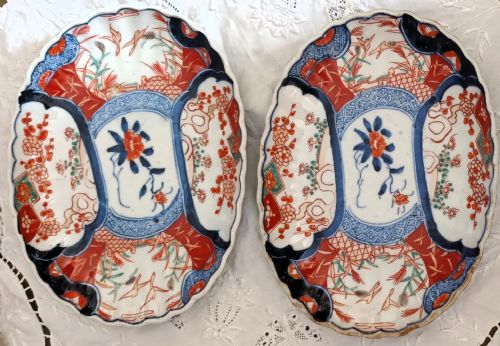
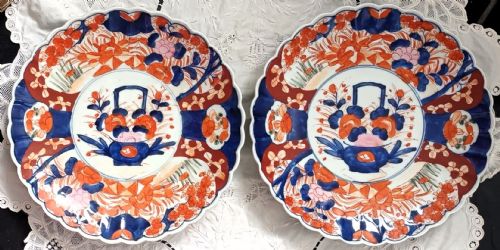
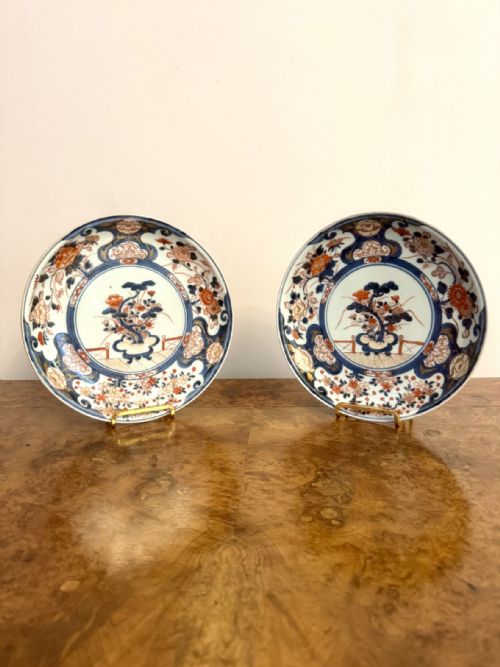
Most items you meet on this page originate from the Meiji period, appearing as large circular chargers, scalloped edge plates, and square shaped display pieces. Makers incorporated traditional motifs such as exotic birds and the Seven Lucky Gods across these ceramic surfaces.
Materials and Construction
Artisans formed these pieces from hard paste porcelain and ironstone, shaping them into standard rounds, ovals, and distinctive square geometries. Workshops applied cobalt underglaze beneath a clear protective finish to establish the deep blue foundation of the pattern.
Painters added iron red and colourful enamel details by hand, frequently accenting the compositions with gold leaf and gilt highlights. Firing in high temperature kilns fused these mineral pigments directly into the glaze.
Several plates depict the Seven Lucky Gods gathered together, ensuring your wall display comes heavily staffed with divine Japanese management.
Evaluating the Pieces
The sophistication of the hand painting determines the distinction between standard production and superior examples, particularly in the precision of the cobalt outlines and the registration of the enamel fills. Pieces featuring complex figure work, such as the Seven Lucky Gods, demonstrate greater artistic ambition than repetitive floral borders.
Physical preservation of the applied gold leaf and surface enamels heavily influences the character of each charger or plate. Examples retaining crisp polychrome definitions and clean porcelain bodies command greater attention from collectors.
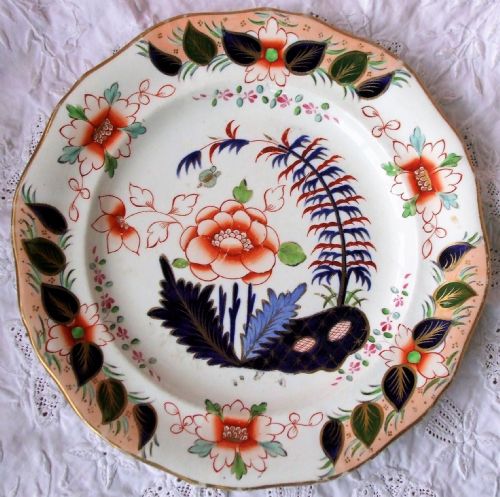
John Davenport of Longport·Flight Barr and Barr
The Imari Ceramic Wall Dish Glossary
- Imari
- A style of ceramic decoration originating in Japan and subsequently copied in China and Europe. It typically employs a palette of cobalt blue, iron red, and gilt.
- Charger
- A large decorative plate intended primarily for display on a wall or sideboard rather than for dining use.
- Meiji Period
- The era in Japanese history spanning from 1868 to 1912, associated in these listings with export porcelain made for Western markets.
- Cobalt Underglaze
- A blue pigment applied to raw ceramic bodies before glazing and firing, producing a permanent colour beneath the glossy surface.
- Ironstone
- A heavy, durable type of ceramic developed in nineteenth century England as a robust alternative to fine porcelain.
Imari Ceramic Wall Dish: Frequently Asked Questions
What is an imari ceramic wall dish?
An imari ceramic wall dish is a decorative plate or charger featuring traditional Japanese, Chinese, or European imari patterns. These pieces were produced primarily for display in domestic interiors.
They utilise distinct cobalt blue and iron red palettes, often enhanced with gold leaf. Historic examples range from nineteenth century Japanese export wares to English ironstone adaptations.
How do I hang a heavy charger?
Displaying large plates safely requires a dedicated wall mounting system designed for heavy ceramics. Spring loaded brass wire hangers or custom plate rails distribute the weight evenly across the rim.
Ensure the mounting hardware fastens securely into wall studs or appropriate masonry anchors. Avoid locations subject to vibration or direct sunlight.
Were these pieces used for dining?
Large chargers and decorative plates served mainly as ornamental items for sideboards and walls. Their elaborate enamel and gilt surfaces were vulnerable to cutlery scratching during regular meals.
Smaller plates in some sets may have seen occasional table use, but surviving examples with intact gilding typically spent their lives displayed as art.
How can I tell Japanese from English imari?
Japanese imari pieces from the Meiji period utilise translucent porcelain bodies and hand painted cobalt with iron red and gold. The brushwork tends to feature asymmetrical natural scenes and traditional figures.
English imari, such as nineteenth century pieces by John Davenport or Worcester, is typically heavier due to ironstone or bone china composition. The forms and motifs often reflect European interpretations of Asian aesthetics.