

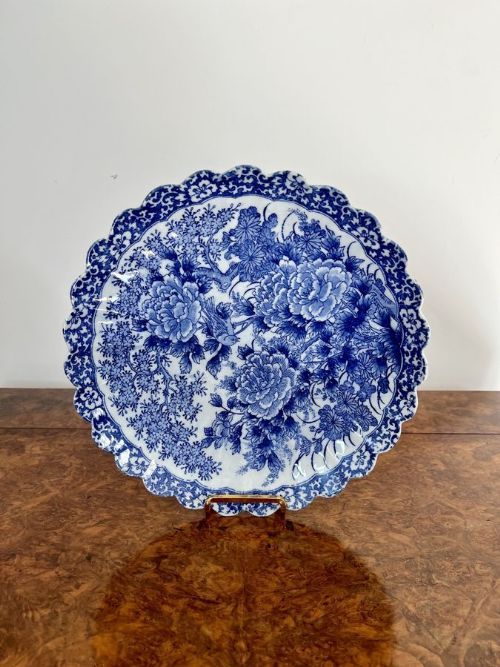

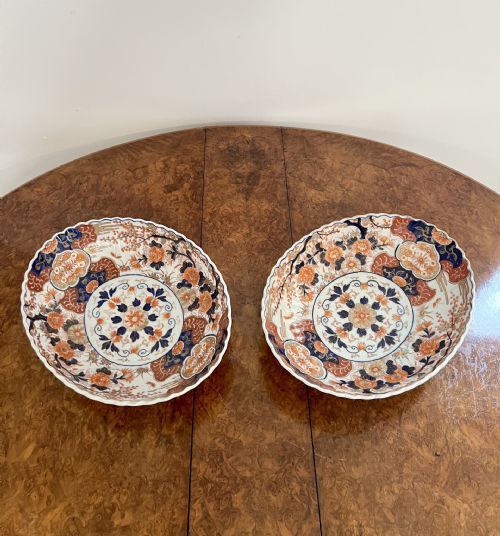


Edo Period Imari Charger
An edo period imari charger brings bold panels of cobalt underglaze and enamel pigments directly from the kiln to the table.

Edo Period Imari Charger
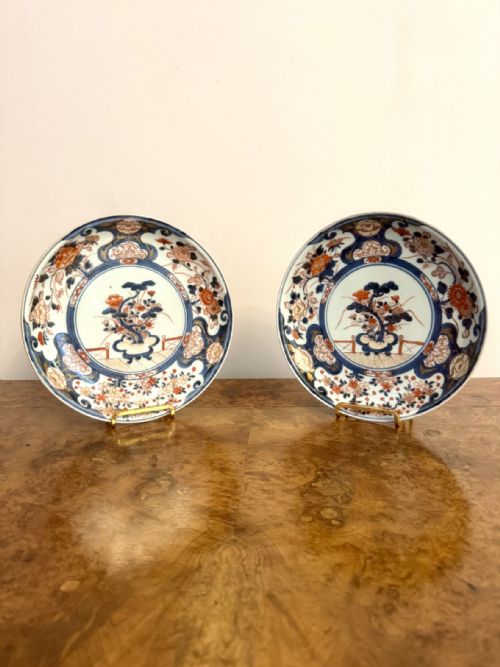
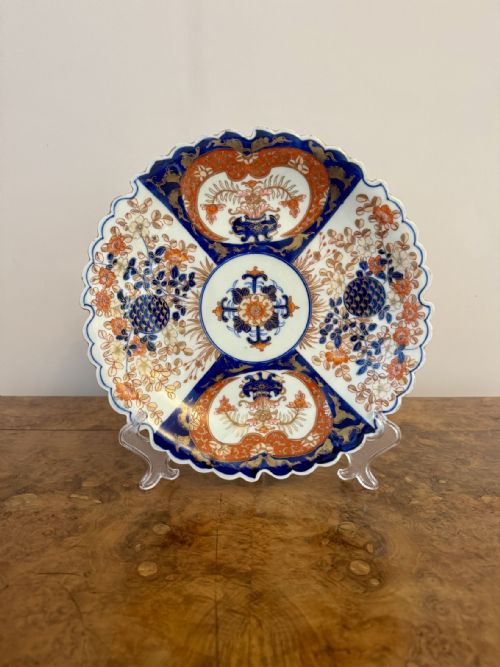
The search for an edo period imari charger opens up a distinct world of Japanese ceramic production originating from the Arita kilns. Buyers encounter large decorative plates, chargers, and dishes displaying the characteristic Imari palette of cobalt blue and iron red, often highlighted with additional enamel colours and gilding.
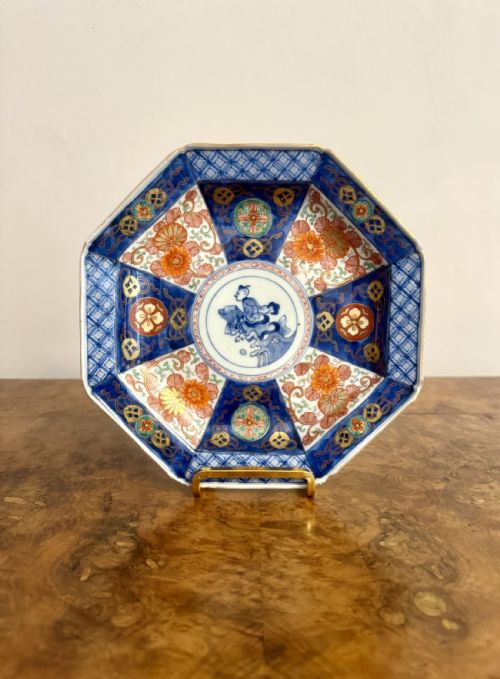
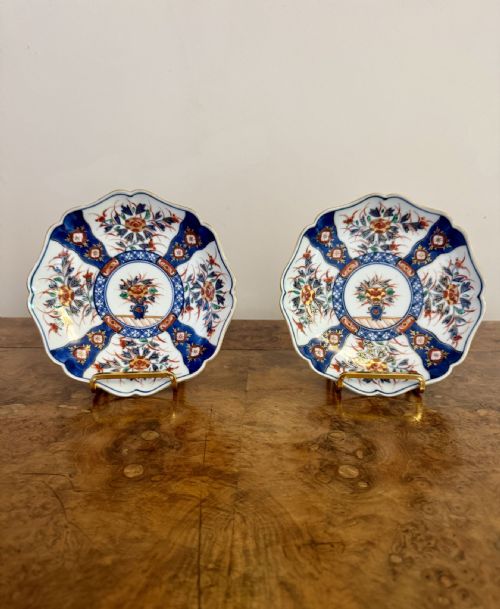
Most examples found on this page date from the nineteenth century or the late seventeenth and eighteenth centuries, reflecting both Edo and Meiji period output. Forms range from standard circular chargers to hexagonal, octagonal, scalloped, square, and fan-shaped plates designed for visual impact.
These items served primarily as ornamental wares rather than dining service pieces, intended for display within interiors. Their survival across centuries demonstrates both their initial popularity in export trade and their enduring appeal for collectors of Japanese porcelain.
How they were made
The creation of these ceramics relies upon hard-paste porcelain fired at high temperatures in the kilns of Hizen province around Arita. Artisans applied cobalt underglaze directly to the body before the initial glaze firing, producing the deep blue tones beneath a glossy surface.
Overglaze decoration followed the primary firing, utilising iron red enamel, additional pigment colours, and gold leaf or gilding to build up complex geometric and floral motifs. This multi-stage technique required precise control to fuse the various enamels successfully during subsequent lower-temperature firings.
Potters occasionally experimented beyond the circle, shaping heavy porcelain into fans and squares to catch the eye across the room.
What varies in quality
The standard of an edo period imari charger depends heavily on the crispness of the hand-painted brushwork and the complexity of the design layout. Finer pieces display sharply defined cobalt lines and precisely applied enamel details that remain vibrant across the surface.
Form and moulding also distinguish superior examples, particularly where kilns produced unusual shapes such as square, octagonal, or fan-shaped plates with scalloped edges. The richness of the palette, including the judicious use of gold leaf and gilding, separates standard production wares from exceptional studio output.
The Edo Period Imari Charger Glossary
- Imari palette
- A decorative scheme employing cobalt underglaze blue and iron red enamel, frequently augmented by gold leaf and additional enamel colours. This distinct combination originated in Hizen province and defined export wares.
- Arita
- The Japanese town and surrounding district in Hizen province where regional porcelain production concentrated during the Edo period. Kilns here supplied the domestic and export markets with chargers and dishes.
- Cobalt underglaze
- A blue pigment applied to the raw ceramic body before glazing and firing, which reacts to high temperatures to produce deep, permanent blue tones. It forms the foundation of most Imari decoration.
- Edo period
- The historical epoch in Japan lasting from sixteen hundred and three to eighteen hundred and sixty-eight, characterised by relative stability and flourishing arts including porcelain manufacture.
- Charger
- A large decorative plate intended for display on a sideboard or wall rather than for serving food at table. These substantial pieces showcase the highest skill of the potter and painter.
Edo Period Imari Charger: Frequently Asked Questions
What is an edo period imari charger?
An edo period imari charger is a large decorative porcelain plate made in Japan during the Edo era, decorated in a distinct palette of cobalt blue, iron red, and gold.
These pieces were produced primarily in the kilns around Arita and shipped globally as luxury ornamental items rather than functional tableware.
How were imari chargers used?
These large dishes served predominantly as decorative display pieces within homes, often showcased on walls or furniture.
Their striking patterns and rich pigments made them focal points in interior decoration throughout Japan and Europe.
How do I date an imari charger?
Dating relies on examining the porcelain body, the depth of the cobalt underglaze, and the style of the hand-painted enamel decoration.
Earlier examples from the late seventeenth century often feature different potting characteristics and sparser palettes compared to nineteenth-century production.
Are all imari pieces from the Edo period?
Not all imari wares date to the Edo period, as production continued strongly into the Meiji era and beyond.
Sellers often list pieces from the nineteenth and early twentieth centuries alongside genuine Edo examples, requiring careful stylistic comparison.