





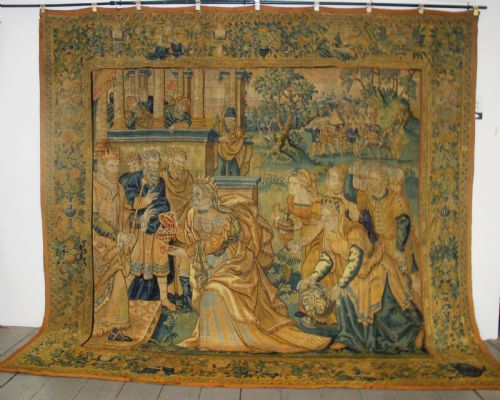
Historic Woven Tapestry
Historic woven tapestry works bring centuries of narrative and foliage into rooms through richly worked threads.
Historic Woven Tapestry
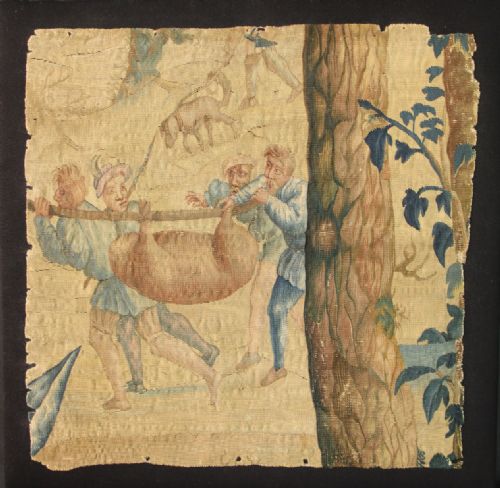
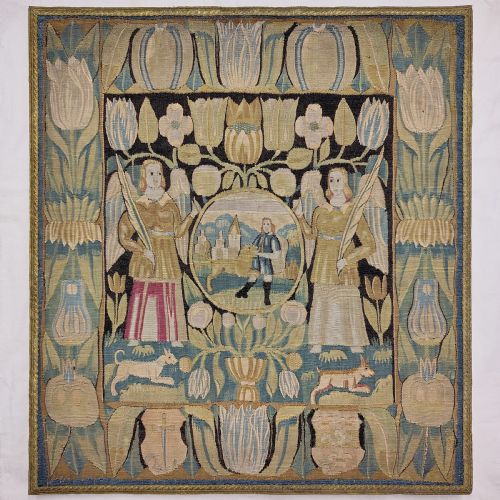
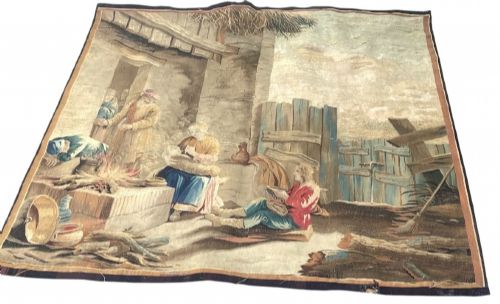
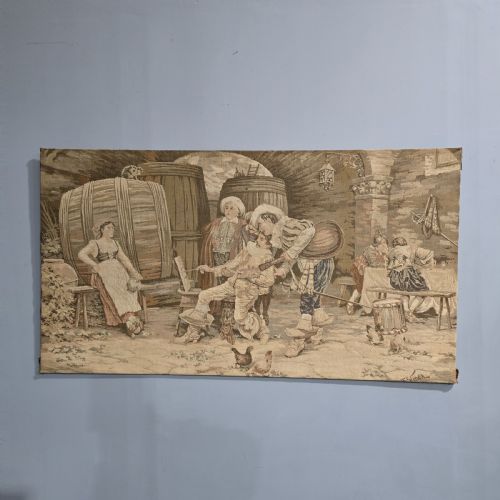
A historic woven tapestry takes the form of large wall hangings, framed panels, smaller fragments, and cushions. Buyers searching for a historic woven tapestry encounter examples originating primarily from seventeenth and eighteenth-century Flemish and French workshops.
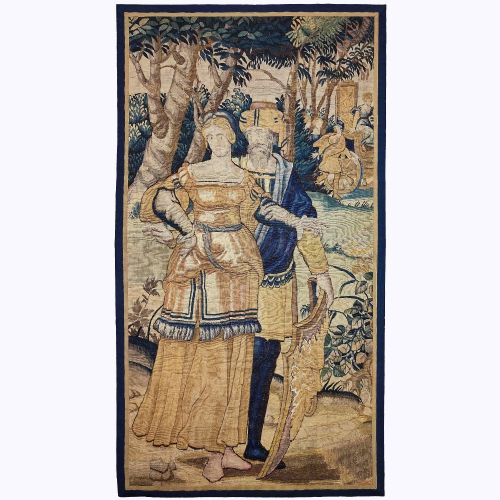
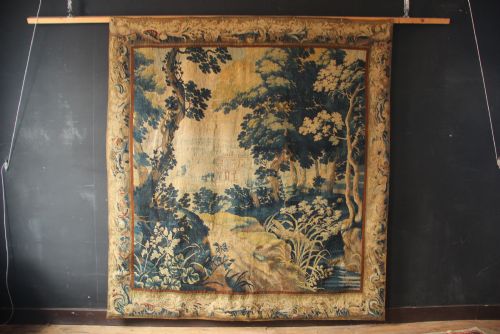
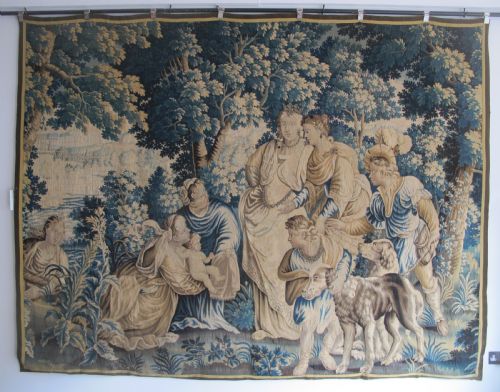
The most common survival on this page is the verdure tapestry, depicting lush foliage and landscape scenes often associated with Flemish output. Biblical narratives and panels after Teniers also appear alongside smaller domestic items such as cushion covers.
What varies in quality
The distinction between pieces rests on the complexity of the design, the fineness of the weave, and the survival of the original palette. Verdure scenes with varied botanical detail and balanced proportions command greater attention than simple borders or fragmented sections.
Materials also dictate the character of the piece, with silk and metallic thread additions introducing depth that plain wool compositions lack.
Several seventeenth-century Flemish panels depict quiet woodland foliage where attentive viewers spot distant birds hiding among the verdant leaves.
The Historic Woven Tapestry Glossary
- Verdure tapestry
- A wall hanging dominated by landscape, trees, foliage, and often birds or animals. These scenes form a major category within seventeenth and eighteenth-century Flemish output.
- Tapestry fragment
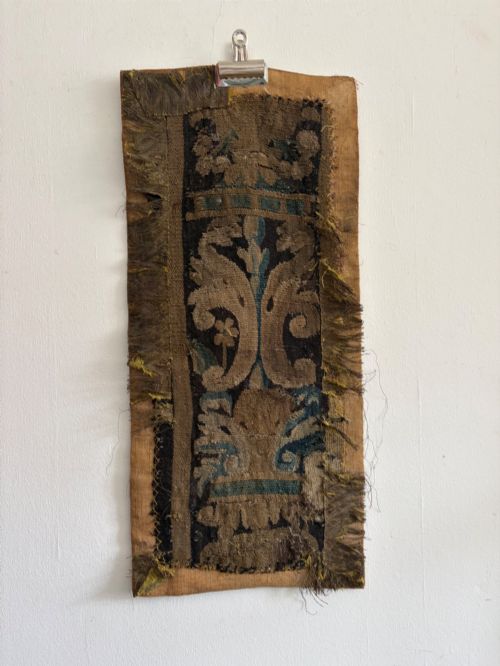
- A surviving portion of a larger historic wall hanging, frequently remounted or repurposed. These pieces isolate specific borders, figures, or landscape elements from destroyed works.
- Warp and weft
- The foundational structural elements of textile weaving, where vertical warp threads hold tension while horizontal weft threads form the visible pattern.
- Metallic thread
- Wrapped wire utilised alongside wool and silk to introduce gleaming highlights. This material appears in select panels to accent garments or architectural details.
Historic Woven Tapestry: Frequently Asked Questions
How do I hang a large tapestry safely?
Large wall hangings require weight distribution across a supportive wooden batten or hidden sleeve mechanism. Attaching the textile directly to a wall by nails damages the fibres.
Professional mounting to a linen backing provides additional stability for heavier wool and silk compositions.
What is a verdure tapestry?
A verdure tapestry depicts woodland scenes, foliage, and gardens rather than human histories or biblical narratives. These panels focus on botanical variety and landscape depth.
Flemish workshops produced many of the verdure examples seen across seventeenth and eighteenth-century periods.
How are tapestry fragments created?
Fragments arise when damaged wall hangings are cut down to salvage undamaged sections, such as borders or central motifs. These smaller pieces are often mounted to linen or framed for display.
Such items offer a way to own historic textile art on a domestic scale.