



Seventeenth Century Wall Hanging
A seventeenth century wall hanging brings heavy wool embroidery, carved oak and woven tapestry fragments directly into a room from the baroque age.
Seventeenth Century Wall Hanging
When you search for a seventeenth century wall hanging, you encounter a diverse group of textile arts, carved wooden panels and framed works from the 17th century. These pieces reflect the rich domestic interiors of the Baroque, Jacobean and Charles II periods.
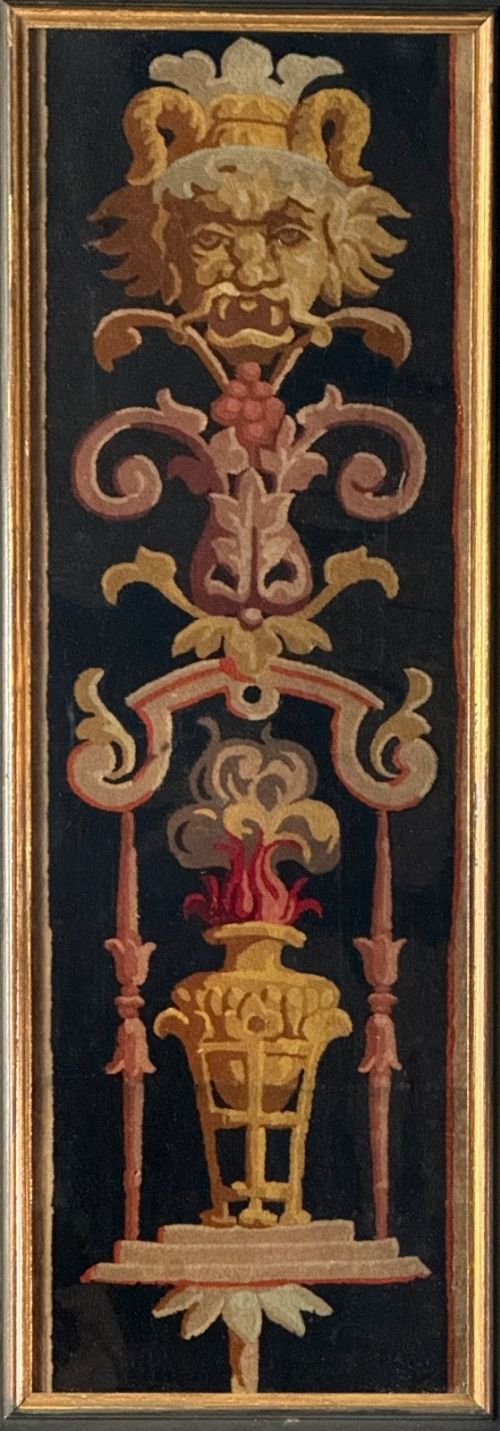
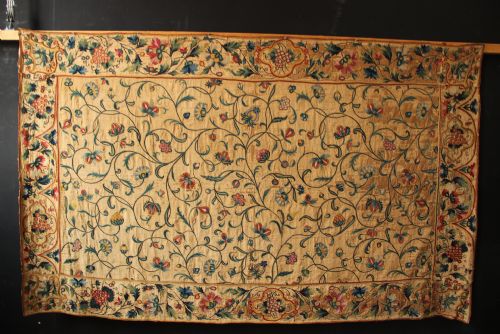
The objects listed range from crewelwork embroideries and embroidered silk velvet to Flemish tapestry fragments, tapestry cushion covers and carved oak wall cabinets or panels. You are most likely to meet crewelwork panels or woven textile fragments on this page.
Origins span England, Flanders and Germany, showing how different European workshops approached interior decoration during the seventeen hundreds and earlier decades. Each item served to insulate stone walls or display status through fine needlework and carving.
Materials and Craftsmanship
Craftsmen utilised wool, silk, gold thread and linen to create intricate embroidered textiles and woven tapestries. These threads were worked onto sturdy foundation fabrics, sometimes enhanced with metal threads for rich visual depth.
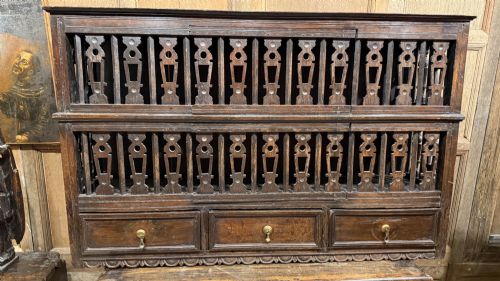
Woodworkers carved solid oak to produce architectural wall cabinets, mural livery cupboards and relief panels depicting allegorical scenes. Brass and glass components occasionally appear in associated hardware or protective framing.
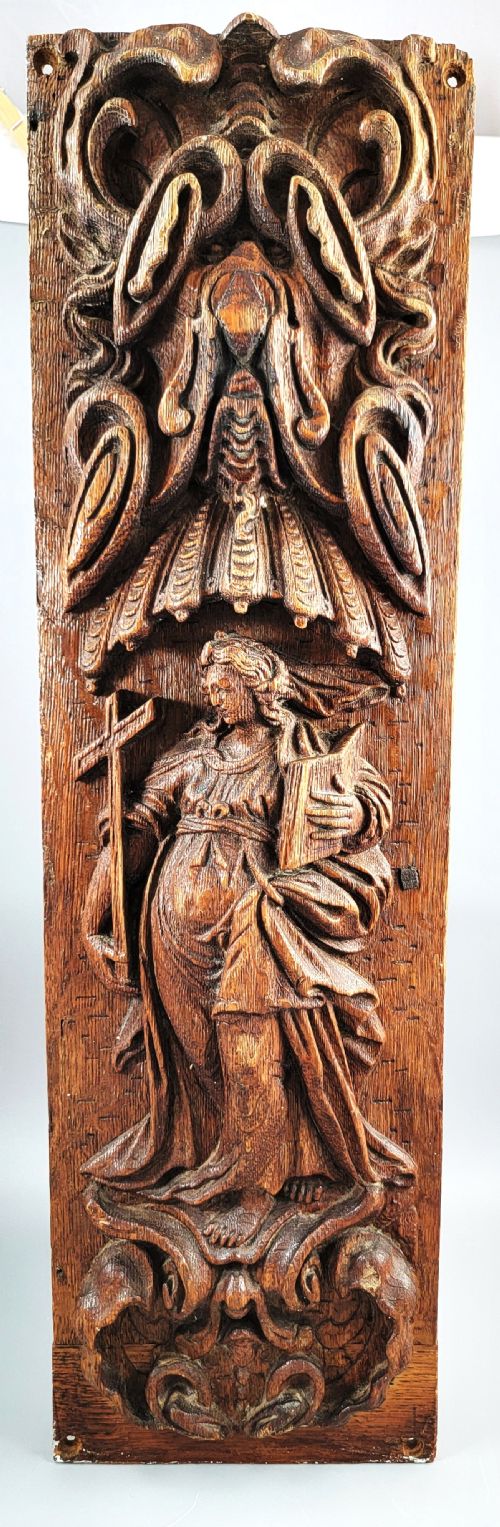
An allegorical figure of faith carved into oak still watches over rooms centuries after its creation.
Judging Quality and Execution
The fineness of the needlework separates ordinary embroidery from exceptional crewelwork. Tightly stitched wool and silk threads on early English pieces demonstrate superior handwork compared to looser, simpler stitching.
Carved oak panels reveal quality through the depth and crispness of the chisel work. Well-defined figures, such as an allegory of faith, show a sculptor's confident control over the wood grain.
The Seventeenth Century Wall Hanging Glossary
- Crewelwork
- Embroidery executed with fine wool yarn on a linen or cotton-linen twill ground. This technique creates textured designs typical of Jacobean needlework.
- Tapestry
- A form of textile art woven by hand on a loom, often depicting pictorial scenes. Flemish weavers produced notable examples during the seventeenth century.
- Livery cupboard
- A small wooden cabinet used for storing food or small household items, often ventilated with turned spindles. Charles II examples are typically fashioned from solid oak.
- Baroque
- An ornate artistic style prevalent in the seventeenth century, characterised by drama, rich detail and exuberant movement. It influences both the carved panels and woven textiles of the era.
Seventeenth Century Wall Hanging: Frequently Asked Questions
What is a seventeenth century wall hanging?
A seventeenth century wall hanging is an antique textile, tapestry fragment or carved wooden panel created during the 17th century. These items were originally used to decorate and insulate the interior walls of period homes.
Today, they survive as crewelwork embroideries, woven tapestry cushions, and oak panels reflecting Baroque and Jacobean styles from England, Flanders, and Germany.
How were these wall hangings used originally?
In seventeenth-century interiors, textiles and heavy wooden cabinets lined drafty stone walls to provide warmth and visual decoration. Embroidered crewelwork and tapestries softened rooms and signalled the owner's wealth.
Wooden wall cabinets and livery cupboards held precious household goods while contributing to the architectural scheme of the panelled hall or chamber.
How do I care for antique textiles?
Antique textiles require protection from direct sunlight, which fades delicate wool, silk, and gold threads over time. Stable indoor humidity and professional mounting behind glass help preserve fragile fibres.
Avoid hanging heavy textile art in damp areas or places subject to temperature extremes to prevent degradation of the original backing fabrics.
How do I distinguish Jacobean from Baroque pieces?
Jacobean items generally display rigid, stylised floral and fauna motifs with flat, linear patterns typical of early seventeenth-century English design. Baroque pieces introduce greater movement, theatrical depth and rich allegorical imagery.
Looking closely at the carving style on oak panels or the figural arrangement in tapestry fragments reveals these stylistic shifts.