
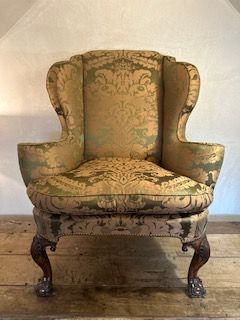
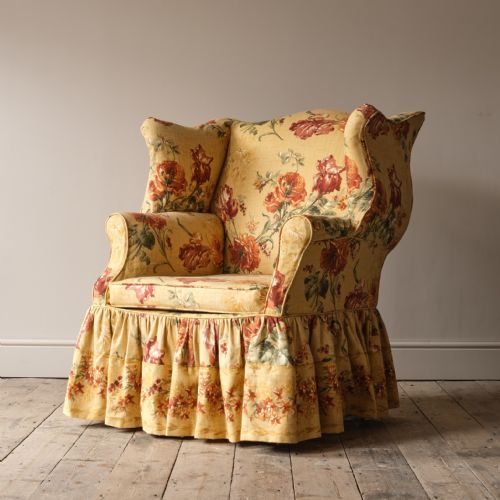
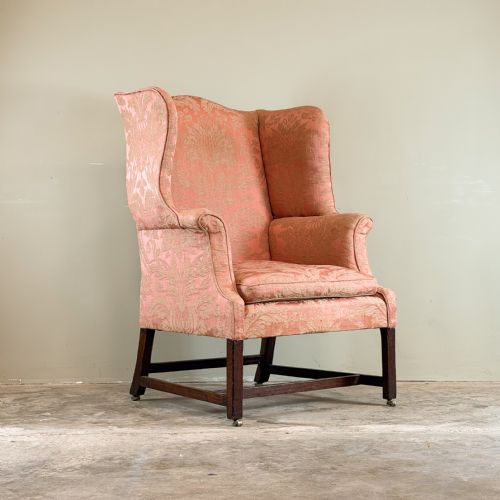
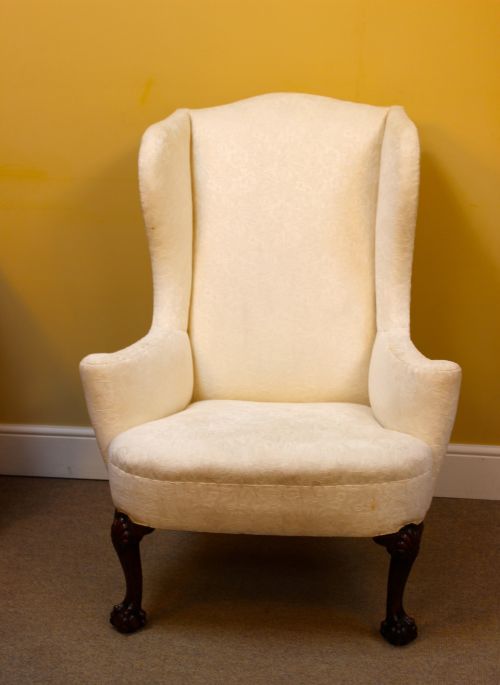
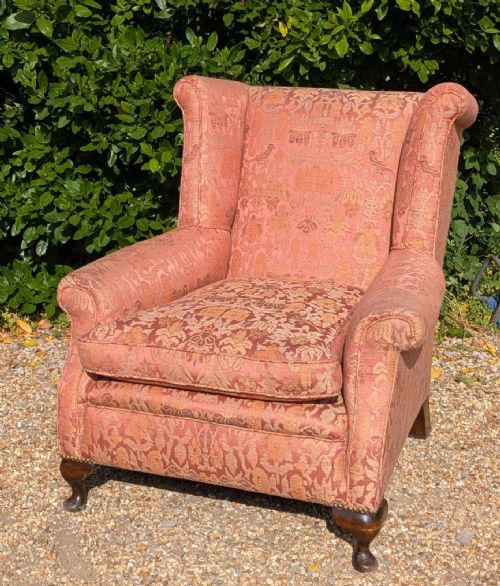
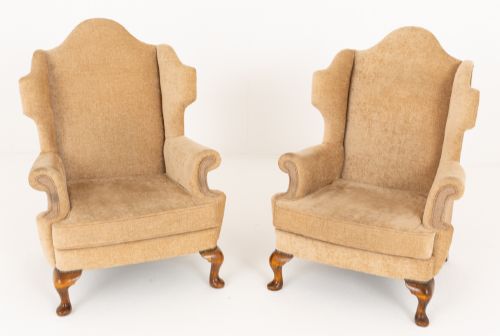
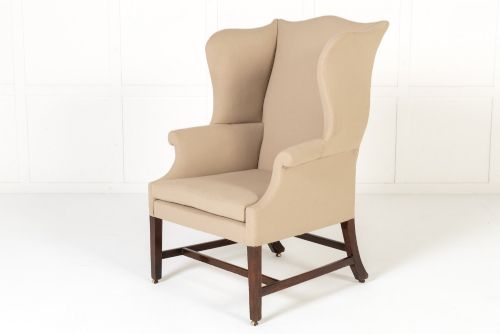
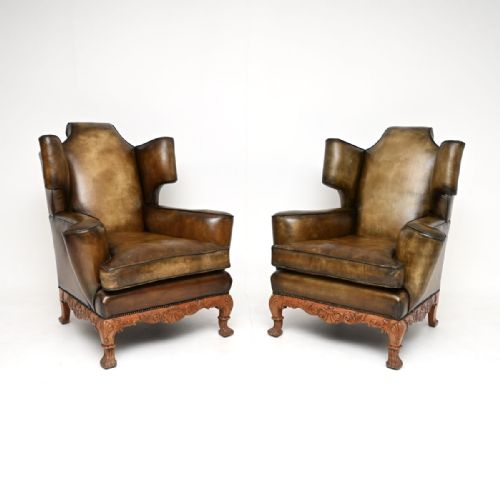
High Back Wingback Chair
A high back wingback chair offers deep, draught-excluding comfort and stands among the most commanding seats in traditional domestic interiors.
High Back Wingback Chair
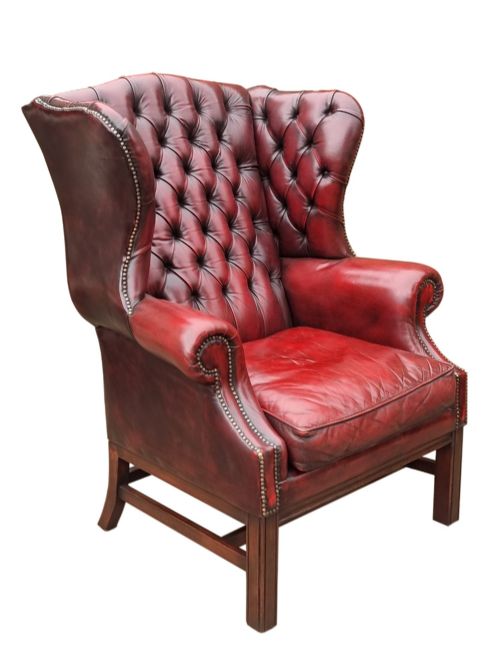
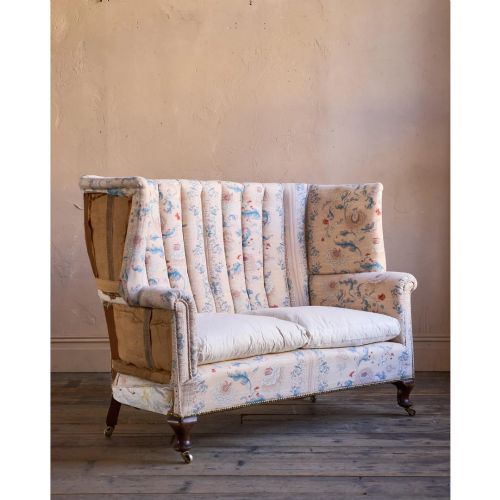
When you search for a high back wingback chair, you encounter substantial seating designed historically to shield the sitter from draughts and retain heat from an open hearth. The versions most commonly met on this page span the eighteenth, nineteenth, and early twentieth centuries, including Georgian originals and later revivals in the Queen Anne and George III styles. These pieces range from monumental library chairs to intimate fireside seats, occasionally appearing alongside related forms such as barrel back armchairs and upholstered sofas.
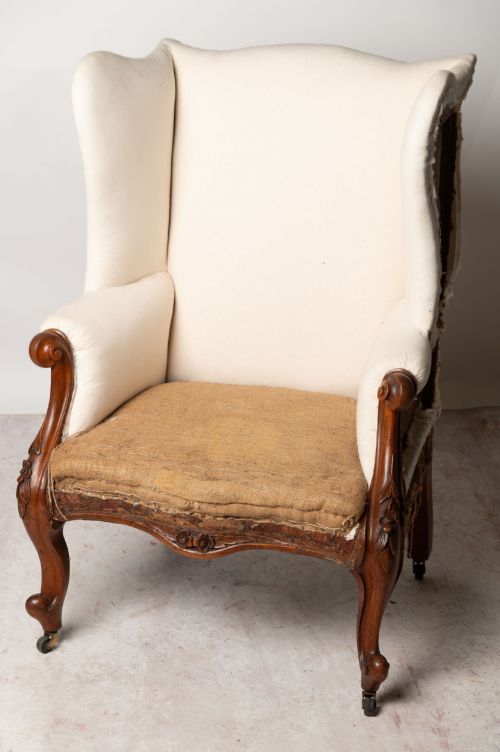
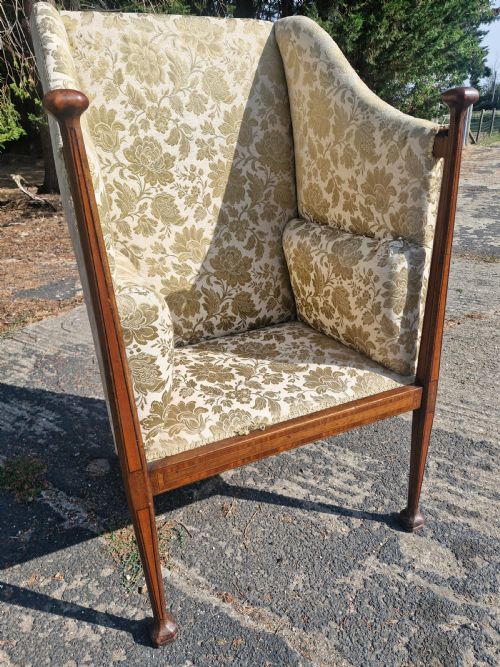
The materials visible across these pieces reflect centuries of cabinet-making and upholstery traditions, utilising solid woods like mahogany, walnut, oak, and timber frames paired with brass details. Upholstery choices run from period leathers and heavy wool plaids to velvet, chenille, and plain calico undercovers, often filled with feathers for a deep, accommodating sit. Formations vary from strict upright proportions to generous, deep-seated proportions suited for country houses and formal libraries alike.
Construction and Materials
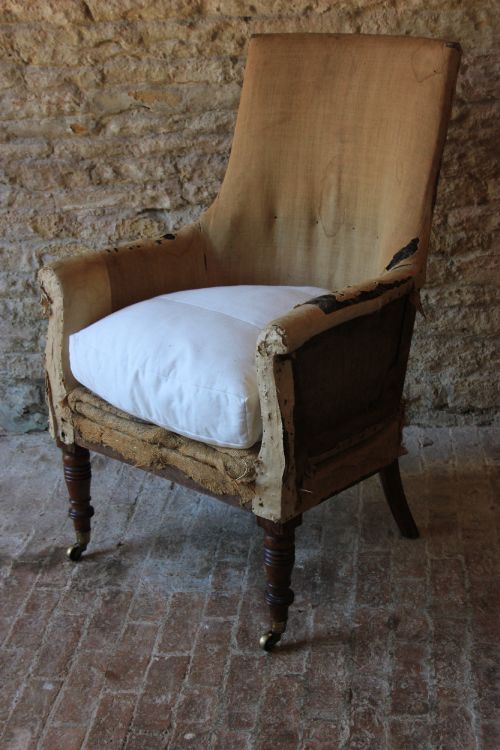
Frames are constructed from dense hardwoods such as mahogany and walnut, jointed with traditional cabinet-making methods to support heavy internal webbing and stuffing. Wood components frequently show fine turning on the legs or stretchers, while mahogany and walnut surfaces display natural grain patination accumulated over decades of use.
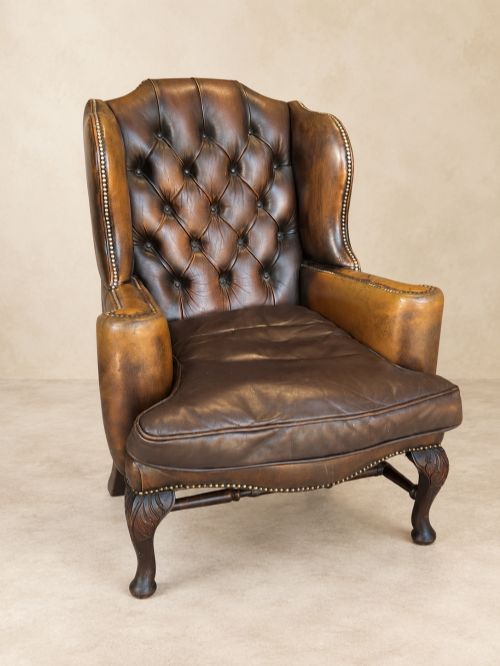
Upholstery techniques rely on multi-layered stuffing and spring or feather filling enclosed beneath top covers of leather, velvet, plaid, or woven twill. Brass studwork often secures the leather edges on older library and club examples, fastening the hides firmly to the wooden internal frame.
Wings were originally stuffed tight with down to trap heat from the parlour fire and block stiff draughts from creeping down the back of the neck.
Evaluating Quality and Proportion
The distinction between ordinary and superior examples rests primarily on the integrity of the frame, the sweep of the wings, and the harmony of the proportions. A well-proportioned high back wingback chair balances the height of the back with the outward curve of the arms, ensuring both visual presence and ergonomic comfort for the sitter.
Originality of the timber frame and the retention of period secondary woods separate untouched pieces from heavily altered ones. Finer examples exhibit crisp carving on the cabriole or square legs, uncompromised internal webbing, and upholstery choices that respect the original aesthetic period of the design.
Howard And Sons·Whytock & Reid
The High Back Wingback Chair Glossary
- Wingback
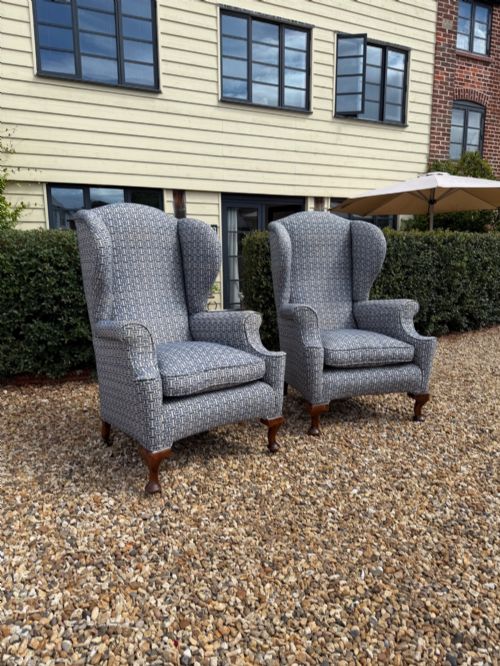
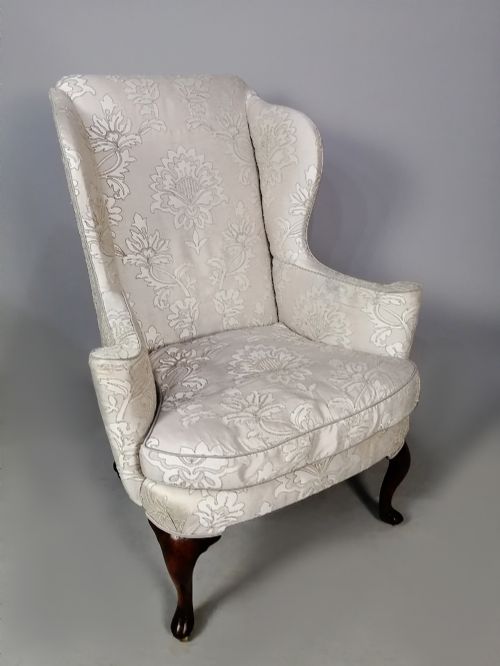
- An upholstered armchair with projecting side panels designed to deflect hearth draughts away from the sitter's head and shoulders. These wings became standard on fireside seating during the late seventeenth century.
- Barrel back
- A seating variation where the upholstered back curves continuously around to form the arms in a single enclosing semicircle. This form provides exceptional enclosure and insulation against cold rooms.
- Cabriole leg
- A furniture leg that curves outward at the knee and tapers inward toward the foot, frequently terminating in a pad or claw-and-ball foot. It is a defining feature of eighteenth-century seating designs.
- Hair stuffing
- Traditional animal hair used as an inner padding material to maintain resilient shape and support within upholstered seat cushions and backs. It predates modern synthetic foams by centuries.
- Webbing
- Interwoven strips of jute or hemp stretched tightly across the seat frame to support the springs and interior padding. The tightness of this foundational layer dictates the firmness of the seat.
High Back Wingback Chair: Frequently Asked Questions
How do I identify a Georgian wing chair?
Georgian examples typically display sturdy mahogany or walnut frames with characteristic stretchers connecting the legs, alongside hand-stitched horsehair stuffing beneath early leather or woven covers. The proportions tend to be deep and robust, designed specifically for comfort in eighteenth-century drawing rooms and libraries.
Closer inspection often reveals period construction markers such as hand-cut joinery and authentic patination on the exposed wooden legs. Later nineteenth and twentieth-century revivals often copy these lines closely, making wood analysis and framing techniques essential for confirming true period origin.
Where should I place a wingback chair?
These chairs find a natural home beside a fireplace, library shelves, or in a spacious hallway where their high backs can command the room. Their traditional function as draught excluders makes them well suited for quiet reading corners and drafty reception spaces.
Because of their substantial visual weight, they anchor large living areas effectively when paired with a low coffee table or reading lamp. Ensure adequate clearance around the piece so the distinctive profile of the wings remains visible from multiple angles.
Are leather or fabric wing chairs better?
Leather examples offer a durable, patina-rich surface that develops character with age, making them popular for studies and traditional libraries. Fabric alternatives, including wool plaid, velvet, and chenille, introduce softer textures and wider colour palettes suited for domestic sitting rooms.
The choice depends entirely on the intended room environment and practical needs for maintenance rather than a strict measure of quality. Both finishes appear across significant historical periods, from eighteenth-century leather library chairs to twentieth-century tweed country house seats.