


High Back Oak Settle
A high back oak settle turns cold hallways into warm, solid seating spaces through centuries of functional joinery.
High Back Oak Settle
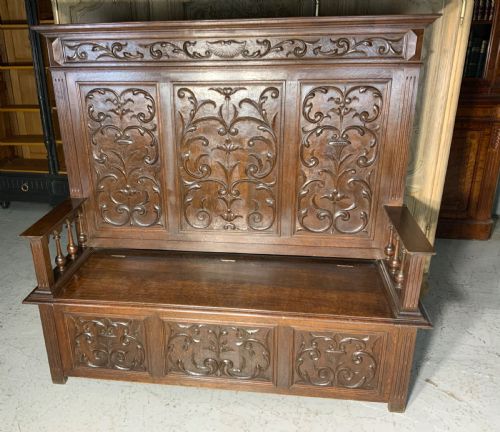
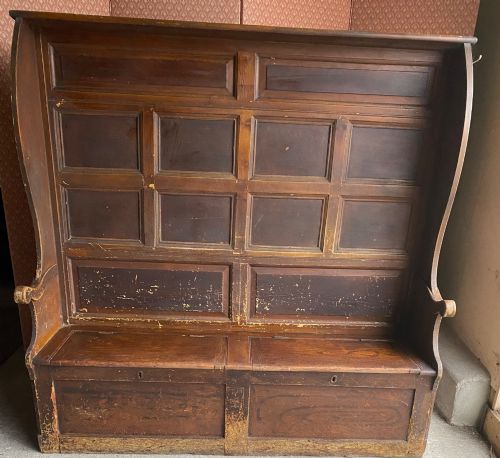
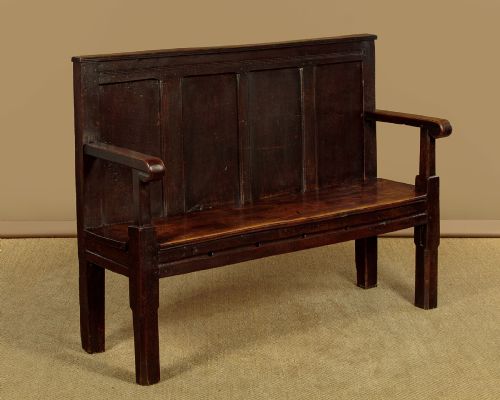
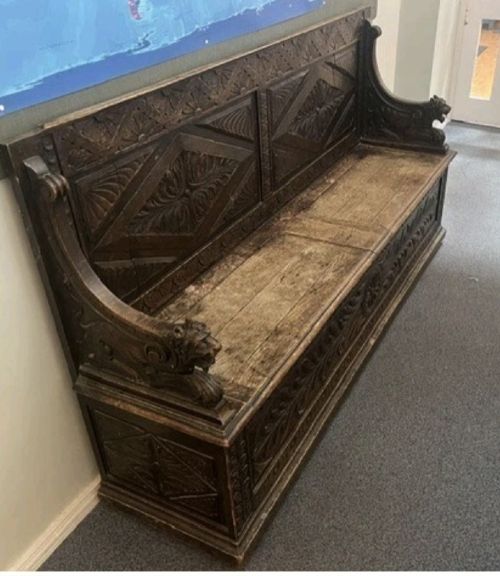
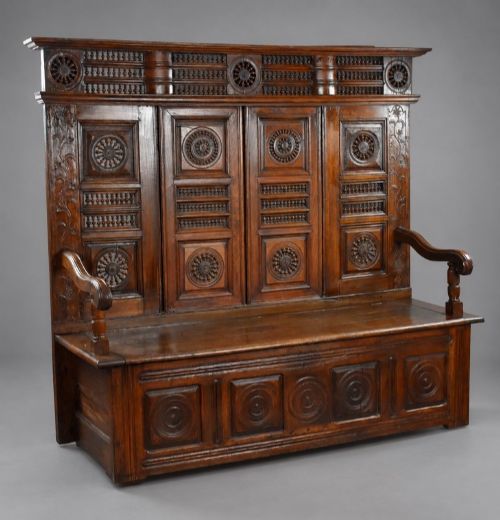
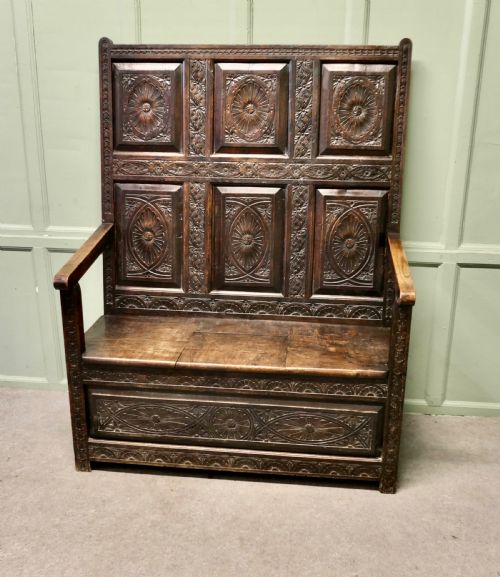
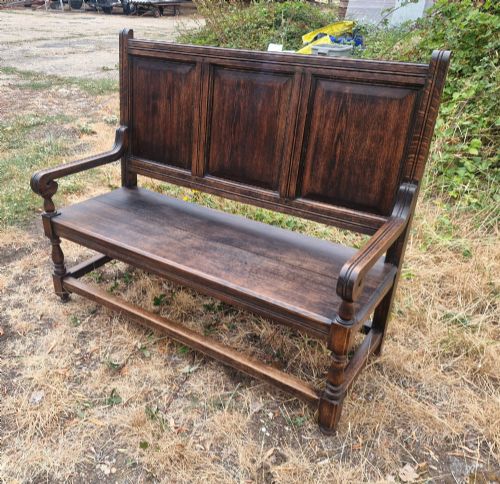
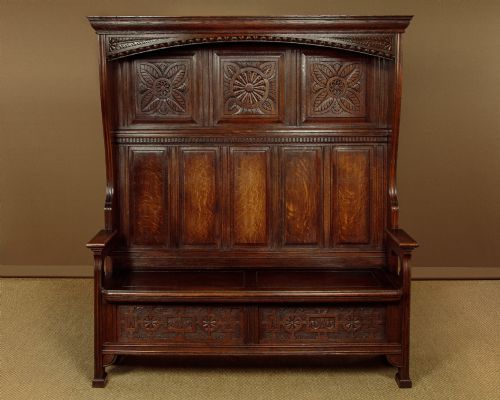
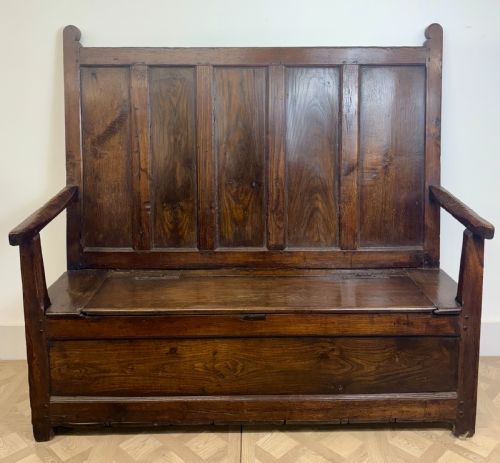
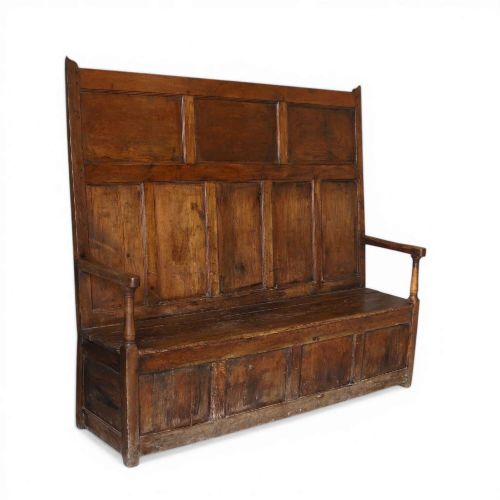
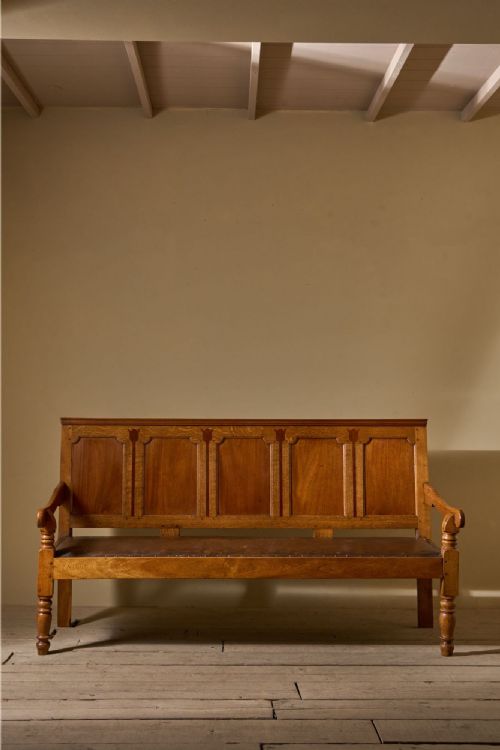
When searching for a high back oak settle, a buyer explores substantial wooden seating designed to block draughts in period interiors. These large benches appear frequently in 17th, 18th and 19th-century variants, often incorporating solid panelled backs and enclosed box bases for storage near hearths.
Many examples stem from regional English workshops, Welsh country traditions, and later Arts and Crafts revivals. The tall back structure serves a dual purpose, keeping seated occupants warm by trapping heat from the open fire while offering a commanding presence in hallways and kitchens.
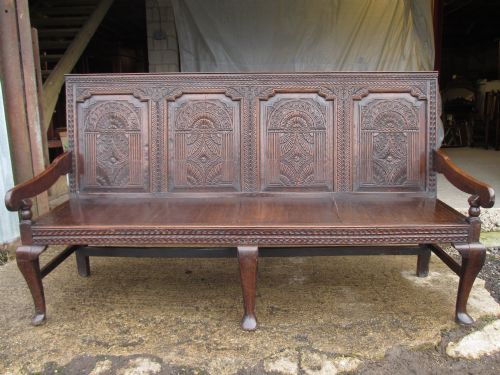
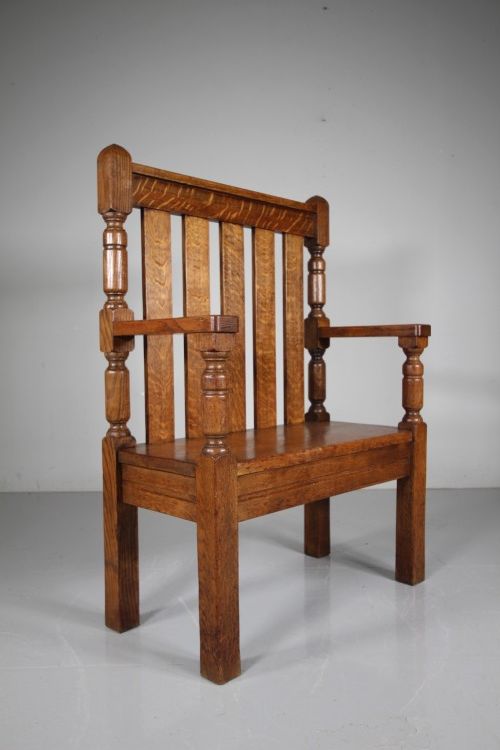
Constructed primarily as heavy utilitarian furniture, surviving pieces range from plain panelled boards to elaborately carved surfaces featuring floral motifs or geometric strapwork. Simple open benches sit alongside enclosed box settles that lift open to reveal deep compartments beneath the seat.
Materials and Construction Methods
Makers relied on solid timber construction, employing sturdy framing techniques such as mortise and tenon joints secured with wooden pegs. Oak provides the dominant structural frame across nearly all pieces, occasionally complemented by secondary woods like ash, pine or elm in internal panels and seat boards.
The tall back panels rely on traditional panel-in-frame construction, allowing the wood to expand and contract naturally with seasonal changes in humidity. Iron hinges and brackets frequently reinforce lids and arm junctions on box settles, while applied mouldings and hand-carved details define the decorative surface vocabulary.
High Back Oak Settle Retail Price Guide 2026
Typical asking prices for high back oak settle among the pieces listed under this phrase on Sellingantiques today, from the lower quarter to the upper quarter. They describe what is for sale here now, not the wider market.
Listings feature oak alongside ash, elm, walnut, and pine across centuries of regional woodworking traditions.
Judging Proportion and Integrity
Quality rests heavily on the retention of original surfaces, untouched patination, and the proportional harmony between the tall back and the seat base. Pieces that retain their original floor-touching box bases without extensive timber replacement command greater appreciation among collectors.
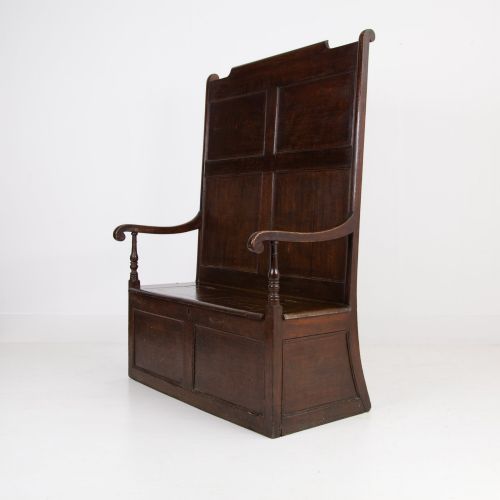
The depth of carving and the crispness of joinery separate utilitarian workshop output from more ambitious commission work. Subtle details such as the integration of winged sides, shaped armrests, and uncompromised panel thickness dictate the overall integrity of the piece.
Liberty
The High Back Oak Settle Glossary
- Box settle
- A bench featuring an enclosed storage compartment beneath the seat boards, accessed by lifting the lid.
- Wainscot
- A style of wooden panelling utilising flush frames and recessed panels, frequently seen on early backrests.
- Panel-in-frame
- A joinery method where a floating central board sits within a grooved outer framework to prevent splitting.
- Patina
- The surface sheen and mellowed colour developed by old wood through decades of handling, polishing and exposure to light.
- Wingback
- A seating design featuring extended side panels attached to the arms or back to block cold draughts.
High Back Oak Settle: Frequently Asked Questions
Where were settles traditionally placed?
These benches found their primary home beside the kitchen or hall fireplace, where the high wooden back acted as a shield against cold winter drafts sweeping across flagstone floors.
Over time, they migrated into entrance halls and dining spaces as domestic architecture evolved to include more reliable heating systems and dedicated hallways.
How do I spot a later revival piece?
Revival pieces from the Victorian era or the early twentieth century often display machine-sawn timber marks, uniform dark chemical staining, and standardised decorative carving that lacks the varied tool marks of earlier centuries.
Examining the underside and internal box compartments reveals the construction methods and nail types characteristic of later workshop production.
Can I use a box settle for storage?
The hinged seat opens to reveal a deep compartment originally utilised for blankets, firewood, or heavy household stores kept close to the hearth.
Modern owners frequently utilise this built-in cavity to store everyday items while maintaining the historical function of the furniture.
What maintenance does old oak require?
Solid oak furniture benefits from occasional applications of natural beeswax to nourish the dry timber and preserve the historic surface sheen without sealing the pores.
Keeping the wood away from direct heat sources and sudden humidity shifts prevents the panels from shrinking or cracking.