



Hexagonal Accent Table
A hexagonal accent table brings a six-sided geometric form to a corner or seating group, offering distinct surface utility and period character.
Hexagonal Accent Table
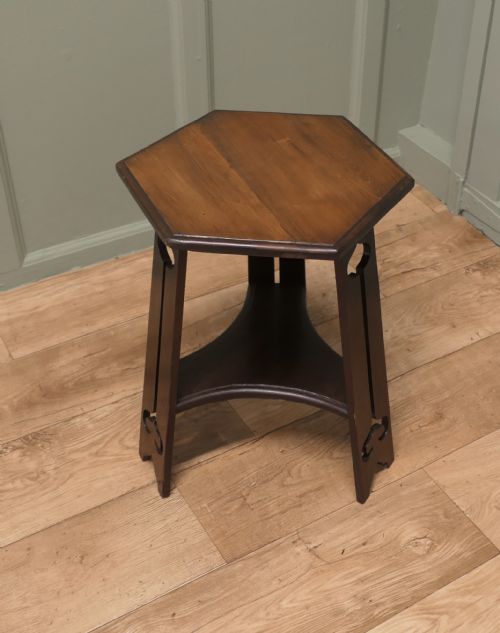
A hexagonal accent table provides a compact surface with six distinct sides, appearing in forms such as occasional tables, side tables, and plant stands. These pieces emerge across nineteenth-century and early twentieth-century periods, spanning Victorian, Arts and Crafts, and Moorish Revival styles.
The version most commonly met on this page is the occasional or side table featuring an inlaid top or turned legs. Examples range from simple oak or mahogany constructions to elaborately decorated tables featuring bone, mother-of-pearl, and metal inlay.
Makers and workshops across Britain, France, and the Near East produced these six-sided formats to suit domestic interiors requiring space-efficient display surfaces. Their distinct geometry allows them to fit readily beside seating or within smaller rooms.
Materials and construction methods
Makers constructed these tables using hardwoods such as mahogany, oak, and walnut, alongside ebonised wood and exotic specimen timbers. Joinery methods matched traditional cabinet-making standards of the Victorian and Edwardian eras, utilising turned legs and solid frames.
Surface decoration frequently involved intricate inlay techniques incorporating mother-of-pearl, bone, white-metal, and copper into walnut or hardwood bases. Brass mounts and marble tops also appear on specific French and Victorian designs.
The inventory records regional styles including Moorish Revival, Arts and Crafts, Gothic Revival, and Art Deco.
Assessing quality and execution
Quality rests in the precision of the geometric joinery and the complexity of the surface work. Tables featuring tightly fitted wood veneers and secure, flush inlay demonstrate superior craftsmanship compared to simpler production pieces.
The depth and intricacy of hand-carved elements or detailed mother-of-pearl and bone inlay elevate a piece's standing. Finer examples retain intact marquetry and stable structural frames without loose joints or missing decorative fragments.
Liberty and Co·Heal s·Muller Bros
The Hexagonal Accent Table Glossary
- Moorish Revival
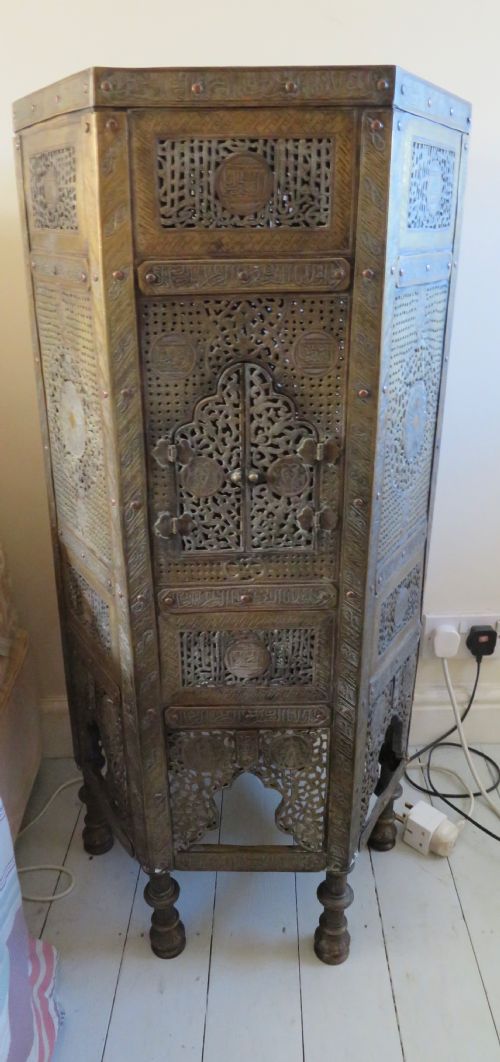
- A nineteenth-century architectural and decorative style drawing inspiration from Islamic North African and Spanish design traditions. It frequently manifests in tables with complex geometric latticework and intricate inlay.
- Cairoware
- A term for nineteenth and twentieth-century metalwork and inlaid furnishings produced in Egypt for Western markets. These objects typically combine brass bases with copper and white-metal inlay in geometric patterns.
- Marquetry
- The art of applying small pieces of veneer to a structure to form decorative patterns and pictures. Makers used contrasting timbers to create elaborate geometric motifs on tabletop surfaces.
- Specimen Woods
- Furniture surfaces composed of numerous different small pieces of native and exotic timbers. This technique highlights the natural colour and grain variations of each individual wood species.
- Occasional Table
- A small, light table designed to be moved about a room as needed for specific tasks. They serve practical functions beside seating while contributing decorative geometric form to an interior.
Hexagonal Accent Table: Frequently Asked Questions
Where should I place a hexagonal accent table?
These pieces suit corners, narrow hallways, or spaces beside armchairs where a traditional rectangular table might obstruct movement. Their six-sided geometry allows them to angle comfortably into tighter layouts.
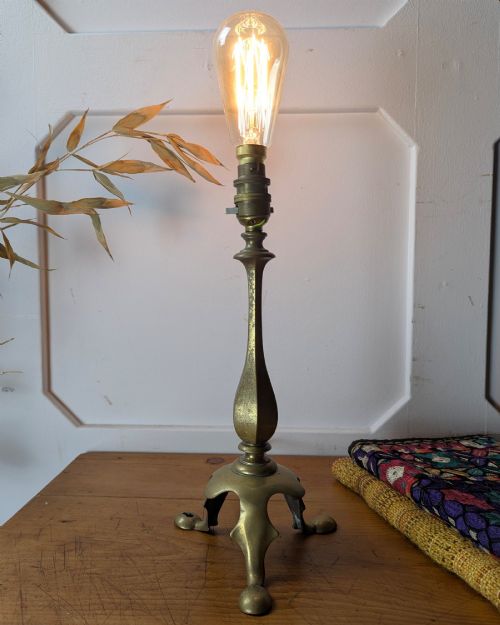
They also function effectively as plant stands or lamp tables, providing a stable surface that draws the eye through distinctive period detail rather than sheer bulk.
How do I care for inlaid wooden surfaces?
Inlaid tables require gentle treatment to protect delicate materials like mother-of-pearl, bone, and metal wire. Dust them regularly with a soft, dry cloth and avoid excessive moisture or harsh cleaning products.
Applying a suitable microcrystalline wax occasionally helps nourish the surrounding hardwood and protects the timber grain without harming the inset decorative elements.
What defines Arts and Crafts tables?
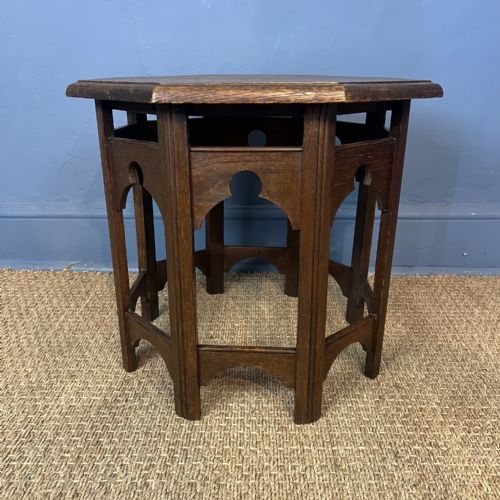
Arts and Crafts examples emphasise visible construction, honest materials, and simple functional forms. They frequently utilise oak with straightforward turned legs or openwork framing.
These pieces reject heavy factory ornamentation in favour of solid craftsmanship that highlights the natural character of the timber.
How can I identify Moorish style tables?
Moorish style tables are characterised by dense geometric patterns, intricate lattice work, and extensive use of bone or mother-of-pearl inlay. Their structures often incorporate arched details or octagonal and hexagonal formats.
Such pieces reflect nineteenth-century European enthusiasm for Islamic decorative arts, bringing ornate Near Eastern craftsmanship into domestic British interiors.