
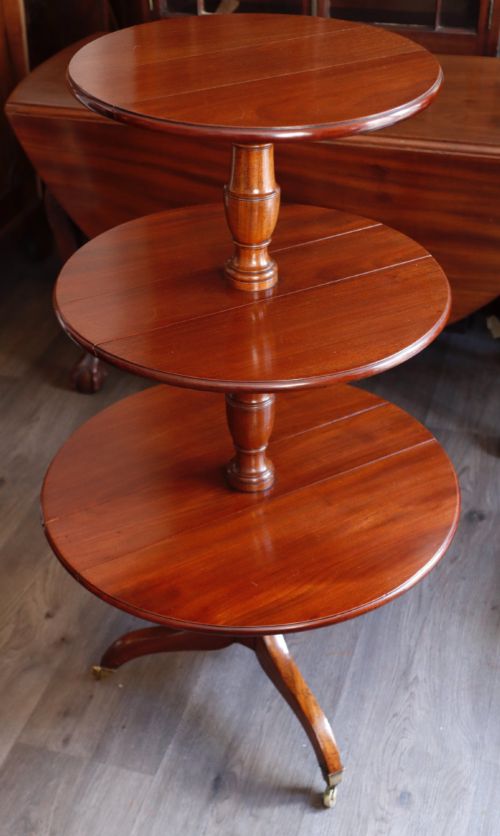


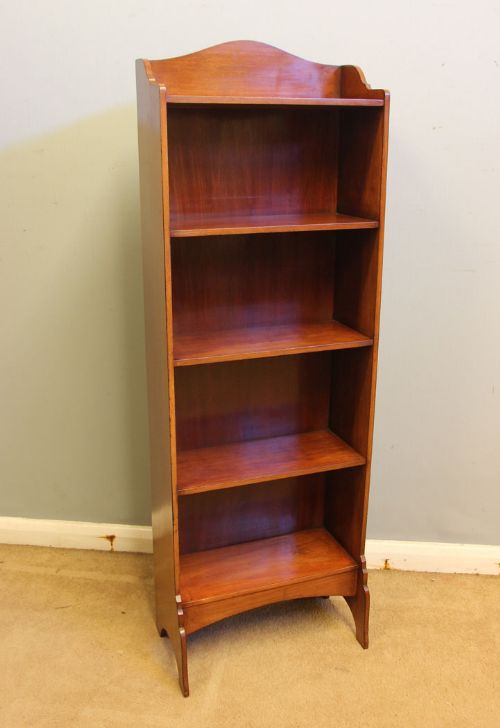


Polished Mahogany Stand
A polished mahogany stand brings warmth and clean timber grain to a room, ranging from Edwardian lamp standards to Georgian wine tables.
Polished Mahogany Stand
The selection on this page draws from multiple periods, predominantly late Victorian, Edwardian, and Georgian eras, reflecting traditional British craftsmanship. Forms vary from tripod wine tables and dumb waiters to console tables and cellarets, each serving a distinct domestic purpose.
Makers and workshops across London and the regions produced these pieces using solid mahogany and mixed hardwoods, occasionally pairing the timber with brass components. The variety spans functional hall furniture and refined parlour pieces.
How they were made
Makers utilised solid mahogany and mixed hardwoods, selecting timber for deep grain patterns and strength, sometimes incorporating satinwood for decorative contrast. Surfaces were polished to bring out the natural lustre of the wood without obscuring the grain.
Construction techniques involved traditional joinery, turning, and tripod base assembly for stability in pieces such as wine tables and lamp standards. Brass mounts and fittings were integrated securely into structural and decorative elements.
Some nineteenth-century tables were designed simply to hold a single glass of port near the fireplace.
What varies in quality
Quality in a polished mahogany stand is evident in the selection of the timber, the depth of the hand-applied polish, and the crispness of any inlay work. Superior examples show careful attention to grain alignment and stable joinery.
The sophistication of the turning on pedestals and the weight of the base separate standard production items from more substantial pieces. Proportion and balance dictate how well the stand sits within a room.
The Polished Mahogany Stand Glossary
- Mahogany
- A durable tropical hardwood known for its reddish-brown colour and fine grain. It forms the primary material for the stands on this page.
- Satinwood
- A pale, hard wood utilised for contrasting inlay work and stringing on Edwardian tables. It provides a bright visual accent against dark mahogany.
- Tripod base
- A three-legged support structure commonly found on wine tables and lamp standards to ensure stability on uneven floors. This configuration allows the stand to rest firmly on three points.
- Dumb waiter
- A tiered stand used in dining rooms for holding dishes or glasses without requiring a servant's constant presence. These multi-level pieces demonstrate practical British domestic design.
- Cellaret
- A fitted cabinet or stand designed to hold bottles securely, often lined or partitioned. They appear in Georgian collections as robust storage furniture.
Polished Mahogany Stand: Frequently Asked Questions
What is a polished mahogany stand used for?
These pieces serve practical functions in domestic spaces, acting as supports for lamps, walking sticks, or dining plates. Their versatile forms adapt easily to hallways, living rooms, and studies.
Historically, specific stands held wine bottles or displayed decorative items, combining utility with polished timber aesthetics for everyday interiors.
How do I tell an Edwardian stand from a Georgian one?
Georgian pieces generally exhibit heavier proportions, robust timber selection, and restrained carving reflecting eighteenth-century design canons. They rely on architectural lines and solid construction.
Edwardian stands often incorporate lighter framing, satinwood stringing, and delicate inlay work characteristic of the early twentieth-century revival styles. The finish and hardware typically offer clues to the manufacturing decade.
How do I care for polished mahogany?
Keep the timber away from direct heat sources and strong sunlight to prevent the polish from fading or the wood from drying out. Regular dusting with a soft, dry cloth maintains the surface sheen.
Apply a traditional beeswax polish occasionally to nourish the mahogany and preserve the depth of the polished finish.
Are these stands stable on carpets?
Tripod bases and weighted plate stands maintain good balance on firm carpets, though thick pile may require careful placement. Most pieces are engineered with sufficient weight distribution to stand securely during daily use.
Adjusting the placement ensures the legs or pedestal base rest evenly without wobbling.