

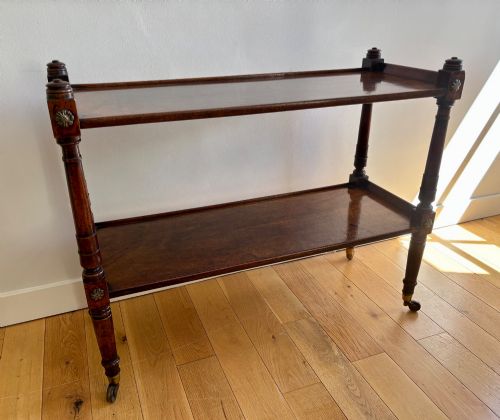
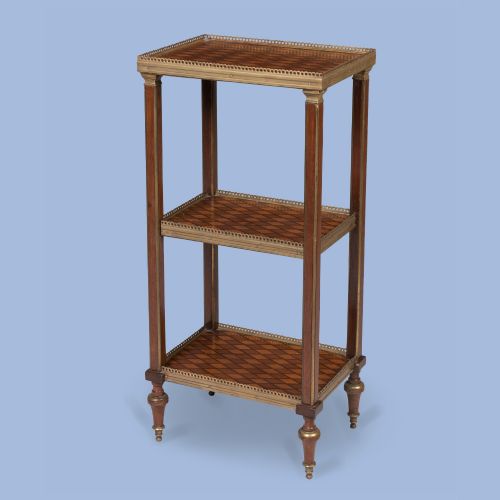

Antique Brass Etagere
An antique brass etagere brings multi-tiered display space into a room, combining metal framing with timber or glass shelves.
Antique Brass Etagere
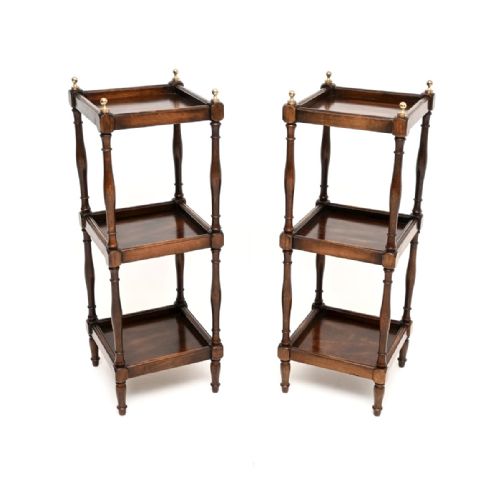
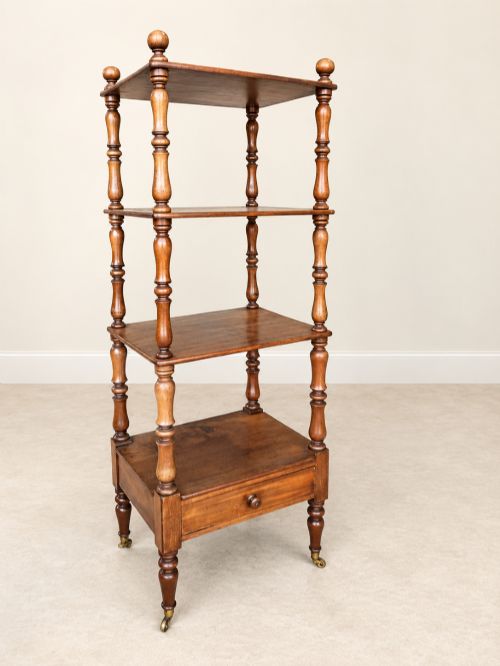
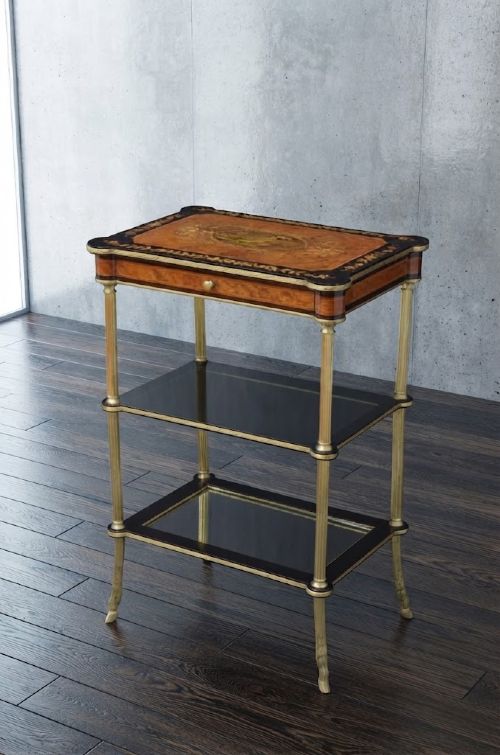
When you search for an antique brass etagere, you encounter tiered display furniture spanning the nineteenth century through the early twentieth century. The selection includes French Napoleon III and Louis XVI style pieces alongside English Regency and Edwardian examples.
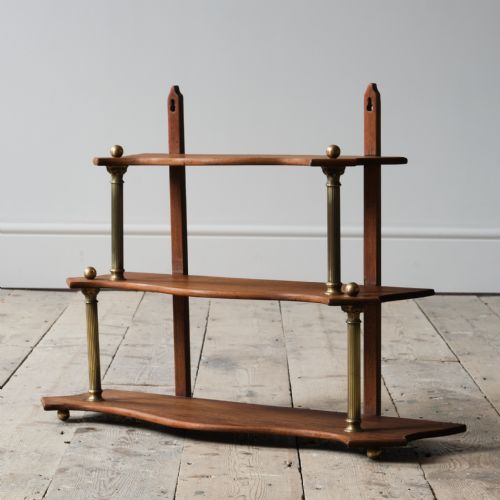
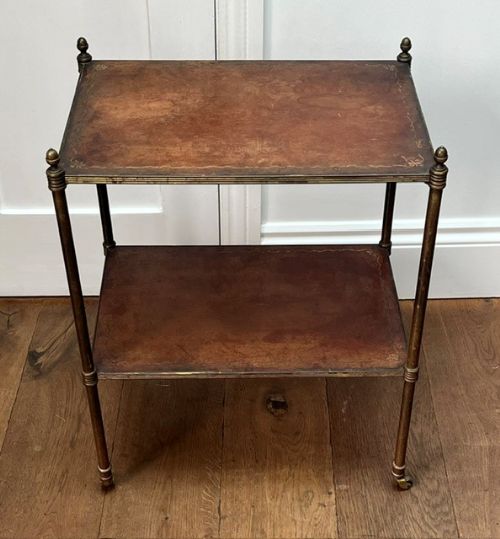
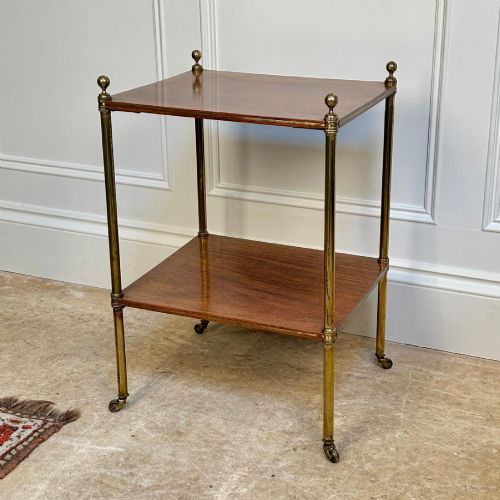
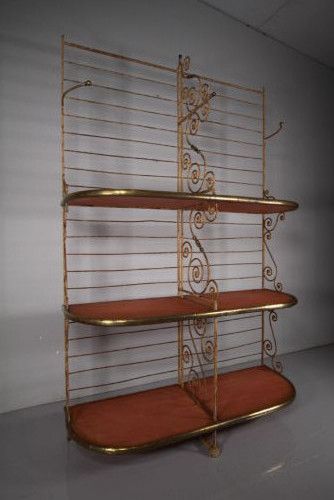
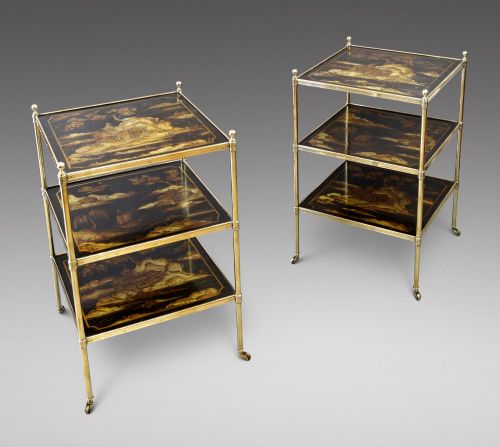
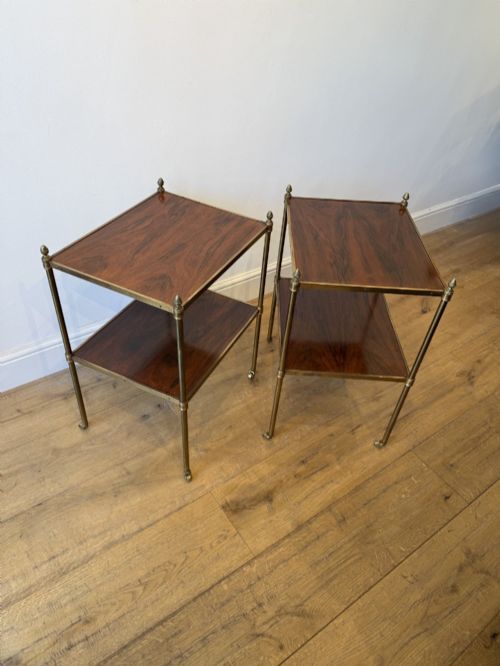
Most pieces function as multi-tier occasional tables, side tables, or wall-hanging shelves. Walnut, mahogany, and rosewood frequently form the tiers, supported or accented by brass frameworks and galleries.
Materials and construction
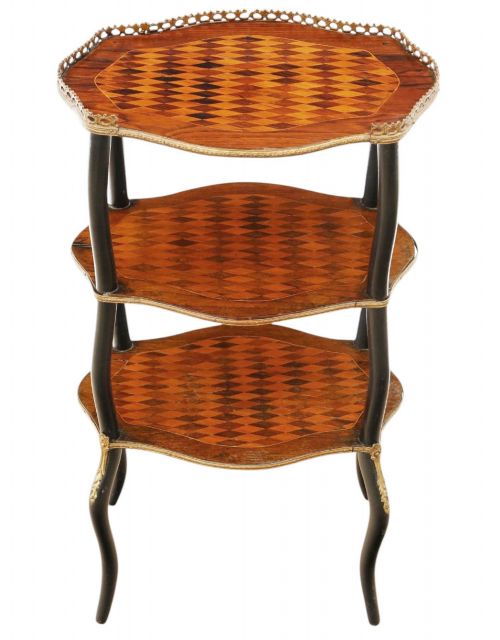
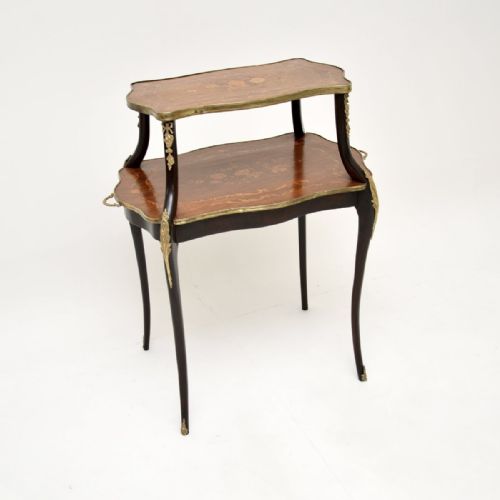
Maker's workshops combined cast or tubular brass with dense hardwoods like mahogany, rosewood, and walnut. Marquetry inlay, parquetry, and satinwood banding often decorate the timber surfaces.
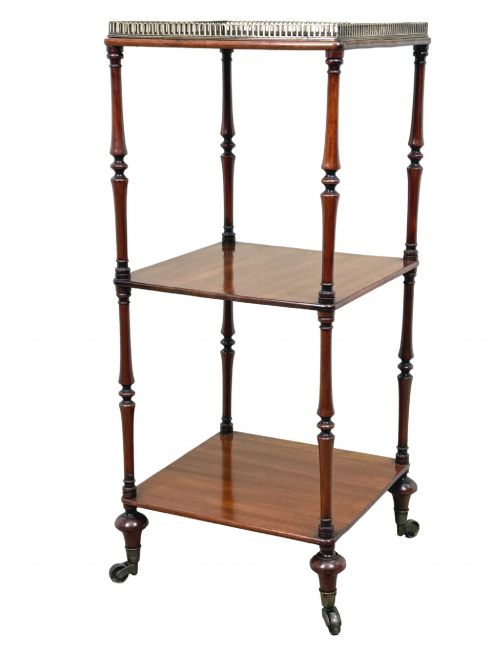
Bronze ormolu mounts and pierced brass galleries secure the edges of upper tiers. Glass inserts and tooled leather surfaces appear on specific occasional table variants.
Listings feature brass combined with mahogany, walnut, rosewood, and ebonised wood across Victorian, Edwardian, and Regency periods.
Quality differences
The distinction between standard production and top-tier execution lies in the crispness of the brass casting and the precision of the timber inlay. Finer pieces display hand-chiselled ormolu mounts and substantial gauge brass framing rather than thin pressed metal.
Construction methods also separate the grades, visible in the tight joinery of multi-tier uprights and the quality of figuring in walnut or rosewood veneers.
Mallett of London·W. Turner Lord & Co
The Antique Brass Etagere Glossary
- Etagere
- A piece of furniture consisting of a set of open shelves for displaying small objects. These tiers are supported by slender columns or metal framing.
- Ormolu
- Gilded bronze applications used as decorative mounts on furniture. This technique gained prominence in French nineteenth-century cabinetmaking.
- Galleried
- A raised edge or miniature railing around the perimeter of a shelf. It prevents items from sliding off upper tiers.
- Marquetry
- Decorative woodwork where pieces of veneer are fitted into a ground material to form geometric or floral patterns. It appears frequently on French and English table tops.
- Whatnot
- A nineteenth-century multi-shelved piece of furniture used for storage and display. It serves a similar function to an etagere.
Antique Brass Etagere: Frequently Asked Questions
What is an etagere used for?
These pieces provide open shelving across multiple tiers to display decorative objects, books, or tea services. They sit in drawing rooms, hallways, or beside seating.
The tiered design maximises vertical display space without heavy footprint demands on the floor plan.
How do I clean brass and wood?
Dust timber surfaces regularly with a soft dry cloth and feed the wood occasionally with appropriate polish or wax. Avoid harsh chemical cleaners on both wood and metal.
Polish brass components gently using a non-abrasive cloth to maintain the metal finish without stripping patination.
Are these pieces sturdy?
Multi-tier shelving units and tables are designed for displaying ornaments, ceramics, or drinks rather than heavy storage. Their stability depends on sound joinery and balanced weight distribution.
Lighter models, such as wall-hanging shelves or small occasional tables, require secure wall fixings or even placement on level floors.
How do I date an etagere?
Dating relies on stylistic clues such as French Napoleon III mounts, Regency mahogany turning, or Edwardian satinwood banding. Construction techniques also indicate the era of manufacture.
Examining fixing screws, timber shrinkage, and secondary woods helps confirm whether a piece belongs to the nineteenth or early twentieth century.