




Tooled Leather Table
A tooled leather table brings rich texture and practical writing surfaces to a room, spanning forms from pedestal desks to compact occasional pieces.
Tooled Leather Table
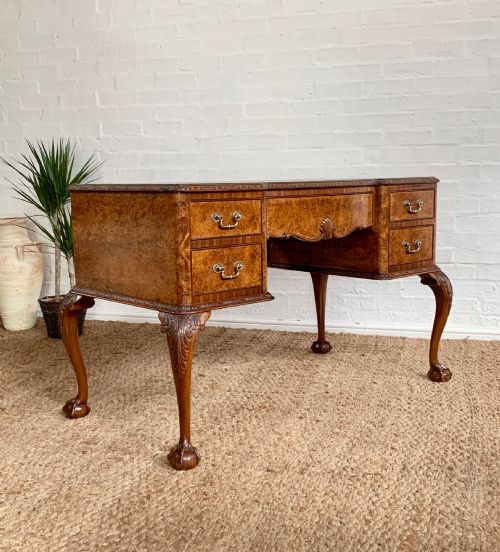
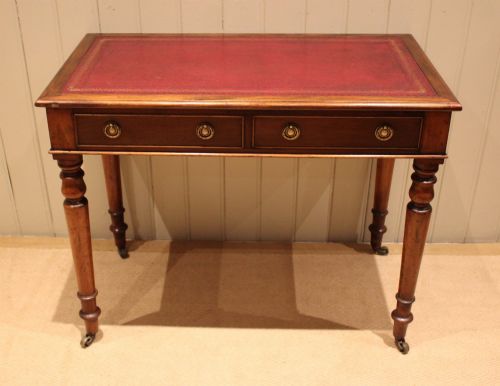
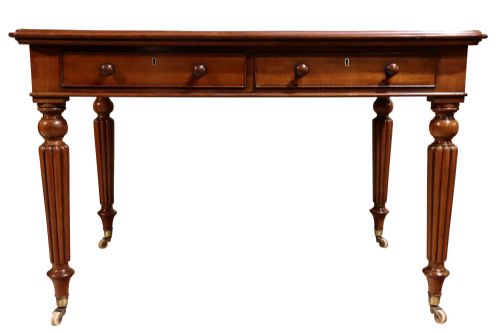
A tooled leather table encompasses writing desks, occasional tables, library pieces, and games boards designed for domestic and study use. When exploring a tooled leather table, expect to find forms ranging from 19th-century mahogany writing tables to Victorian walnut pedestal desks.
The selection includes specific regional and period interpretations, such as Edwardian oak kneehole desks and Arts and Crafts tables featuring quatrefoil leather surfaces. These pieces serve primarily as functional desks or display surfaces rather than purely decorative items.
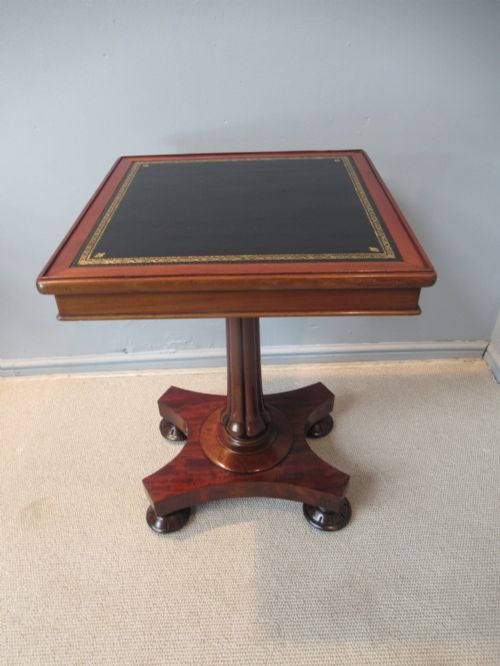
Makers and designers from various eras utilised inset leather surfaces framed in timber, brass, or lacquer to create durable writing areas. The format adapts across styles from William IV and Regency to mid-century neoclassical interpretations.
How They Were Made
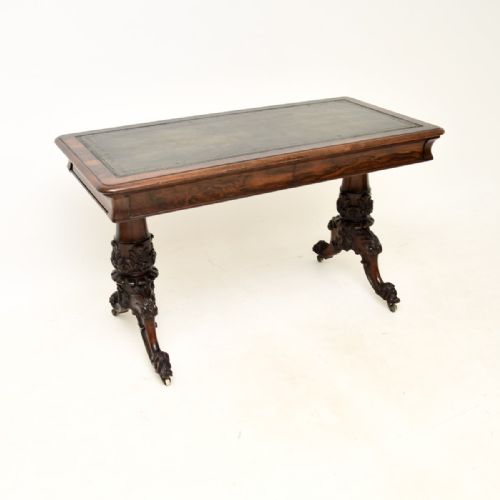
Cabinetmakers constructed these tables using dense timbers such as mahogany, walnut, rosewood, and oak, often incorporating burr veneers for decorative grain patterns. Brass, gilt ormolu, and lacquered elements appeared frequently as structural mounts and framing details.
The inset writing surfaces utilise leather treated with blind or gold leaf tooling to create decorative borders and royal commemorative motifs. Skilled artisans bound the leather directly into timber insets or onto revolving surfaces.
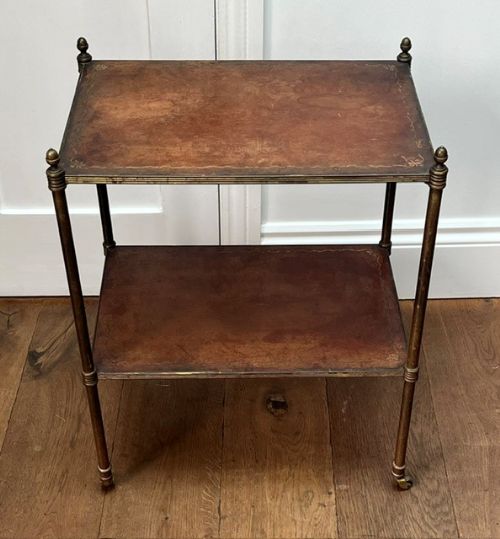
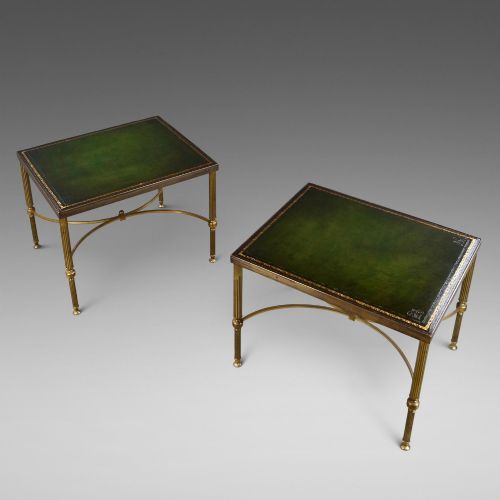
Joinery techniques ranged from traditional pedestal desk construction with multiple drawers to X-frame supports and brass etagere tiers. Ebonised finishes and inlaid details further distinguished the fabrication of finer library and writing tables.
Listings feature mahogany, walnut, rosewood, and oak across Victorian, Edwardian, and Regency periods.
What Varies in Quality
The depth and crispness of the gold leaf or blind tooling on the leather inset distinguish standard production from exceptional examples. Original leather retaining its distinct colour and texture holds greater distinction than later replacements.
Timber selection and secondary framing dictate the overall calibre of the construction, with solid rosewood, figured walnut, and heavy mahogany exhibiting superior structural integrity. Fine cast brass mounts, ormolu sabots, and retained cabinetmaker stamps elevate specific pieces above typical workshop output.
Maple and Co·Mallett of London
The Tooled Leather Table Glossary
- Tooled leather
- Leather decorated with impressed patterns using heated metal tools and often finished with gold leaf. This technique provides both grip and decoration on writing surfaces.
- Pedestal desk
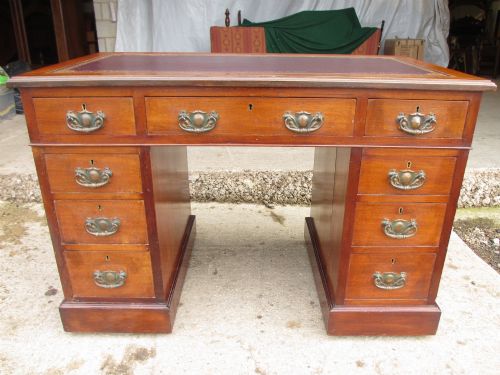
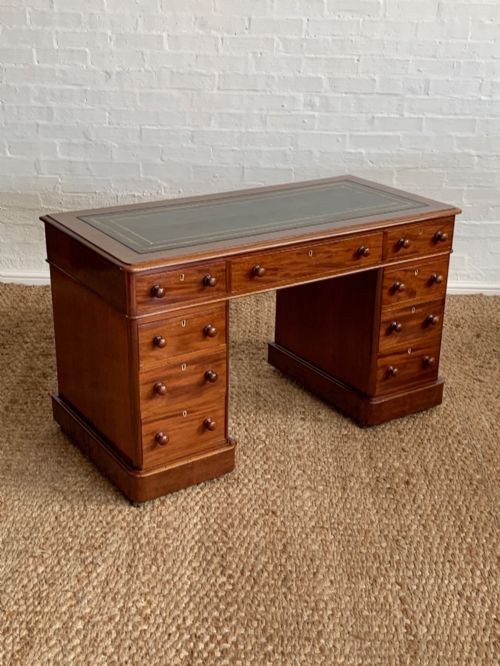
- A large freestanding desk featuring two banks of drawers supporting the upper writing surface. These units frequently incorporate extensive tooled leather inserts.
- Etagere
- A set of open shelves or tiers used for display, occasionally constructed from lacquered brass and timber. They bring a lighter profile to the table category.
- Kneehole desk
- A compact desk configuration with a central recess for the user's legs, flanked by pedestals of drawers. They accommodate smaller studies and libraries.
- Ormolu
- Gilded bronze mounts applied to furniture edges, legs, and drawers. This French technique adds metallic contrast to dark timber frames.
Tooled Leather Table: Frequently Asked Questions
What periods are common for these tables?
The listings span the nineteenth century through the early twentieth century, encompassing Victorian, Edwardian, William IV, and Regency eras.
Earlier examples from the 1850s and 1880s sit alongside later 1930s interpretations and Arts and Crafts designs.
How do I identify the wood type?
Cabinetmakers primarily relied on hardwoods such as mahogany, walnut, rosewood, and oak for structural frames and surfaces.
Burr walnut and kingwood veneers appear on finer pieces, while ebonised finishes and brass mounts provide additional contrast.
Were these tables used only for writing?
While many function as pedestal desks or writing tables with inset leather, the category also includes occasional tables, lamp tables, and coffee tables.
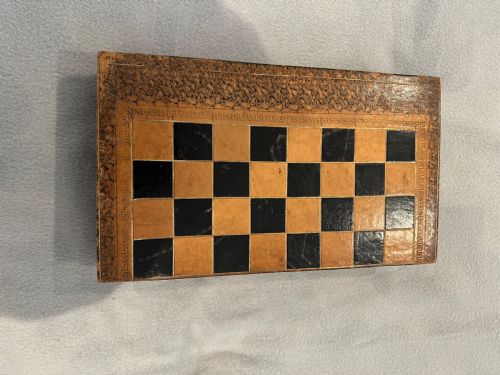
Some specialised pieces double as games boards, book-tables, or vanity cases depending on their internal configuration.
Is the leather surface original?
Many pieces retain their original tooled Moroccan or calfskin leather tops featuring blind or gold leaf stamping.
Over decades of use, some surfaces show historical patination or have received replacement leather matching traditional methods.