

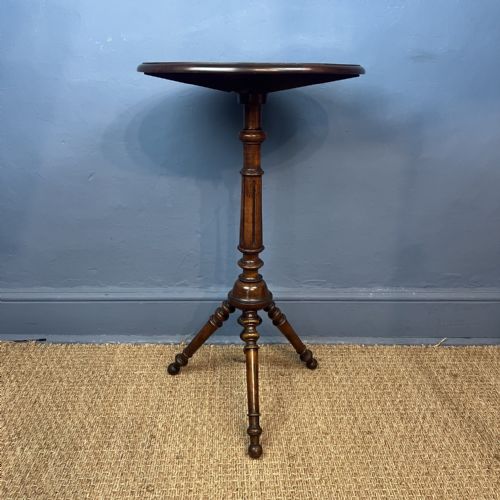
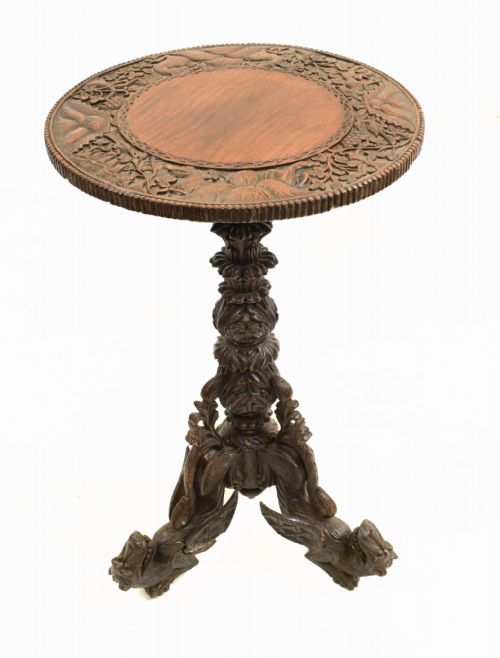


Late Victorian Tripod Table
A late victorian tripod table brings compact utility and varied regional carving to a corner or parlour.
Late Victorian Tripod Table
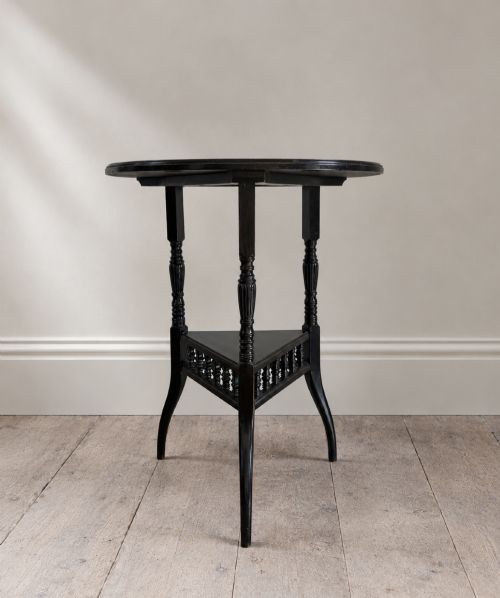
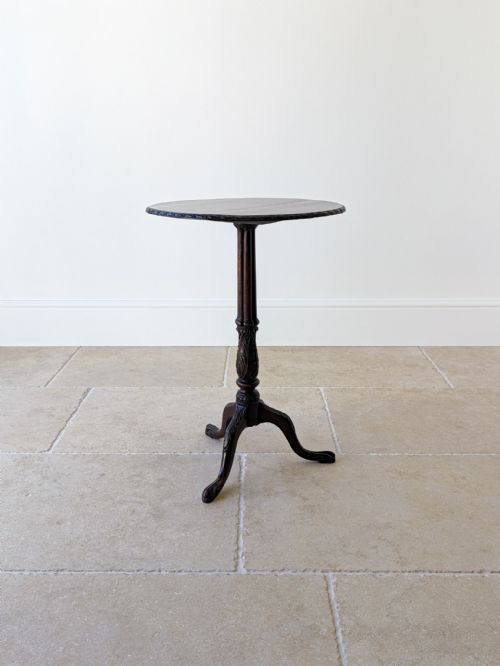
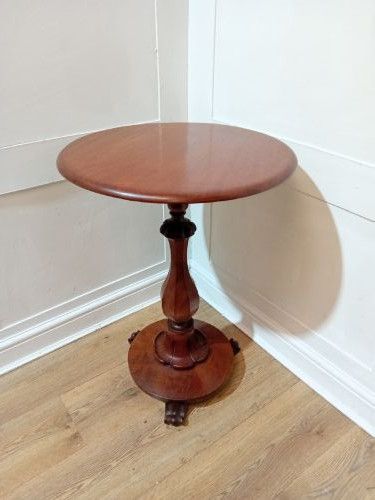
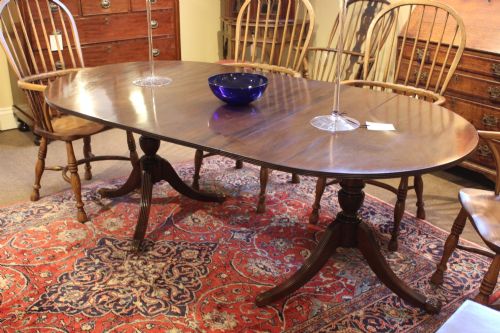
A late victorian tripod table is a compact support typically resting on three legs, designed for wine, books, or plants in nineteenth-century interiors. These pieces appear in forms such as wine tables, side tables, and occasional tables, often dating around eighteen ninety.
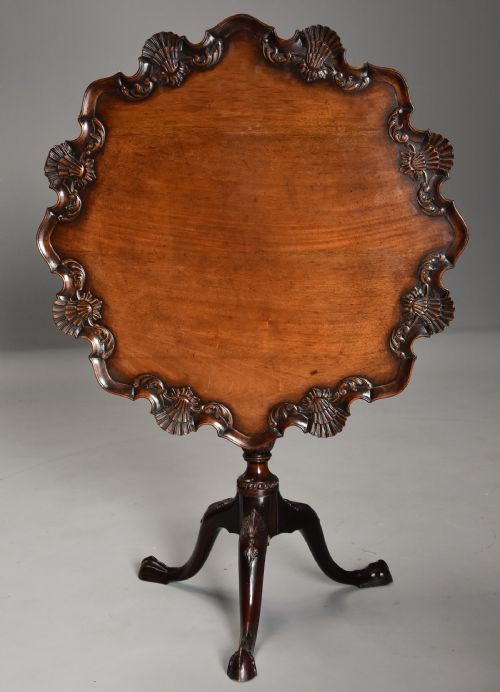
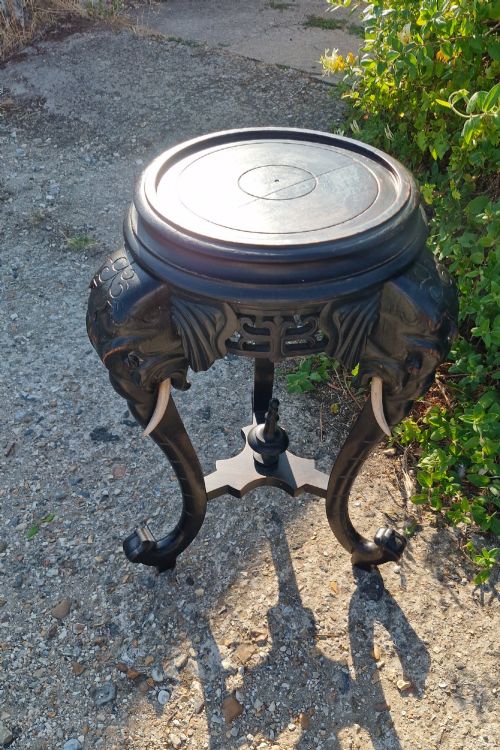
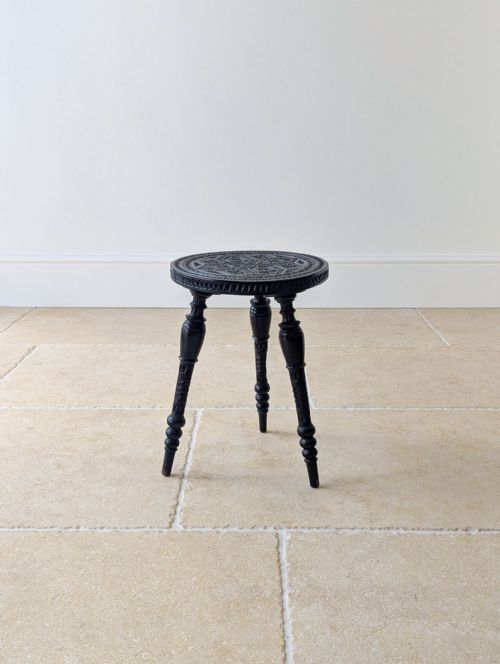
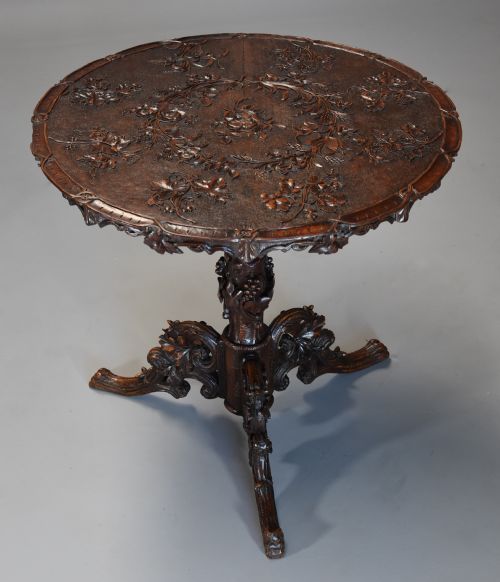
The most common versions on this page are mahogany wine and side tables, alongside heavily carved regional specimens like Burmese and Black Forest pieces. Makers utilised walnut, ebonised hardwood, oak, and rosewood to suit diverse revival styles including Chippendale, Queen Anne, and Aesthetic Movement.
How they were made
Makers constructed these tables using timbers such as mahogany, walnut, oak, and linden wood, frequently employing turning, joinery, and tilt-top mechanisms. Surfaces often received elaborate chip-carving, detailed paintwork, or hand-painted decoration.
Some examples incorporate specialist materials like brass hardware, inset marble tops, or painted wooden tusks to enhance the decorative scheme. Ebonised finishes and black lacquer provided alternative surface treatments distinct from polished grain.
Listings feature mahogany, walnut, oak, and linden wood across nineteenth-century styles such as Aesthetic Movement, Chippendale Revival, and Black Forest.
What varies in quality
The standard of carving sets apart exceptional tables from simpler production pieces, particularly on Black Forest and Burmese examples where depth and naturalism define the work. Profuse, crisp detailing on linden wood or hardwood indicates a more skilled hand.
Structural stability and timber selection also divide the range, with well-figured mahogany, walnut, or burr walnut offering superior visual presence. The integrity of tilt mechanisms and detachable tops further distinguishes better-made items.
The Late Victorian Tripod Table Glossary
- Tripod table
- A small stand supported by three legs radiating from a central pillar. This form allowed the table to sit steadily on uneven nineteenth-century floors.
- Tilt-top
- A table top hinged to tip vertically when not in use. This mechanism saved floor space in crowded Victorian parlours.
- Black Forest
- A style of carving originating in Switzerland, known for naturalistic animal and foliage motifs in linden wood. Tables in this manner often feature bears or intricate leaf bases.
- Gypsy table
- A lightweight, three-legged occasional table often associated with the Aesthetic Movement. These tables frequently featured draped fabric or painted wooden surfaces.
- Bobbin turned
- Furniture legs or supports shaped on a lathe into a series of rounded spheres resembling bobbins. This technique was popular during revival periods.
Late Victorian Tripod Table: Frequently Asked Questions
What is a tripod table used for?
These tables served primarily as convenient surfaces for holding wine glasses, reading materials, or small decorative items near seating.
In period homes, smaller versions could be moved easily around a room or tipped up against a wall when floor space was needed.
How do I identify a late Victorian piece?
Look for construction traits, timber choices, and stylistic revivals characteristic of the late nineteenth century, such as ebonised finishes or Aesthetic Movement decoration.
Dates around eighteen eighty to nineteen hundred often correspond with revival styles like Chippendale and Queen Anne.
Are tilt-top mechanisms original?
Many wine and occasional tables feature original pivoting catches and rule joints designed to let the top fold flat.
Examining the underside reveals the block and hinge assembly used by nineteenth-century joiners.
How do I care for a wood table?
Keep wooden surfaces away from direct heat sources and strong sunlight to prevent the timber and polish from drying out.
Dust gently with a dry cloth and avoid harsh chemical cleaners that might damage hand-painted or ebonised finishes.