
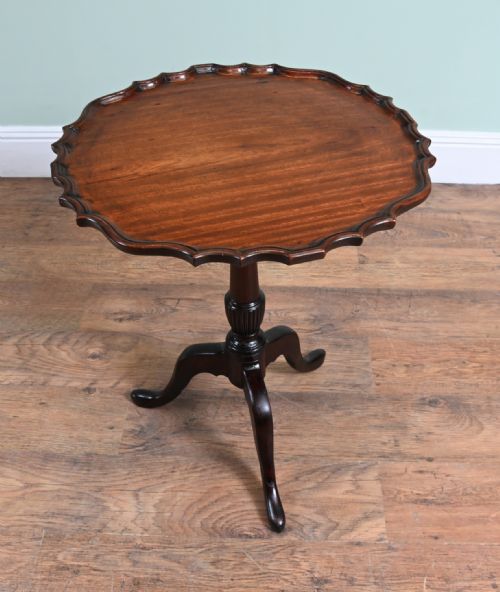
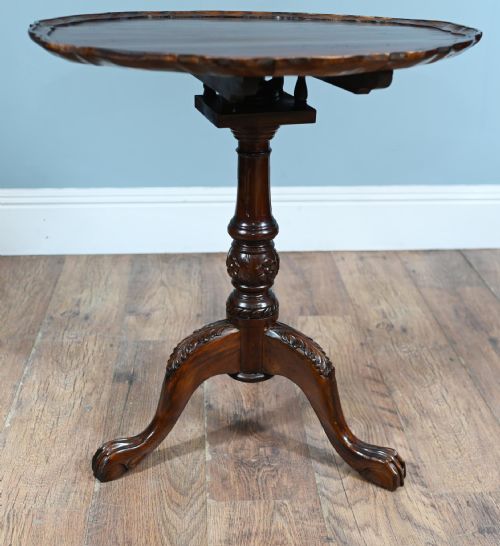


Chippendale Revival Side Table
A chippendale revival side table brings eighteenth-century elegance into a modern room through rich mahogany and meticulous carving.
Chippendale Revival Side Table
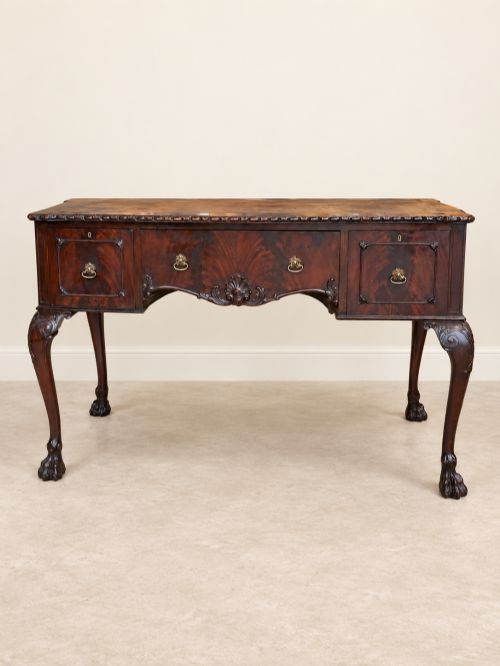
A chippendale revival side table translates the flowing lines and confident carving of the Georgian era into pieces made during the Victorian, Edwardian, and early twentieth-century periods. These items range from compact occasional and wine tables to expansive writing desks and console tables.
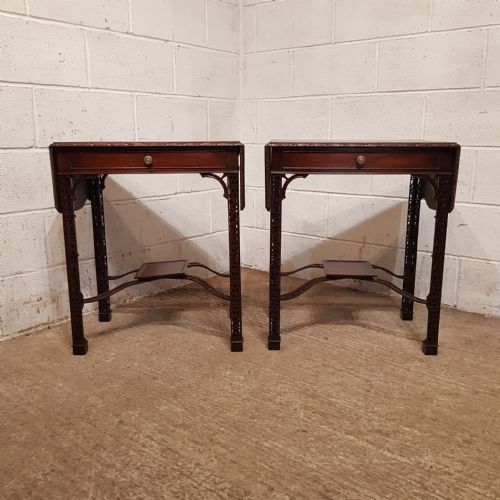
Makers adapted classic forms for varied domestic uses, producing silver tables, drum tables, and two-tier stands alongside standard side tables. Oak and padauk occasionally appear alongside the predominant mahogany, widening the stylistic range within the revival genre.
Materials and Construction
Makers relied primarily on solid and veneered mahogany, shaping the timber to form serpentine fronts, drop leaves, and tripod bases. Brass hardware and leather inserts frequently supplemented the timber framework on writing tables and partners desks.
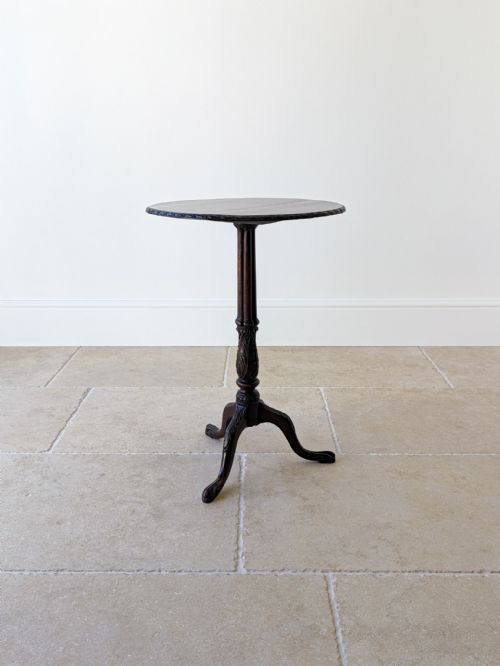
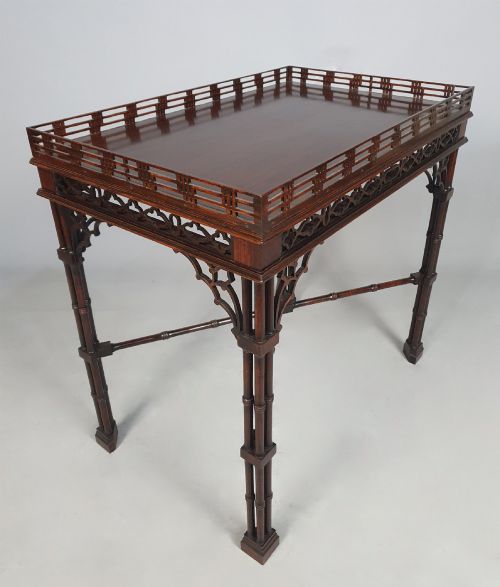
Craftsmen applied detailed carving by hand to legs and edges, creating pie crust borders and intricate pierced galleries on tray-top and silver tables. Joinery followed traditional cabinet-making practices to ensure structural stability in multi-tiered and tilt-top designs.
Chippendale Revival Side Table Retail Price Guide 2026
Typical asking prices for chippendale revival side table among the pieces listed under this phrase on Sellingantiques today, from the lower quarter to the upper quarter. They describe what is for sale here now, not the wider market.
Listings demonstrate that mahogany is the dominant material across these nineteenth and early twentieth-century tables.
Distinctions in Quality
The depth and crispness of the timber carving separate standard production items from superior examples, particularly on moulded legs and shaped edges. Figured mahogany grain and careful timber selection indicate a higher grade of manufacture.
Structural complexity influences quality, with sophisticated mechanisms on tilt-top tables, drum tables, and partner desks reflecting superior workshop standards. The integration of secondary materials like brass or leather displays the maker's attention to finish.
Waring
The Chippendale Revival Side Table Glossary
- Pie crust
- A raised, scalloped edge carved into the perimeter of a circular table top. This decorative moulding resembles pastry work and appears frequently on wine tables.
- Silver table
- A display table with a raised gallery edge designed to hold silver tea services. These pieces often feature intricate fretwork and slender cabriole legs.
- Tip top
- A table top hinged to tilt vertically when not in use. This mechanism allowed tables to be stored flat against a wall.
- Partners desk
- A large double-sided desk built with drawers and cupboards accessible from both directions. These substantial pieces often share stylistic traits with revival side tables.
- Tripod base
- A central pillar supported by three spreading legs. This configuration provides stable footing for smaller occasional and wine tables.
Chippendale Revival Side Table: Frequently Asked Questions
What is a chippendale revival side table?
It is a piece of furniture manufactured during the Victorian or Edwardian eras that copies the aesthetic of eighteenth-century designer Thomas Chippendale. These tables utilise traditional timber forms and decorative carving.
They serve as functional surfaces in reception rooms, hallways, and libraries while displaying historical revival design motifs.
How were these tables used originally?
Owners utilised them for writing, serving tea, holding lamps, or displaying decorative objects in domestic interiors. Different top configurations suited specific household tasks.
Tilt-top variants allowed for compact storage against walls when floor space was required for other activities.
How do I date a revival side table?
Dating relies on identifying construction traits, timber characteristics, and stylistic markers associated with late nineteenth and early twentieth-century production. Periods such as the Edwardian era and the 1920s show distinct manufacturing methods.
Cabinet-makers of these decades reinterpreted earlier Georgian aesthetics using contemporary workshop tools and local timber supplies.
What woods were used for these tables?
Mahogany is the primary material recorded across the majority of surviving examples, often selected for its rich grain and suitability for carving. Burr walnut and oak also appear in specific pieces.
Secondary materials such as brass fittings and leather writing surfaces frequently complement the timber structures.