



Heavy Crystal Drinking Glasses
Heavy crystal drinking glasses bring weight to the hand, spanning Georgian rummers and Victorian tumblers shaped for spirits and wine.
Heavy Crystal Drinking Glasses
Heavy crystal drinking glasses encompass robust forms designed for spirits, wine, and drams, drawing on English traditions across the Georgian and Victorian eras. When buyers search for heavy crystal drinking glasses, they encounter pieces ranging from early 18th-century baluster stems to mid-19th-century rummers and whiskey tumblers.
Originating predominantly from English workshops, these pieces demonstrate the evolution of drinking vessels from baluster goblets to robust 19th-century table glass. Buyers will regularly find pairs and sets alongside individual collector pieces spanning the Georgian, Regency, and Victorian periods.
How they were made
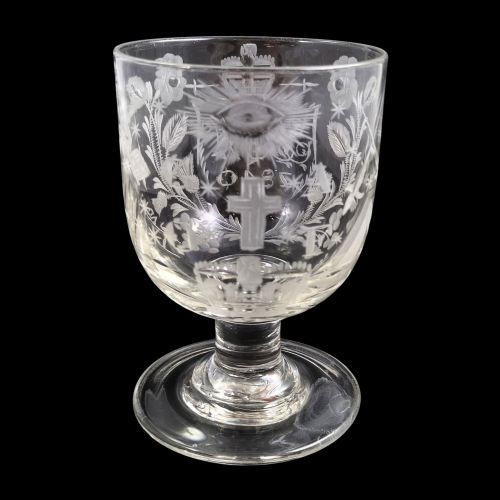
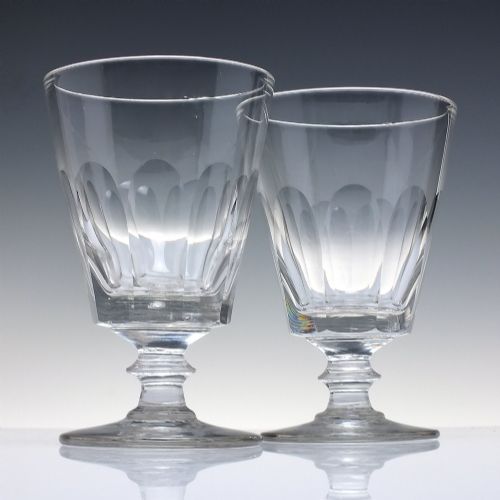
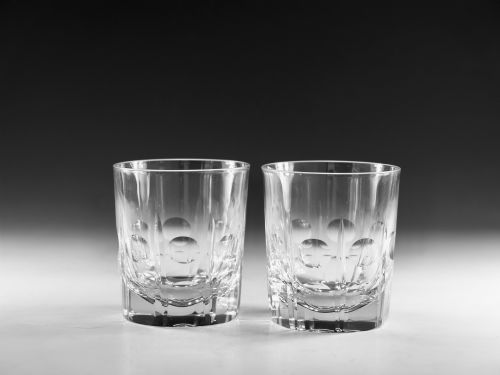
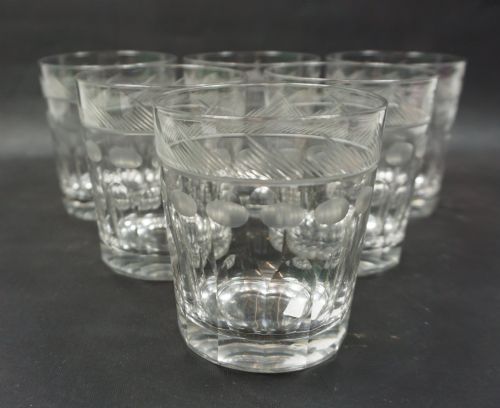
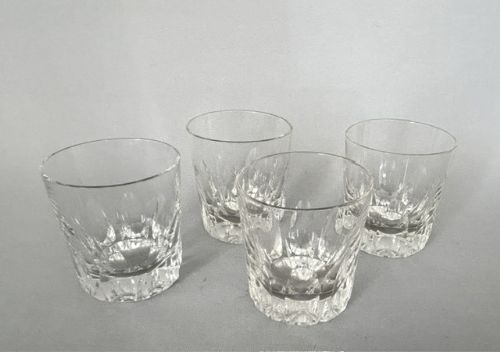
Decoration relied on skilled wheel engraving, seen in floral motifs and Masonic symbols on rummers, combined with heavy moulding for structural bases like the lemon squeezer foot. Cutting and polishing created the faceted surfaces characteristic of Victorian tumblers and heavy wine glasses.
What varies in quality
Quality rests upon the clarity of the metal and the depth of the lead content, which together dictate the ring and brilliance of the glass. Superior pieces display crystal of exceptional transparency without cloudiness or heavy impurities from the furnace.
Execution of form and decoration sets individual examples apart, from the precise draw of a baluster stem to the crispness of wheel engraving. Proportion, balance in the hand, and the stability of thick bases distinguish finer table glass from standard production.
The Heavy Crystal Drinking Glasses Glossary
- Rummer
- A large, heavy drinking glass popular in the 18th and 19th centuries, typically used for ale, beer, or wine. These vessels usually feature a short stem and a capacious bowl.
- Baluster stem
- A heavy, swelling stem shape found on drinking glasses of the late 17th and 18th centuries. The contour echoes the architecture of stone or wood balusters.
- Multiple spiral air twist
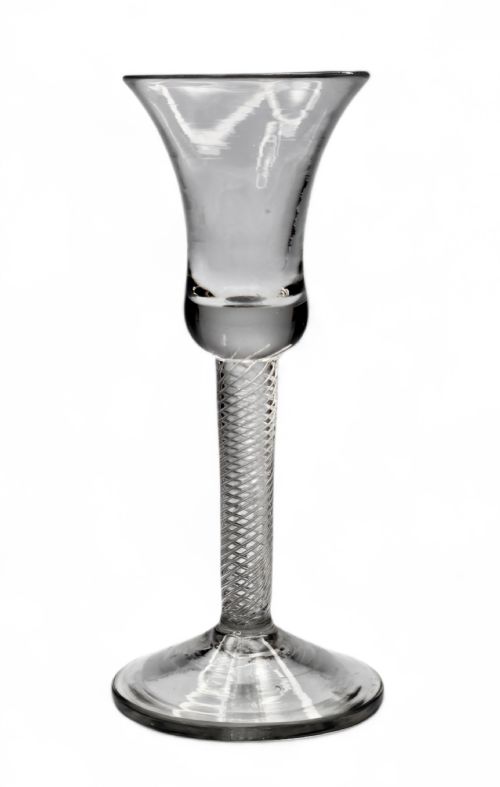
- A decorative optical effect inside a glass stem created by drawing out tiny air bubbles during manufacture. It produces a shimmering network of threads within the metal.
- Lemon squeezer base
- A square, moulded glass foot with bevelled corners resembling a citrus juicer. This heavy base provides stability for tall rummers and Masonic glasses.
Heavy Crystal Drinking Glasses: Frequently Asked Questions
What is a rummer glass used for?
Rummers served as versatile vessels for hearty drinks like ale, cider, and punch during the Georgian and Victorian periods. Their generous bowls and sturdy builds suited them for everyday tavern and domestic use.
Over time, they evolved into display pieces and heavier tableware, often passed down through generations.
How do I date a heavy crystal glass?
Dating relies on identifying form, stem construction, and foot style, such as comparing early 18th-century balusters with mid-19th-century moulded bases. Tool marks, pontil scars on the bottom, and the composition of the glass provide further clues.
Engraving styles and specific decorative motifs also align with particular decades of English manufacture.
Are these glasses safe to use today?
Many collectors use their antique glasses for special occasions, though lead crystal requires careful handling and hand washing. Sudden temperature changes can crack old metal, so hot liquids should be avoided.
Gentle washing preserves the surface polish and prevents any clouding of the historic glass.
What makes lead glass different from normal glass?
Lead glass incorporates lead oxide into the batch, which increases density, weight, and refractive index. This addition allows the material to catch the light more brilliantly and gives it a resonant ring when struck.
It also remains softer for longer during shaping, enabling artisans to cut deeper facets.