


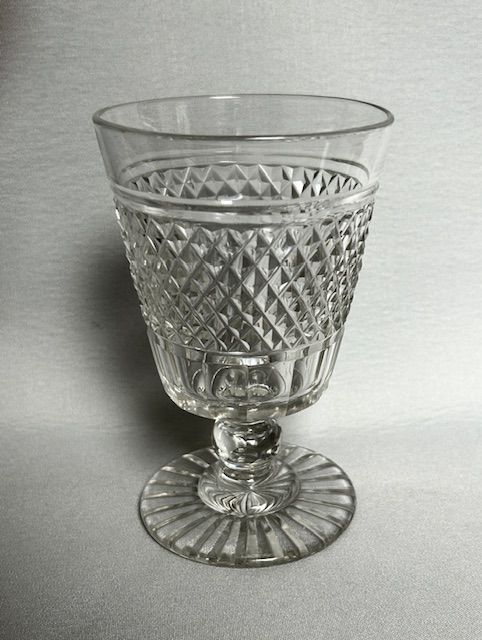


Clear Crystal Rummers
Clear crystal rummers are generous drinking vessels that brought hefty weight and bright clarity to nineteenth-century tables.
Clear Crystal Rummers
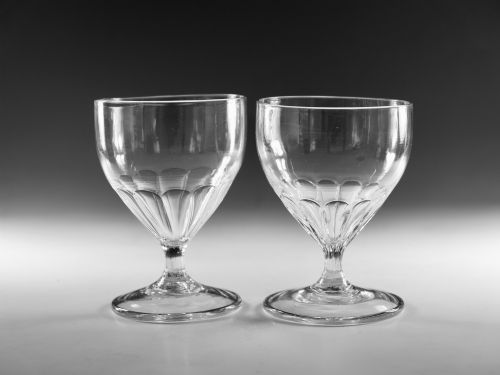
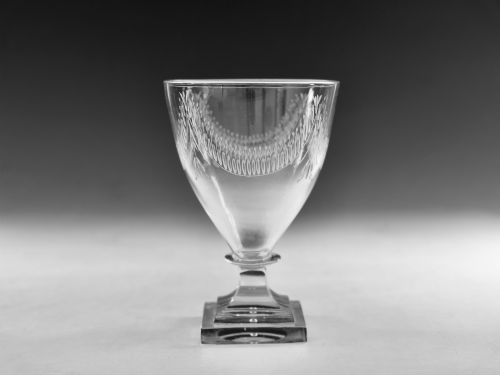
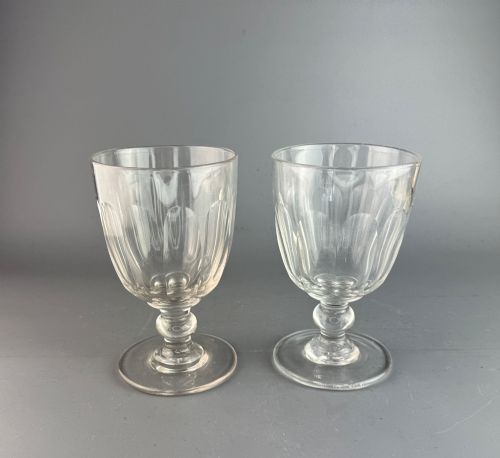
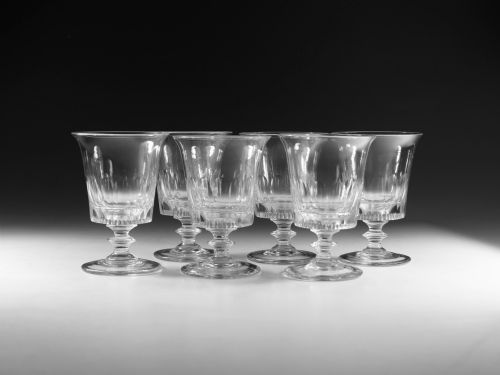
When you search for clear crystal rummers, you are looking at substantial drinking glasses designed for ale, wine, and spirits across the Georgian, Regency, and Victorian periods. The versions you are most likely to meet on this page feature large bowls resting on stems, often with square lemon squeezer bases or heavy round feet.
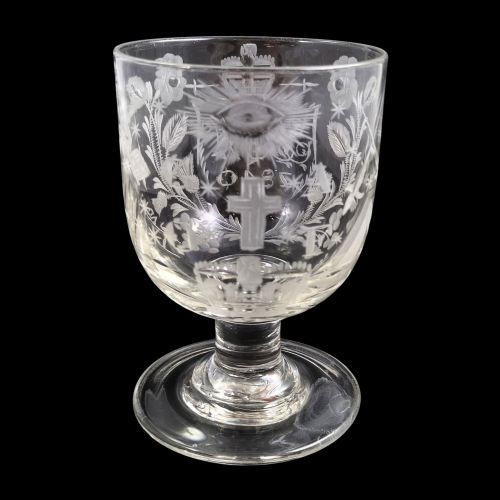
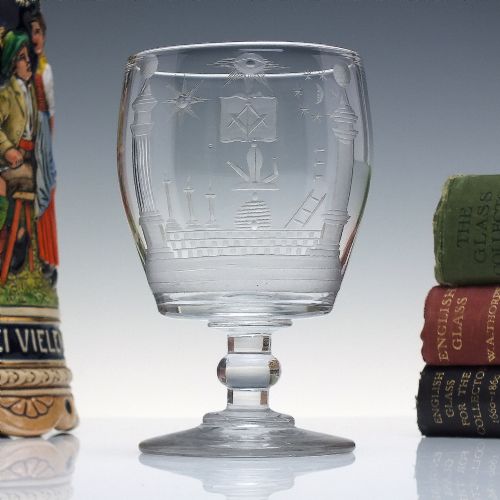
These English drinking glasses range from simple ovoid bowls to heavily cut and engraved examples bearing hops, barley, or armorial motifs. Surviving pieces span from the late eighteenth century through to the Edwardian era, showing a steady evolution in weight and decorative techniques.
Materials and construction
These pieces rely on lead crystal, flint glass, and clear glass shaped through hand-blowing techniques. The inclusion of lead oxide gave the metal a heavier feel and a brilliant refractive quality that caught candle and gas light.
Hot glass was gathered, blown into shape, and then finished with wheel-cutting, engraving, or etching. Bases were frequently moulded separately, particularly in the case of square lemon squeezer feet attached to the stem.
Certain rummers proudly display detailed engravings of Sunderland Bridge or sailing ships.
Assessing quality and finish
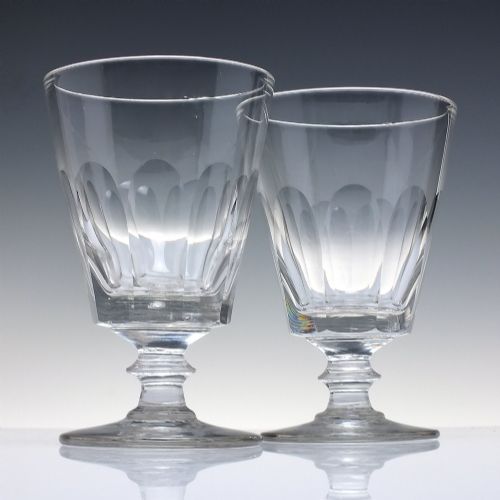
Quality rests in the crispness of the cutting and the depth of the hand-engraving, where sharp facets and clear motifs distinguish finer pieces from simpler wares. The clarity of the metal itself, free from excessive cloudiness or heavy inclusions, marks out superior craftsmanship.
Proportion and weight also dictate the standing of a rummer, with balanced heavy lead crystal vessels commanding greater presence on the table. The precision with which a square foot is moulded or a stem is drawn shapes the overall character of the glass.
The Clear Crystal Rummers Glossary
- Rummer
- A large, heavy drinking glass used primarily for ale, wine, or punch during the Georgian and Victorian eras. These vessels typically feature a wide bowl and a sturdy stem.
- Lemon squeezer base
- A square, pressed glass foot with sloping panelled sides resembling the citrus juicing tool of the period. This form is frequently seen on Georgian and Regency rummers.
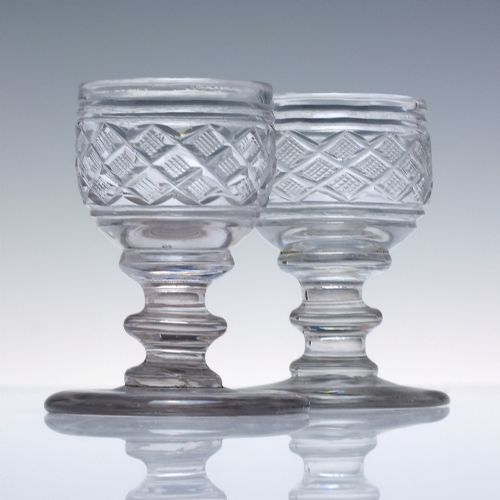
- Hobnail cut
- A raised geometric pattern of small square facets covering the body of the glass. This deep cutting creates intense sparkle under light.
- Baluster stem
- A thick, turned stem featuring knops or swells reminiscent of architectural balusters. It provides physical stability to heavier drinking vessels.
- Ovoid bowl
- An egg-shaped bowl profile common on eighteenth and nineteenth-century goblets and rummers. This shape concentrates aromas before drinking.
Clear Crystal Rummers: Frequently Asked Questions
What were clear crystal rummers used for?
These large vessels served hearty portions of ale, beer, wine, and cider in homes and taverns.
Their generous capacity made them practical for daily dining rather than formal toast drinking.
How do I date a glass rummer?
Dating relies on combining bowl shapes, stem types, and foot designs with decorative techniques.
Georgian examples often feature square lemon squeezer bases, while Victorian pieces lean towards heavy round feet and etched pan bowls.
Can I use antique rummers daily?
These lead crystal glasses are robust enough for occasional use if handled with proper care.
Hand washing in lukewarm water protects the soft lead metal and historic surface engraving.
Why do some rummers have square bases?
Square bases were pressed in moulds during the late eighteenth and early nineteenth centuries to give heavy glasses extra stability.
This distinct foot shape helped prevent tipping on uneven tavern and dining tables.