


Hand Woven Tekke Rug
When you search for a hand woven tekke rug, you enter the distinctive world of Central Asian tribal textile heritage.
Hand Woven Tekke Rug
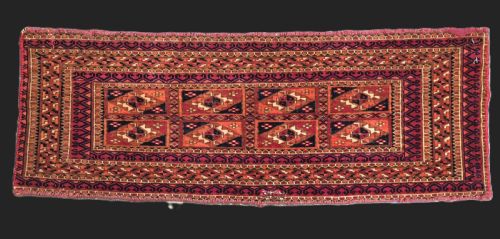
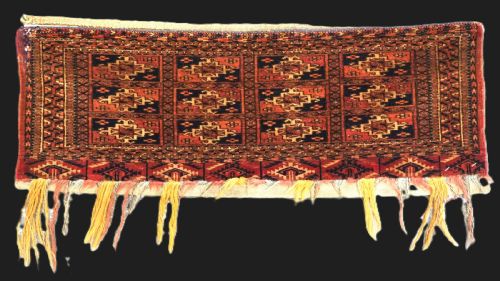
A hand woven tekke rug represents the traditional weaving artistry of the Tekke Turkmen tribes originating from Central Asia, notably associated with the Merv Oasis and the Emirate of Bukhara. These textiles encompass various functional forms including main carpets, smaller dowry rugs, wedding rugs, and prayer rugs known as ensis, alongside utilitarian storage bags like chuvals and torbas.
The pieces available originate primarily from the nineteenth and early twentieth centuries, spanning periods from the eighteenth century up to the 1920s. Buyers will frequently encounter torba faces, chuval fragments, and complete carpets displaying characteristic tribal motifs and traditional formats.
How they were made
The construction relies fundamentally on wool foundations and piles, often enriched with natural dyes that yield deep red and varied secondary hues. Certain examples incorporate silk highlights or flat-woven details to add textural contrast.
Weavers utilised precise knotting techniques to achieve the tight structures seen in very fine weave specimens, occasionally pairing the piled surfaces with plain weave backs on storage items.
Listings feature pieces utilising wool, natural dyes, silk, and linen across nineteenth and early twentieth century periods.
What varies in quality
The distinction between ordinary and exceptional examples rests heavily on the density and precision of the weave. Pieces executed with an exceptionally fine weave demand greater skill and time from the maker.
Visual depth relies upon the richness of the natural dyes and the preservation of the pile and structure. Intact backs on bags and complete formats rather than fragments elevate the historical integrity of the piece.
The Hand Woven Tekke Rug Glossary
- Gul
- The primary octagonal medallion motif repeated across Turkmen carpets and bag faces. These geometric emblems often identify the specific tribe or sub-group.
- Chuval
- A large tent bag utilised by nomadic groups for domestic storage. They frequently survive as decorative faces separated from their original plain weave backs.
- Torba
- A smaller storage bag produced by Turkmen weavers for household use. They display intricate medallion designs analogous to those found on larger rugs.
- Ensi
- A specialised carpet type functioning as a tent door hanging. They typically feature a quartered field design separated by a central candelabra motif.
- Dip Khali
- A term used to designate specific regional rug formats. These textiles share the dense field patterns characteristic of Central Asian weaving traditions.
Hand Woven Tekke Rug: Frequently Asked Questions
What is a tekke rug?
A tekke rug is a hand-knotted textile created by the Tekke Turkmen tribe of Central Asia, historically recognised by repeating geometric medallions known as guls.
These pieces range from small dowry and wedding rugs to large main carpets and tent furnishings produced during the nineteenth and early twentieth centuries.
How were these rugs used originally?
Nomadic and tribal communities utilised these textiles as floor coverings, tent decorations, and functional storage containers within their dwellings.
Bags like chuvals and torbas held personal belongings and dowry items, while ensis served specifically as doorway flaps for yurt entrances.
How do I care for an antique rug?
Protect the textile by placing it in areas shielded from direct, harsh sunlight to prevent natural dye fading over time. Vacuum gently with a suction-only attachment without using a rotating brush roll.
Rotate the rug periodically to ensure even wear across the surface from foot traffic and furniture placement.
How do I date a Turkmen rug?
Dating relies on assessing the wool quality, the chemical composition of the natural dyes, and the structural fineness of the weave. Earlier nineteenth-century examples often display greater fineness and specific archaic gul arrangements.
Comparison with documented tribal pieces from historical periods helps establish the approximate decade of origin.