





Hand Painted Staffordshire Jug
A hand painted staffordshire jug brings vibrant colour and character to a room, combining domestic utility with the bold charm of regional potteries.
Hand Painted Staffordshire Jug
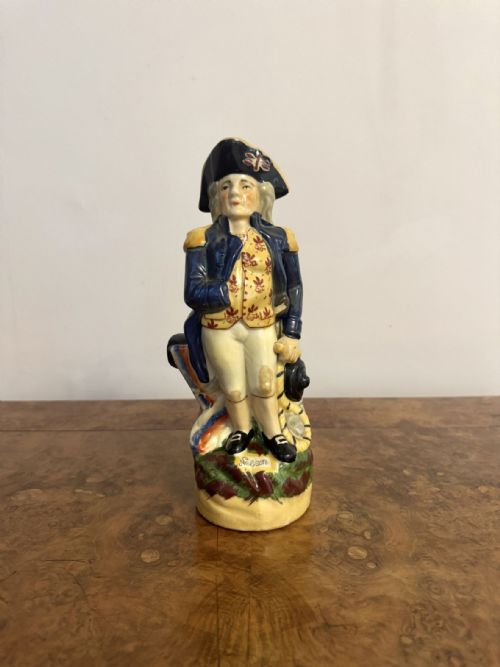
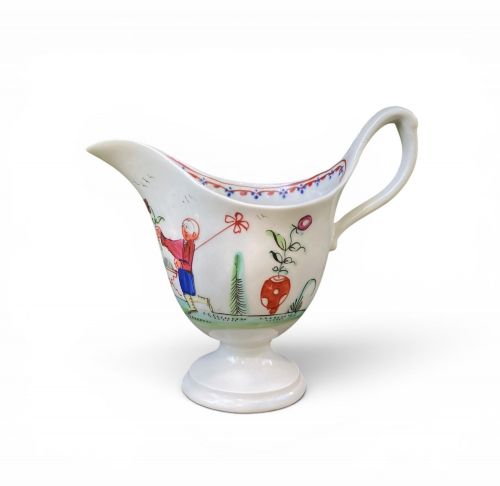
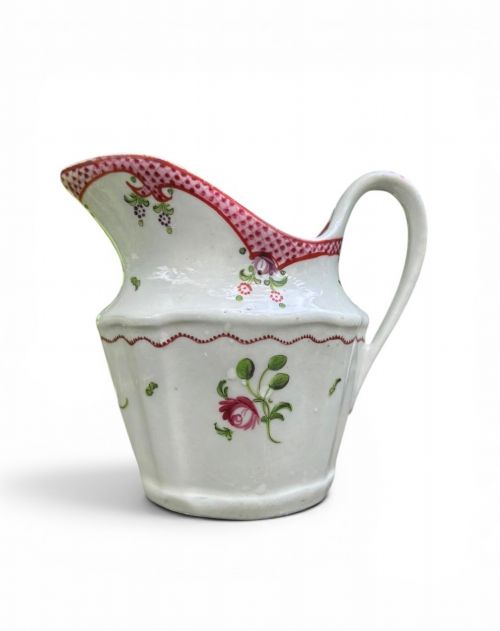
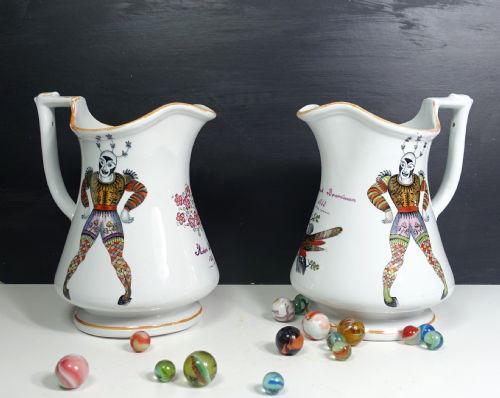
When you search for a hand painted staffordshire jug, you encounter earthenware, pearlware, and porcelain vessels created across the Georgian and Victorian eras. These range from small cream jugs and pepperpots to robust toby jugs and large milk pitchers decorated with floral patterns, oriental scenes, or figural subjects.
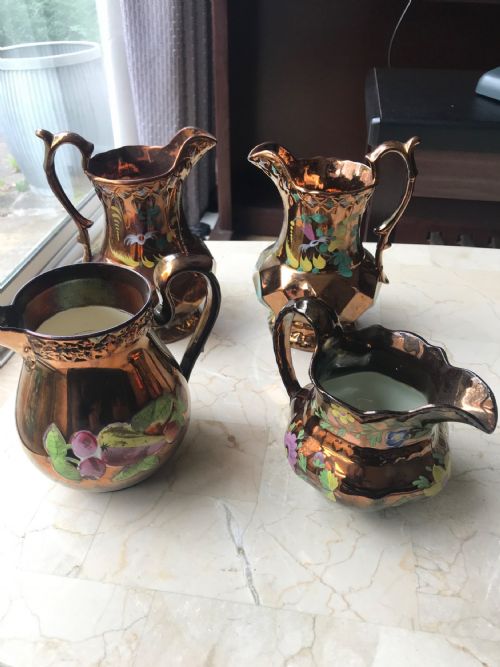
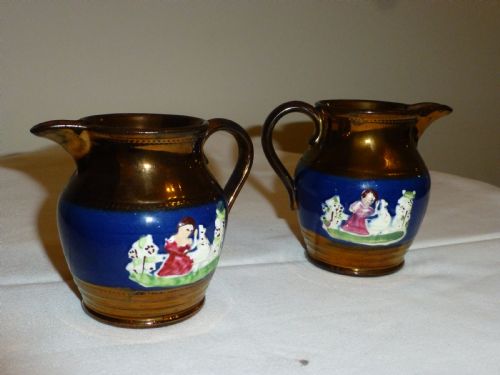
The versions most commonly met on this page span the 19th century and the late Georgian period, often featuring copper lustre glazes or hand-decorated enamel motifs. Makers applied rich colours directly to the ceramic body, resulting in lively pieces intended for both display and everyday table service.
Materials and production methods
Potters shaped these vessels using earthenware and pearlware bodies, frequently applying moulded details such as cabbage leaf patterns or figural forms before firing. Copper lustre glazes were then used to impart a metallic sheen to the surface of the ceramic.
Painters applied enamel colours and gilding by hand over the glaze, bringing individual character to each piece. Ironstone and porcelain were also utilised for specific forms like puzzle jugs and cabinet creamers, requiring precise kiln work to achieve the finished glaze.
Listings feature items spanning the Georgian and Victorian periods, utilising earthenware, pearlware, porcelain, and ironstone.
Assessing quality and finish
The richness and consistency of the copper lustre or enamel glaze also define the grade of the piece, as well as the preservation of any applied gilding. Superior items display careful alignment of decorative motifs and stable ceramic bodies without excessive firing flaws.
New Hall·H & R Daniel
The Hand Painted Staffordshire Jug Glossary
- Pearlware
- A refined earthenware developed in the late 18th century featuring a bluish-white glaze that pooled in recesses. It provided a paler ground for painted enamels than standard creamware.
- Copper Lustre
- A metallic glaze technique containing copper oxides that fired to a reflective, coppery sheen. It was widely applied to Staffordshire jugs during the 19th century.
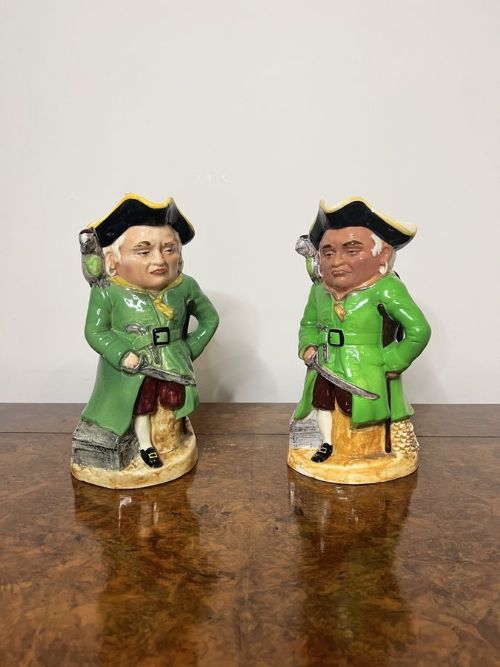
- Toby Jug
- A pottery jug modelled in the form of a stout, cheerful man usually holding a mug and a pipe. These figural pieces served both decorative and functional roles in homes and taverns.
- Puzzle Jug
- A drinking vessel with a perforated neck and hollow rim designed to confound the drinker. Fluid had to be sucked through a specific spout to avoid spilling.
- Enamel
- Opaque vitreous colours painted onto the surface of fired ceramics. Enamels required a subsequent low-temperature firing to fuse the pigments to the glaze.
Hand Painted Staffordshire Jug: Frequently Asked Questions
What were hand painted staffordshire jugs used for?
These vessels served practical functions on the dining table for holding milk, cream, or water. Many forms were also designed for display on dresser shelves or mantelpieces.
Larger pitchers handled heavier daily tasks, while smaller cream jugs and figural toby jugs often occupied more decorative roles in the domestic interior.
How do I tell Georgian pieces from Victorian ones?
Georgian examples frequently utilise pearlware bodies with characteristic bluish glazes and simpler hand-painted motifs. The forms tend to reflect neoclassical or early earthenware styles.
Victorian pieces often incorporate rich copper lustre finishes, heavier ironstone bodies, or more ornate figural modelling such as toby pepperpots and decorated milk jugs.
What is a toby jug?
A toby jug is a pottery vessel shaped like a seated person, typically depicted in 18th-century attire with a mug of ale. They were produced in various sizes across the Staffordshire potteries.
Some variations functioned as pepperpots or small pouring jugs while retaining the classic figural caricature.