




Staffordshire Copper Lustre
Staffordshire copper lustre ware brings rich metallic warmth and hand-painted detail to any room, offering the quintessential charm of nineteenth-century ceramic figures and jugs.
Staffordshire Copper Lustre
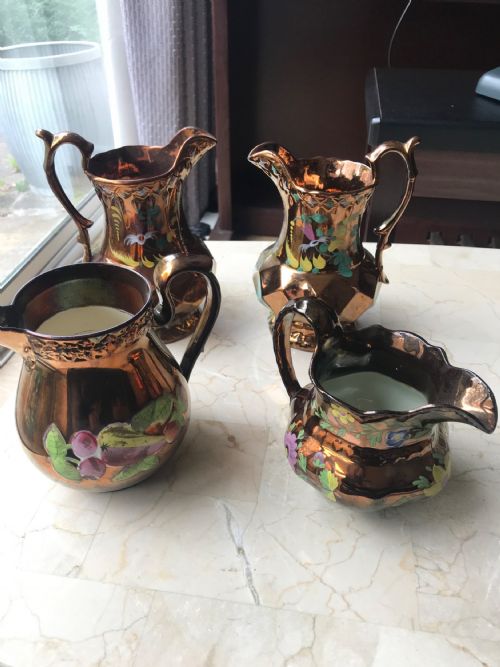
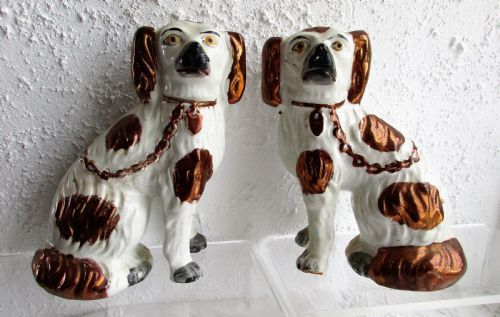
When you search for staffordshire copper lustre, you encounter a distinctive group of nineteenth-century ceramics spanning the Georgian and Victorian eras. These items primarily comprise decorative figurines, notably seated spaniels, alongside functional pitchers, jugs, cream jugs, and teacups.
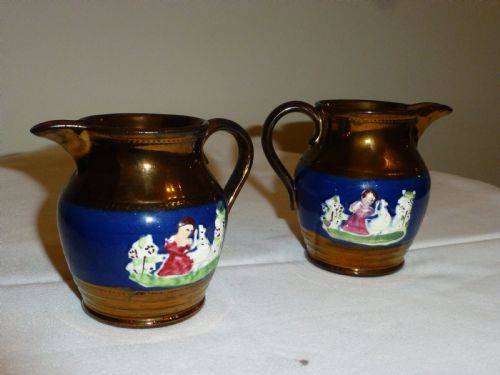
The most common versions met on this page are pairs of spaniel dogs and various pouring vessels decorated with hand-painted fruit or relief panels. Originating from Staffordshire potteries, these pieces showcase the metallic glaze and enamel detailing characteristic of the period.
How they were made
Potters shaped these objects from earthenware and ceramic, applying a copper lustre glaze that yields a metallic, reflective surface. Many items incorporate additional decorative elements such as enamel colours, gilt highlights, and moulded relief panels.
Makers formed figurines and jugs using traditional pottery techniques before applying the metallic glaze and hand-painted details. Firing methods dictated the depth and brilliance of the copper lustre finish across the surface.
Staffordshire Copper Lustre Retail Price Guide 2026
Typical asking prices for staffordshire copper lustre among the pieces listed under this phrase on Sellingantiques today, from the lower quarter to the upper quarter. They describe what is for sale here now, not the wider market.
Listings feature 19th Century, Georgian, and Victorian periods, utilising earthenware, ceramic, and copper lustre glaze.
What varies in quality
The richness of the copper lustre and the preservation of any enamel or gilt decoration distinguish superior items. The survival of matched pairs in good condition elevates the desirability of figures within this category.
The Staffordshire Copper Lustre Glossary
- Copper Lustre Glaze
- A metallic ceramic glaze that produces a reflective, copper-coloured sheen upon firing. This finish defines the visual appeal of nineteenth-century Staffordshire jugs and figures.
- Earthenware
- A porous pottery body fired at lower temperatures, commonly used for nineteenth-century Staffordshire figures and jugs before glazing. It forms the structural base for copper lustre ware.
- Relief Panel
- A raised decorative motif moulded onto the surface of a jug or vessel. These panels frequently feature painted details that contrast with the surrounding metallic glaze.
Staffordshire Copper Lustre: Frequently Asked Questions
What periods do these pieces date from?
The inventory spans the Georgian and Victorian eras, primarily covering the nineteenth century from roughly eighteen thirty to eighteen ninety.
Specific dates on items range across this period, reflecting shifts in Staffordshire pottery production styles over several decades.
Were copper lustre spaniels used as fireplace mantel ornaments?
Yes, pairs of Staffordshire spaniels served principally as mantelpiece ornaments in nineteenth-century homes. Dealers often refer to them as comforter spaniels.
They were displayed facing each other on either side of the fireplace, a traditional arrangement in Victorian parlours.
How do jug forms differ from figurines?
Jugs and pitchers function as pouring vessels for milk, water, or tea, featuring handles and spouts alongside hand-painted fruit or relief panels. Figurines serve purely decorative purposes.
While both share the characteristic copper lustre glaze, their manufacturing moulds and domestic uses remain entirely separate.
How can I identify genuine nineteenth-century pieces?
Look for the characteristic weight of period earthenware combined with the specific metallic sheen of nineteenth-century copper lustre glazes. Hand-painted enamel touches and moulded relief work also indicate age.
Comparing items against documented examples from Staffordshire potteries helps confirm period authenticity.