


Antique Pottery Milk Jugs
These antique pottery milk jugs bring hand-painted patterns, lustres and figural cow designs straight from Georgian and Victorian tables.
Antique Pottery Milk Jugs
When you search for antique pottery milk jugs, you encounter functional vessels shaped for pouring cream and milk at the tea table. The selection spans earthenware, stoneware and porcelain pieces originating from Staffordshire, Wales, Leeds and other regional potteries.
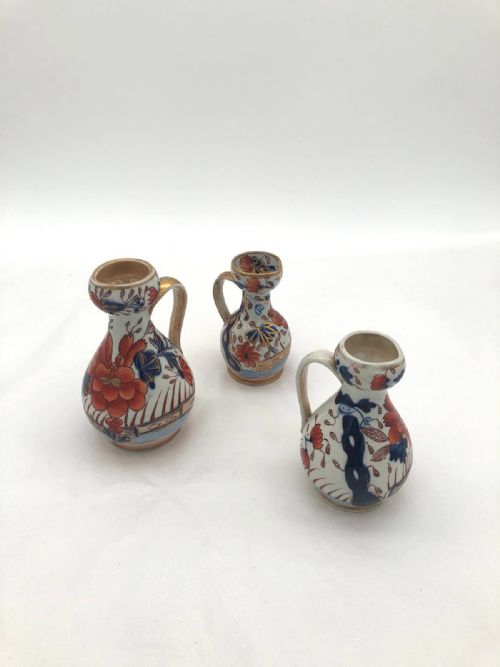
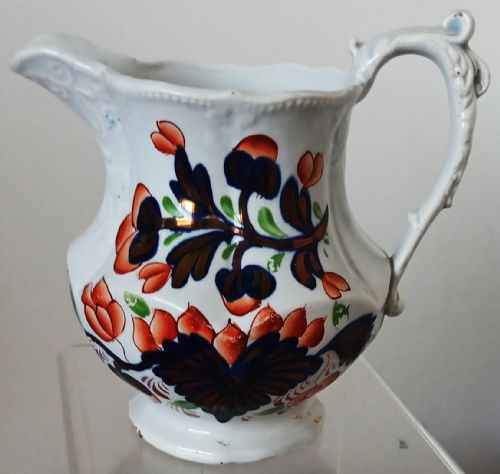
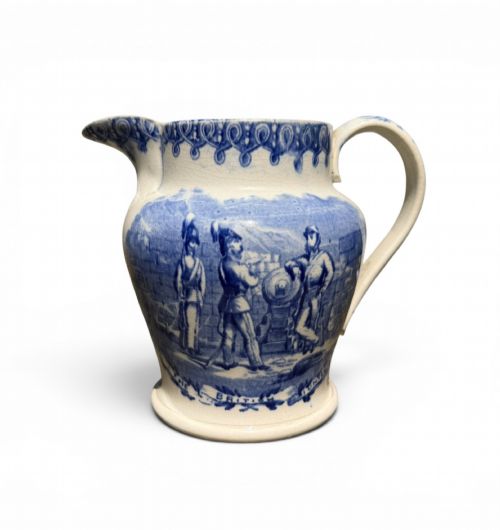
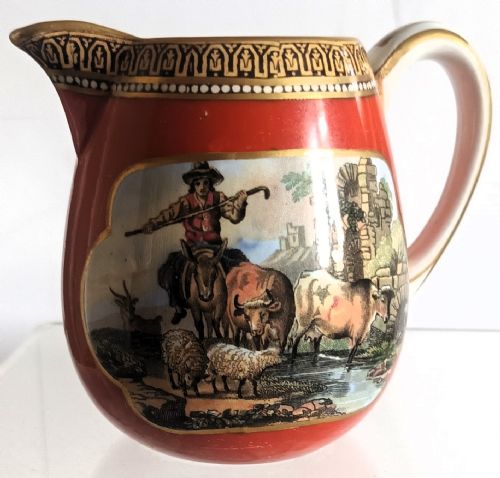
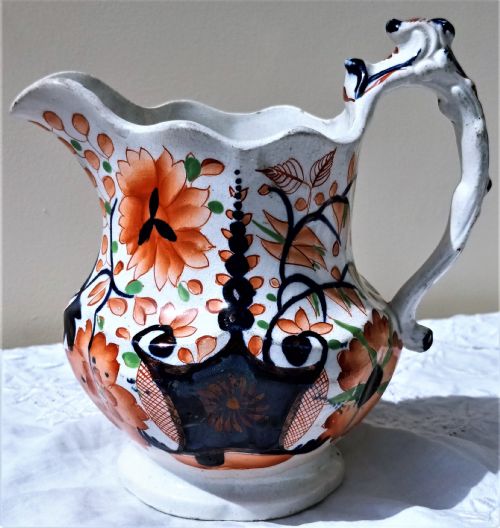
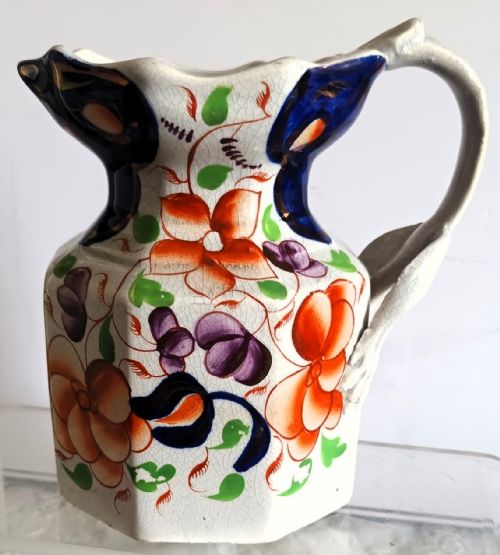
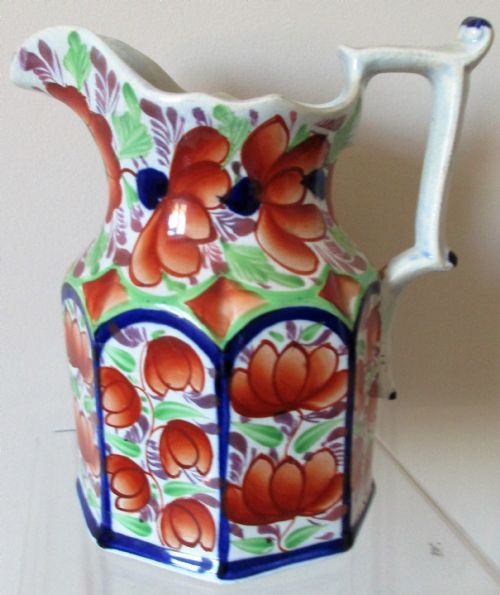
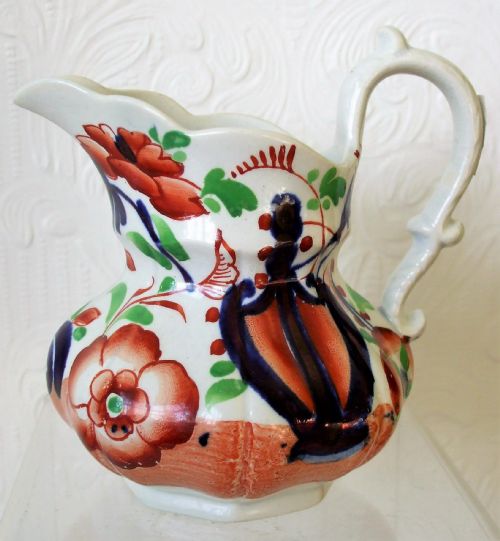
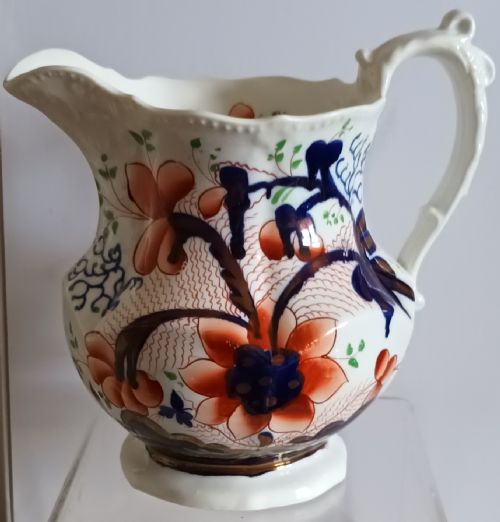
The pieces on this page appear in various forms, from standard creamers and milk jugs to figural cow creamers and faceted pitchers. Most examples date from the Georgian and Victorian periods, carrying transfer-printed scenes, hand-decorated fruit motifs or vibrant Gaudy Welsh patterns.
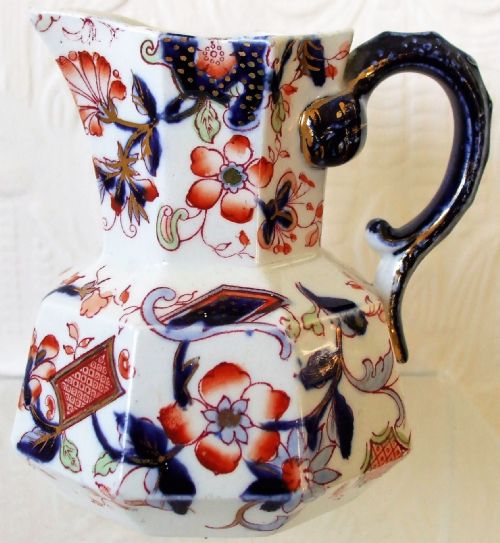
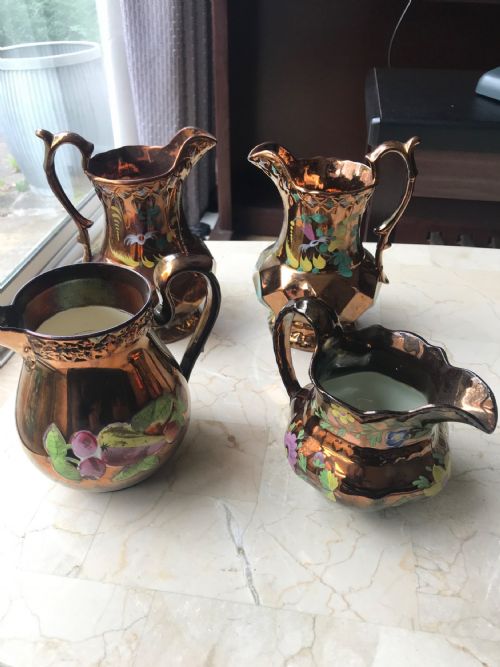
Form matches utility across these items, with handles designed for a steady grip and spouts drawn for clean pouring. Collectors find everything from simple blue and white domestic pottery to ornate Mason's ironstone and copper lustre wares.
How they were made
Potters shaped these jugs using earthenware, pearlware, ironstone and stoneware bodies, often formed in moulds or thrown on a wheel. Makers then applied glazes and decorated the surfaces with transfer printing, hand-painted enamels or metallic copper lustre.
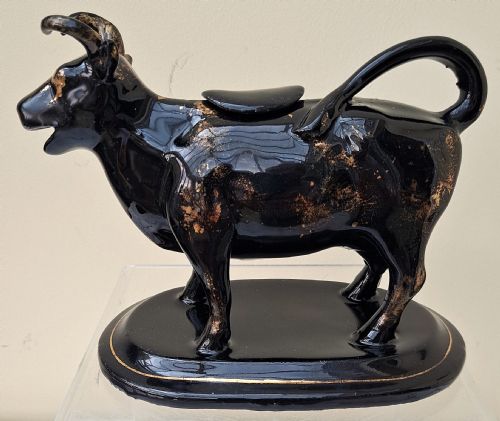
Specialised techniques defined specific regional wares, such as the deep black body of basalt, the lustrous dark glaze of Jackfield pieces, and the moulded animal forms of Staffordshire cow creamers. Gilt highlights and polychrome palettes were fired onto the ceramic bodies to secure the colours.
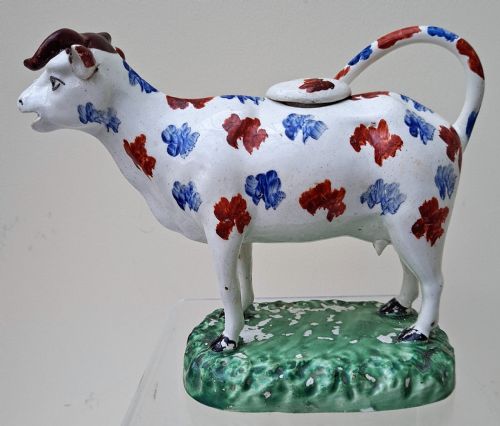
Cow creamers invite milk to be poured straight from an animal's mouth.
What varies in quality
The richness of the glaze and the complexity of the decoration also divide the range, with multi-coloured Gaudy Welsh patterns and heavy copper lustre finishes showing higher artisanal ambition than plain domestic wares.
Keeling And Co·Doulton Lambeth·Leeds Pottery·Livesley Powell And Co·Phillips And Bagster·Copeland Spode
The Antique Pottery Milk Jugs Glossary
- Copper lustre
- A metallic glaze technique that imparts a reflective, coppery sheen to the surface of earthenware and porcelain jugs.
- Cow creamer
- A hollow figural jug shaped like a cow, designed to be filled through an opening on the back and poured from the mouth.
- Gaudy Welsh
- A style of colourful, hand-painted pottery featuring cobalt blue, iron red, pink lustre and green, popular in the nineteenth century.
- Ironstone
- A durable type of heavy earthenware patented in the nineteenth century to rival true porcelain.
Antique Pottery Milk Jugs: Frequently Asked Questions
How do I identify a Georgian milk jug?
Georgian milk jugs often display creamware bodies, pearlware glazes or neoclassical transfer prints reflecting eighteenth-century design tastes. Their forms tend to be lighter and more restrained than later Victorian examples.
Look for evidence of early manufacturing techniques, such as unglazed foot rims and hand-painted polychrome decoration characteristic of the period before mass production took over.
What is a cow creamer used for?
Cow creamers served as whimsical table vessels for dispensing cream or milk during tea service. Guests or hosts poured the liquid directly from the cow's mouth.
These figural jugs were filled through a small aperture on the animal's back, often accompanied by a modelled milkmaid figure on earlier Staffordshire versions.
How do I clean an antique jug?
Wash antique pottery gently by hand using lukewarm water and mild soap. Avoid abrasive sponges, harsh detergents and soaking, which can damage old glazes and delicate enamel work.
Dry the piece immediately with a soft cloth to protect vulnerable painted surfaces and metallic lustre finishes from moisture damage.
What is Jackfield pottery?
Jackfield pottery is characterised by a dark, glossy black earthenware body finished with a rich glaze. These pieces often feature gilt highlights applied over the dark surface.
Cow creamers and small milk jugs were frequently produced in this distinctive style during the Victorian era.