






Hand Painted Platter
A hand painted platter brings centuries of brushwork and fired pigment directly to the table or wall.
Hand Painted Platter
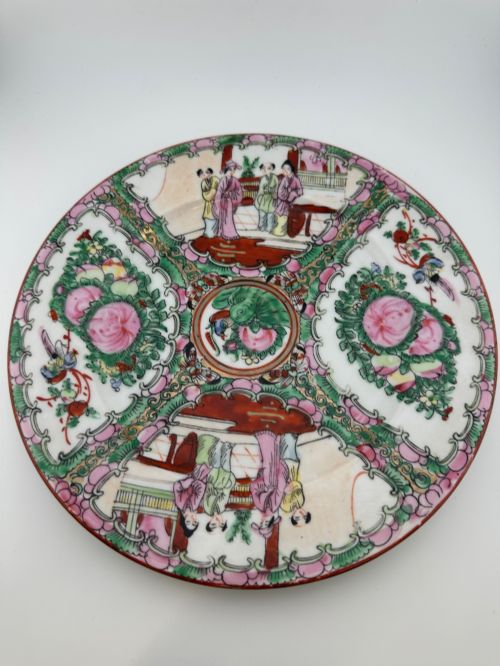
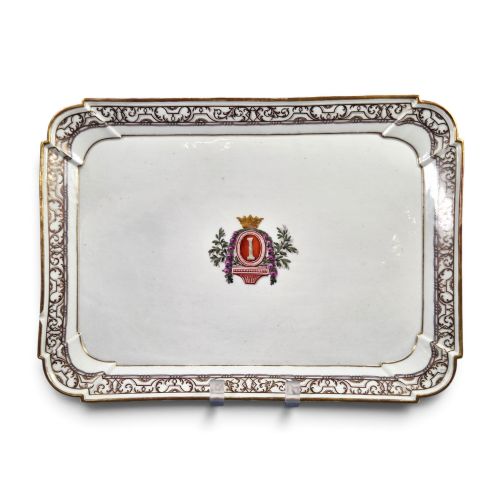
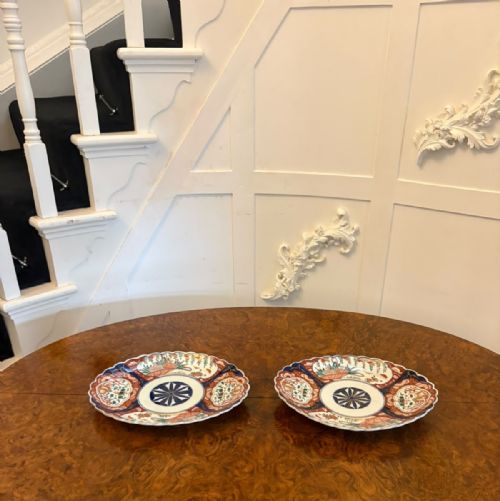
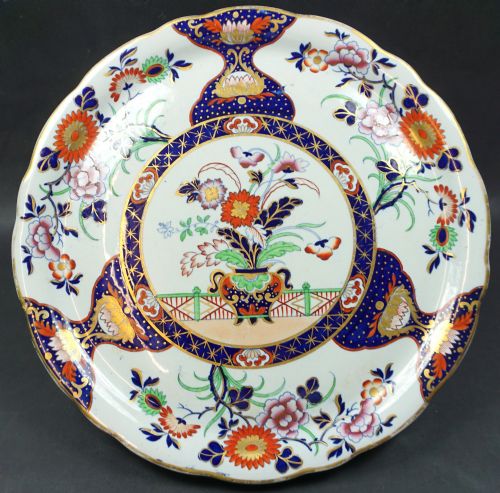
A hand painted platter encompasses large decorative chargers, serving dishes, and trays produced across the eighteenth and nineteenth centuries. Examples range from English porcelain and earthenware to continental faience and Japanese Imari porcelain.
Buyers meet diverse forms including octagonal ironstone plates, scalloped dishes, and papier-mâché trays bearing hand-applied polychrome or blue and white decoration.
How they were made
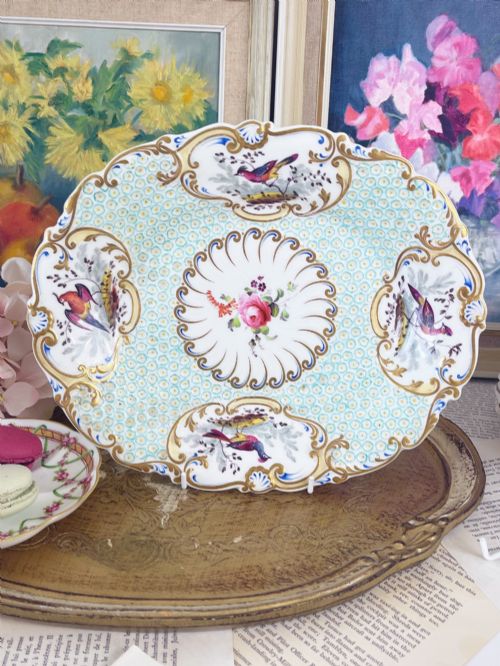
Potters shaped ceramic bodies from porcelain, earthenware, and ironstone before applying glazes and hand-painted pigments. Many pieces incorporated cobalt blue underglaze, enamel colours, and delicate gold leaf or gilding.
Alternative substrates like papier-mâché utilised heavy layers of paper pulp and varnish, finished with hand-painted or japanned decoration by skilled artisans.
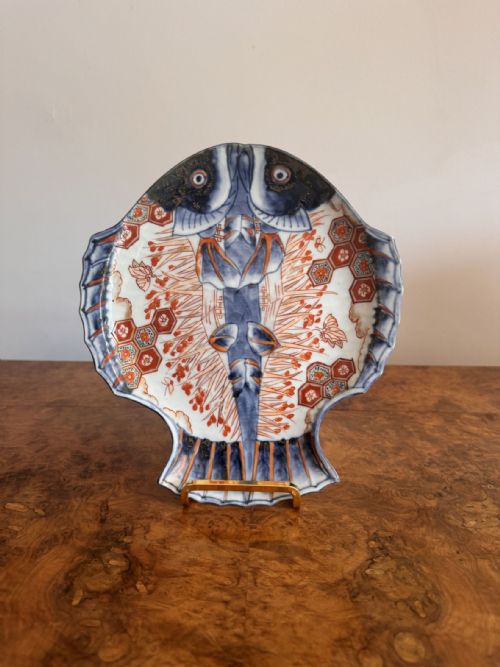
An eighteenth-century plate shaped entirely as a fish demonstrates that potters enjoyed swimming against the current.
What varies in quality
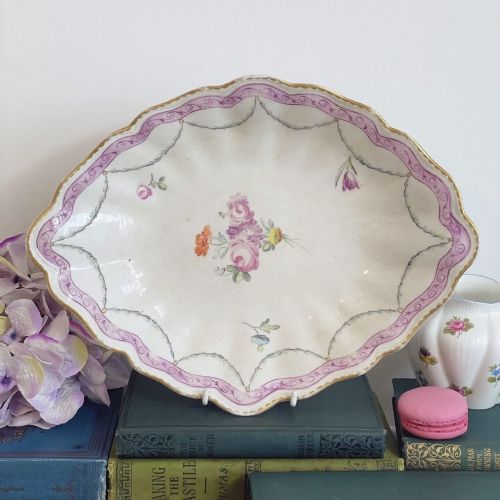
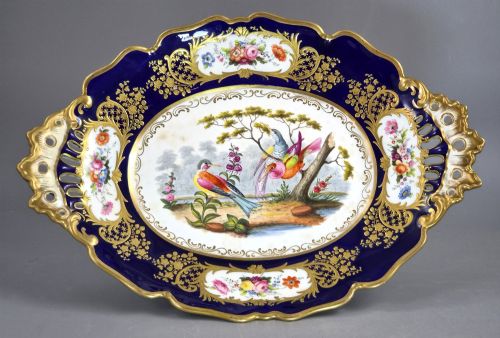
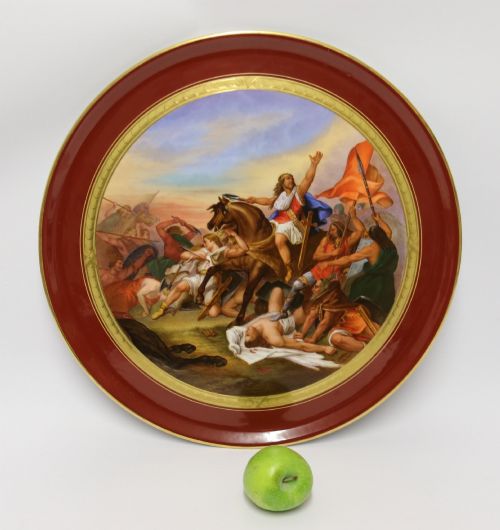
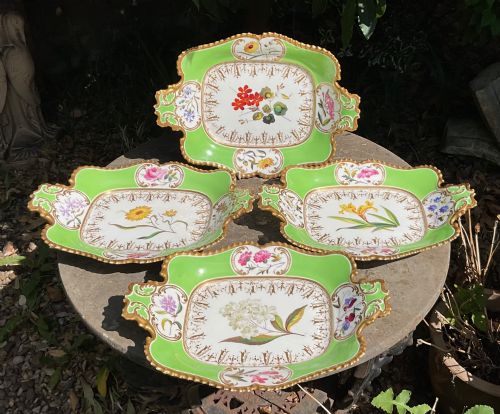
Quality rests in the precision of the brushwork and the complexity of the painted subject, from simple floral sprays to detailed historical battle scenes and exotic birds. The clarity of the glaze and the richness of any gilding also distinguish standard production from exceptional pieces.
The sophistication of the ceramic body, whether translucent Paris porcelain or heavy Delft faience, shapes the overall character and standing of the dish.
H & R Daniel·Coalport·Royal Bonn·Chamberlains Worcester·Hicks & Meigh·Royal Doulton·John Davenport·Joseph-Gaspard Robert·Copeland & Garrett
The Hand Painted Platter Glossary
- Charger
- A large decorative plate or dish, typically measuring over twelve inches across. These pieces were often displayed on walls or sideboards rather than used for dining.
- Imari
- A style of Japanese porcelain featuring a distinct palette of cobalt blue, iron red, and gold. European factories frequently copied these vibrant patterns during the eighteenth and nineteenth centuries.
- Delft
- Tin-glazed earthenware originating from the Netherlands and England, characteristically decorated in blue and white. Pieces often display tin opacification over a buff earthenware body.
- Japanned
- European furniture and papier-mâché finished with varnishes and paints in imitation of Asian lacquerwork. This technique produced glossy surfaces suitable for serving trays.
- Ironstone
- A heavy, durable type of earthenware patented in the nineteenth century. It provided a robust alternative to porcelain for utilitarian and decorative tableware.
Hand Painted Platter: Frequently Asked Questions
How were ceramic chargers used?
Large chargers served functional roles at formal dining tables for presenting joints of meat or sharing courses among guests. Over time, many transitioned to decorative display pieces hung on walls or placed on sideboards.
Their substantial size provided an ideal canvas for ambitious hand-painted scenes, floral patterns, and armorial bearings.
Can papier-mâché trays still be used?
Papier-mâché trays withstand light service but require gentle handling to protect their delicate painted surfaces and varnished finishes. Moisture and heat can damage the underlying paper composition.
Most owners prefer to display them vertically on stands or keep them on tables for dry decorative storage.
How do I identify Delft earthenware?
Delft pieces feature a porous earthenware body covered in a white tin glaze that accepts painted cobalt decoration. Examination of the footrim often reveals the yellowish or pinkish clay beneath the opaque glaze.
Older examples may show minor chipping along the edges where the soft earthenware is exposed.
What defines an Imari pattern?
Imari decoration relies on a contrasting palette dominated by underglaze blue and iron red, frequently highlighted with gold leaf. The designs draw heavily from traditional Japanese textile motifs and floral arrangements.
Both Japanese export studios and European potteries utilised this striking colour scheme across plates and chargers.