

Hand Painted Papier Mache
Hand painted papier mache brings together moulded pulp, deep lacquer and precise brushwork across items ranging from serving trays to folk art figures.
What these pieces are
Hand painted papier mache covers a variety of decorative and utilitarian items made from pressed paper pulp, including serving trays, writing boxes, card boxes, coasters, and small sculptures. These objects appear most frequently from the nineteenth century, often reflecting Victorian or Regency tastes.
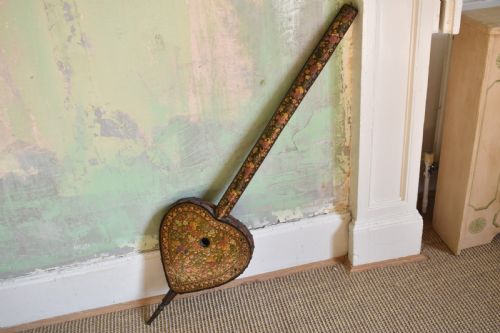
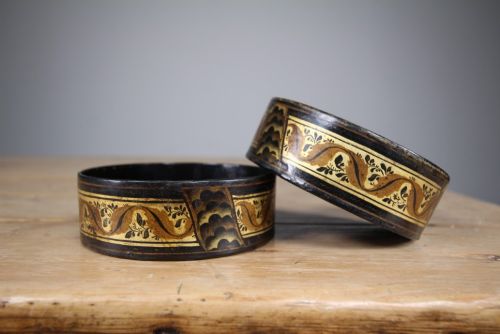
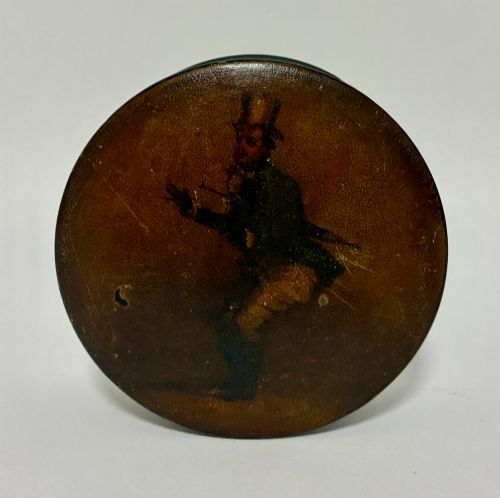
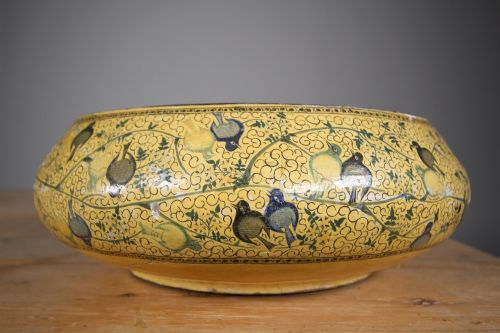
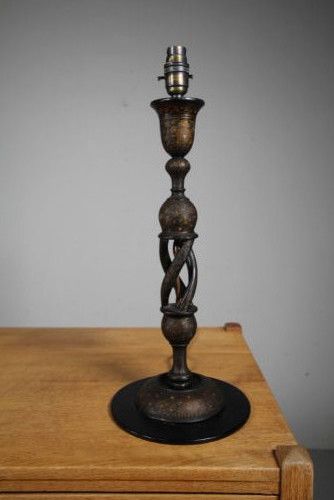
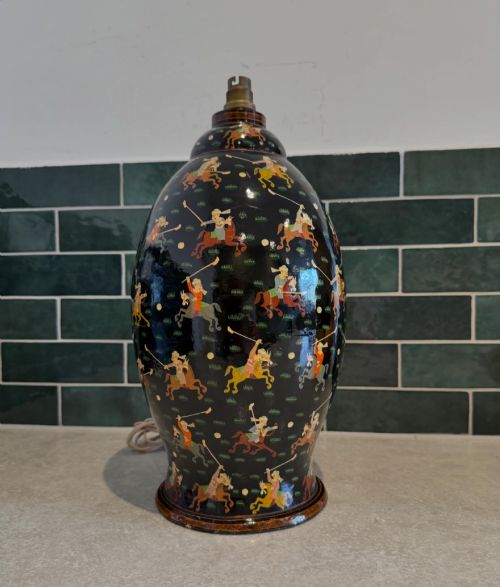
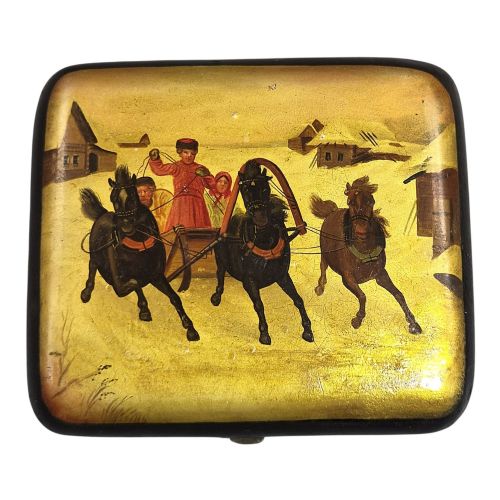
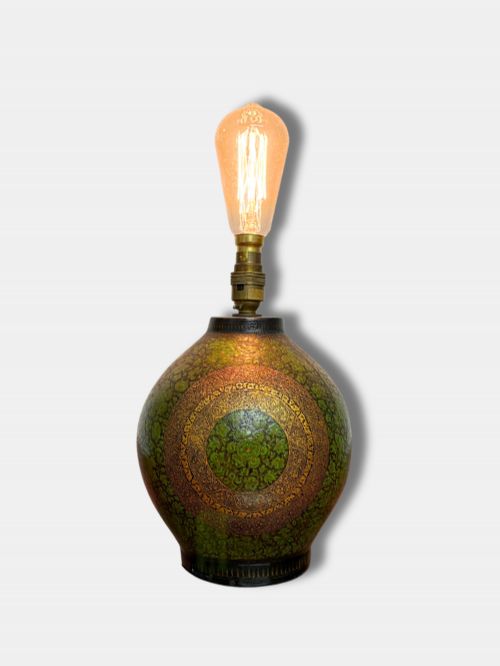
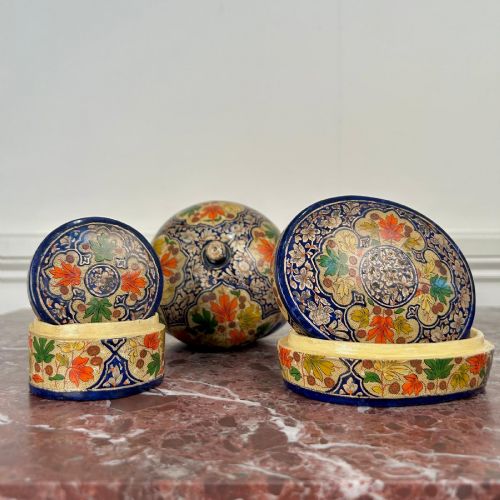
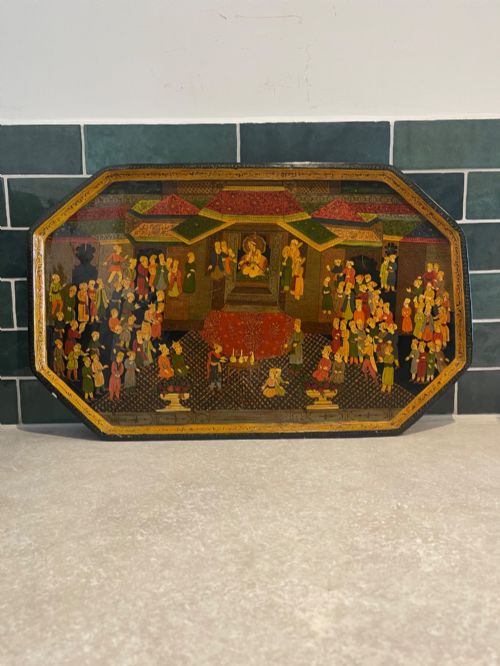
The selection ranges from functional table accessories like drinks butlers and gaming token trays to ornamental pieces such as lidded pots, trinket boxes, and folk art figures like bulls and decoy pigeons. English and Indian Kashmir workshops both contribute distinct traditions to this category.
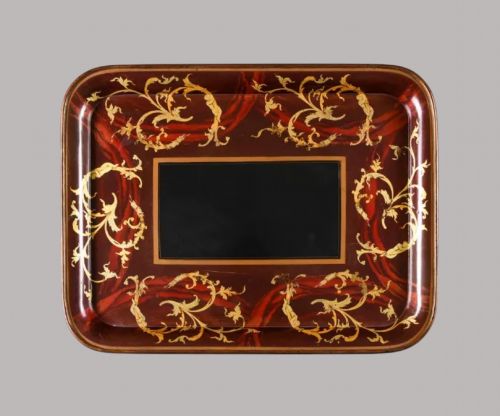
Serving trays and lap desks form a substantial portion of the available items, frequently displaying detailed landscape scenes, floral patterns, or animal subjects. Buyers encounter both black lacquer finishes and coloured variants such as red or green grounds.
How they were made
The foundation of these pieces relies on papier-mache, constructed from layered paper pulp mixed with glue or resin, sometimes reinforced with wood or metal elements. Makers shaped this material under pressure before drying it to create a rigid substrate.
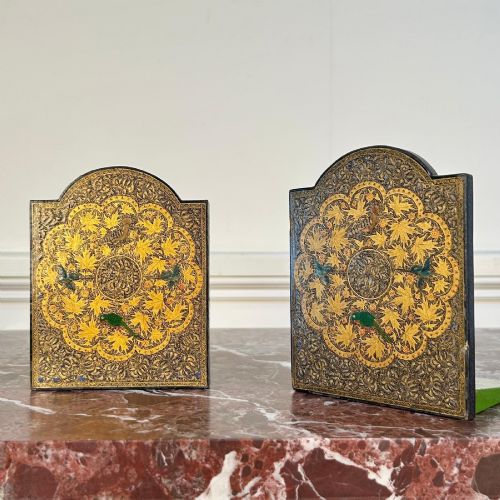
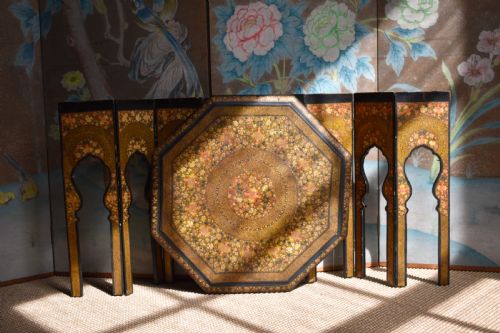
Surfaces received multiple coats of lacquer, often finished in black, red, or green, providing a smooth base for intricate hand painting and gilding with gold leaf. Many examples incorporate mother of pearl inlay to catch the light alongside the painted details.
Retail Price Guide 2026
Typical UK retail prices for hand painted papier mache, calculated from the Sellingantiques database of over a million retail prices indexed since 2003. This retail price guide relies exclusively on Sellingantiques data; no external sources or auction records are used, so the figures do not describe the wider market.
Among the painted wildlife, a decoy pigeon stands ready to fool nobody in particular.
What varies in quality
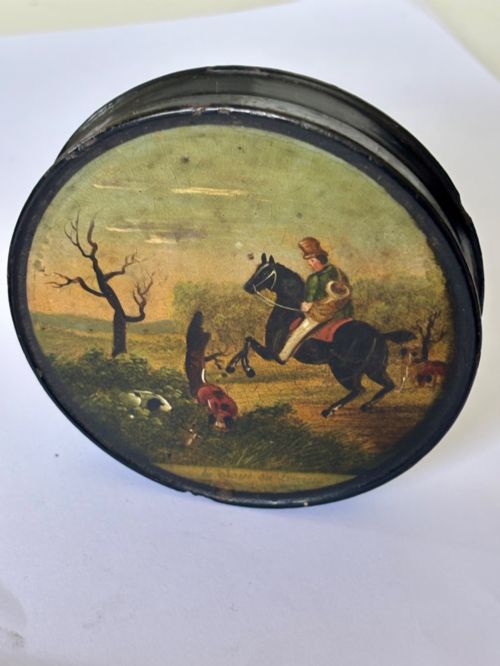
Quality rests in the precision of the hand painting and the depth of the lacquer finish. Pieces with finely detailed figurative scenes, such as historical architecture or hunting subjects, demand greater skill than simpler floral motifs.
The integration of decorative elements like mother of pearl inlay and gold leaf gilding distinguishes finer boxes and trays. Preservation of the original painted surface and interior fittings also elevates an example within the range.
The Hand Painted Papier Mache Glossary
- Papier-mache
- A composite material made from paper pulp or layers of paper pasted together, moulded while wet and hardened to form durable decorative objects.
- Lacquer
- A clear or coloured varnish applied in multiple coats to the papier-mache surface, creating a hard, glossy finish that protects the painted decoration beneath.
- Gilding
- The application of gold leaf or gold paint to highlight specific areas of a design, adding contrast against dark lacquer grounds.
- Chinoiserie
- A European artistic style reflecting Chinese motifs and decorative schemes, commonly found on nineteenth-century trays and boxes.
- Mother of pearl
- An iridescent inner layer of mollusc shell inlaid into the lacquer surface to create shimmering highlights on trays and boxes.
Frequently Asked Questions
What is hand painted papier mache?
Hand painted papier mache consists of objects moulded from paper pulp, finished with smooth lacquer, and decorated by hand with pigments, gilding, or mother of pearl inlay.
These items span the nineteenth century and include practical domestic accessories as well as purely decorative sculptures and boxes.
Where were these pieces made?
English workshops, particularly those producing Regency and Victorian goods, created many of the trays, lap desks, and boxes found in this category.
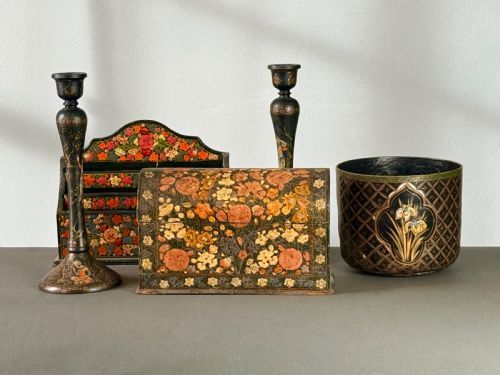
In addition, Indian Kashmir makers produced distinct vases, bowls, and boxes featuring their own traditional hand-painted styles.
How are Victorian pieces identified?
Victorian examples often feature characteristic black or coloured lacquer grounds decorated with floral motifs, hunting scenes, or inlaid mother of pearl.
Constructed from pressed paper pulp, these nineteenth-century items frequently take the form of serving trays, writing boxes, and card cases.