




Vintage Page Turner
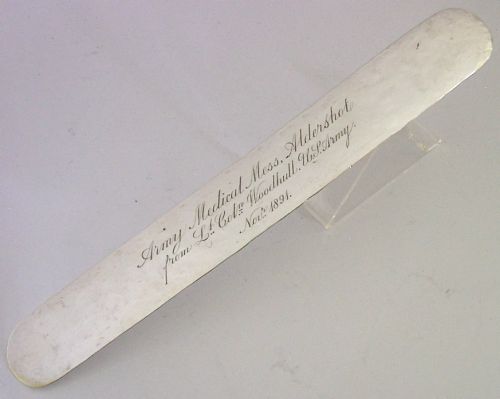
These vintage page turner examples are desk accessories and letter openers in sterling silver, mother-of-pearl, wood, and papier-mâché that turn book leaves and slice envelopes.
Vintage Page Turner
A vintage page turner handles the delicate task of separating uncut book leaves and opening daily correspondence across desk accessories, letter openers, and page turners. These objects emerge from periods spanning the nineteenth century through the Edwardian, Victorian, Art Deco, and George V eras, reflecting changing domestic habits at the writing table.
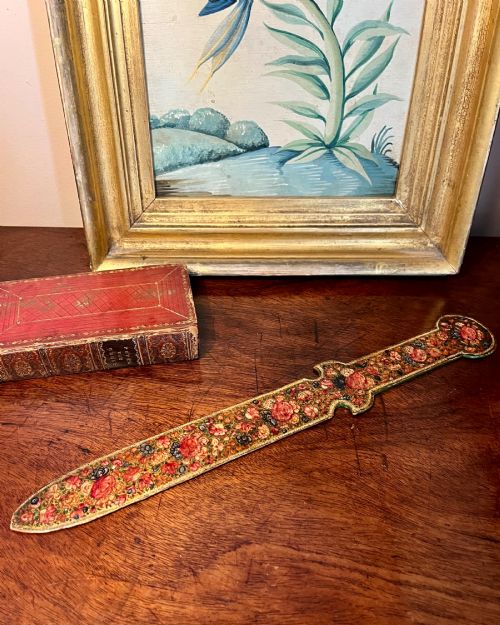
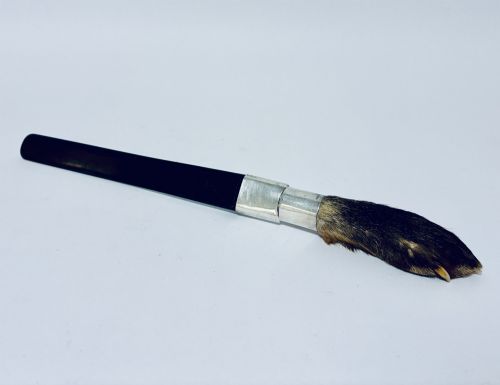
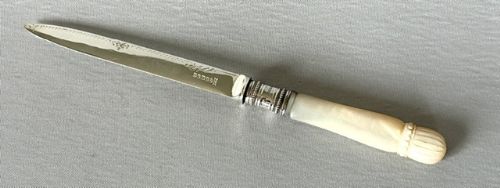
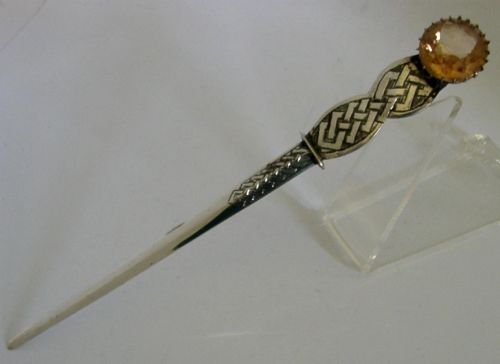
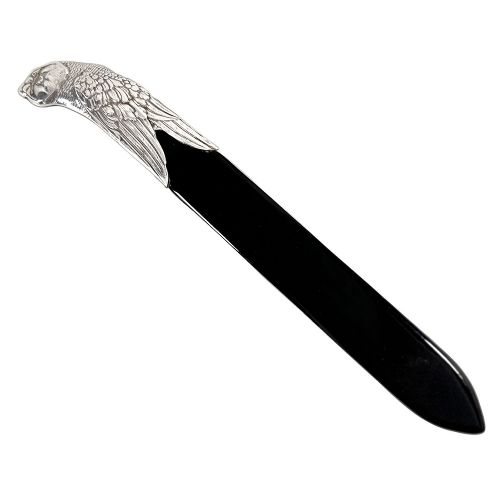
Buyers meet varied forms on this page, including Kashmiri papier-mâché, Scottish provincial horn, taxidermy mounts like otter and pheasant, and carved mother-of-pearl handles. Materials extend to ebony, lacquer, tortoise, yew wood, and celluloid, alongside mounted sterling silver blades and handles.
Origins stretch from English country workshops to Scottish provincial silversmiths and Kashmiri artisan centres, producing practical desk tools alongside decorative novelties like animal figures, greyhounds, owls, and citrine gemstones.
How they were made
Metalsmiths hammered and cast sterling silver for mounts and blades, often pairing the metal with natural organic materials such as horn, mother-of-pearl, and tortoise. Skilled artisans carved wood, bone, and yew, incorporating white metal inlay and detailed animal motifs.
Papier-mâché pieces received layers of paint and lacquer, particularly in Kashmiri workshops where intricate surface decoration defined the finish. Horn and tortoise were polished smooth to create flexible, thin blades suitable for sliding between paper sheets.
What varies in quality
Quality rests in the harmony of materials and the crispness of the carving, distinguishing a plain stamped handle from a hand-carved greyhound or owl terminal. The execution of silver mounts, whether plain or cast with animal forms, shows the hand of the maker.
The integrity of organic elements like mother-of-pearl, horn, and tortoise determines the durability of the thin blade. Finer examples maintain smooth transitions between the handle and the working edge without structural weakness in the joint.
The Vintage Page Turner Glossary
- Page turner
- A long, flat implement traditionally used for slitting the uncut pages of newly bound books and periodicals. These items are often found combined with letter opening functions on the desk.
- Sterling silver
- An alloy containing ninety-two point five percent silver by mass, frequently utilised for the handles and blades of desk accessories across the Victorian and Edwardian eras. It provides both weight and durability to the piece.
- Mother-of-pearl
- The iridescent inner layer of mollusc shells, carved into slender handles and panels for desk tools. Its lustrous surface requires careful handling to preserve the natural grain.
- Papier-mâché
- A composite material consisting of paper pieces or pulp bound with glue, layered and painted with lacquer. Kashmiri examples showcase elaborate hand-painted traditions on this medium.
- Scottish provincial
- Describing silver objects marked and made outside the main assay offices of Edinburgh and Glasgow. These regional pieces hold distinct interest for collectors of British silver.
Vintage Page Turner: Frequently Asked Questions
What is a vintage page turner used for?
These pieces served readers by slicing open folded paper signatures in books and periodicals before machine cutting became standard. They also functioned as general stationery tools for slicing incoming mail.
Today, collectors place them on writing desks or display them alongside antique books and inkstands.
How do I care for a mother-of-pearl handle?
Keep organic materials away from direct sunlight and excessive moisture to prevent warping or dulling of the iridescent surface. Clean them gently with a dry, soft cloth rather than chemical polishes.
Silver mounts on the same piece require standard silver maintenance using appropriate cloths without touching fragile handle inserts.
How can I tell the period of a desk accessory?
Examine the hallmarks on silver components for date letters and maker marks that pinpoint the exact year of assay. Stylistic cues such as Art Deco geometric lines or Victorian naturalism also indicate the decade of manufacture.
Materials like celluloid point toward twentieth-century production, while papier-mâché and horn span earlier nineteenth-century workshops.