






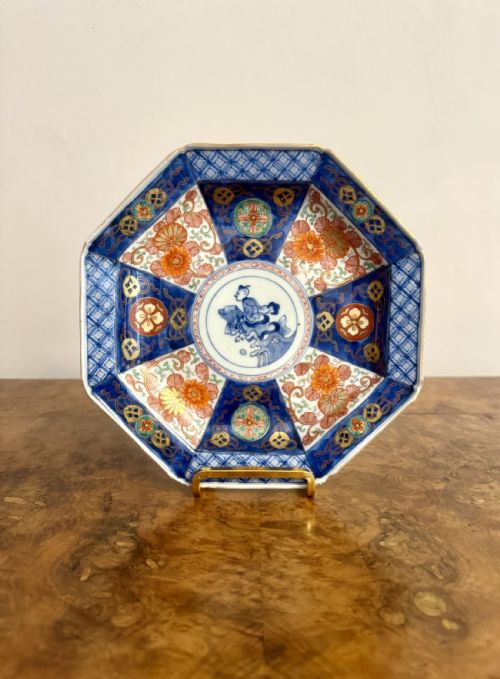
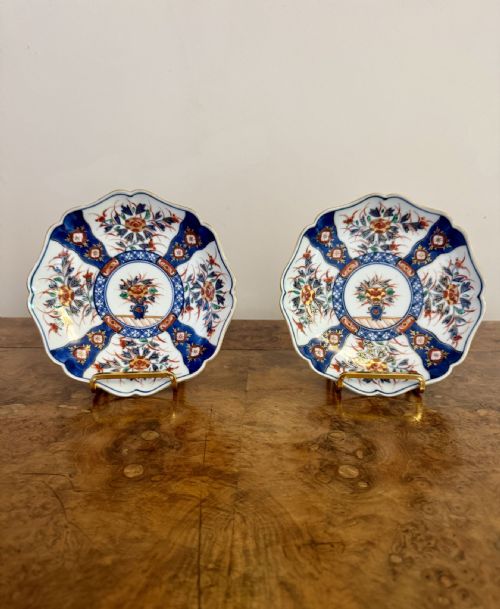
Hand Painted Japanese Charger
These hand painted japanese charger examples bring traditional eastern artistry into western rooms, offering striking wall display and table presence.
What a hand painted japanese charger is
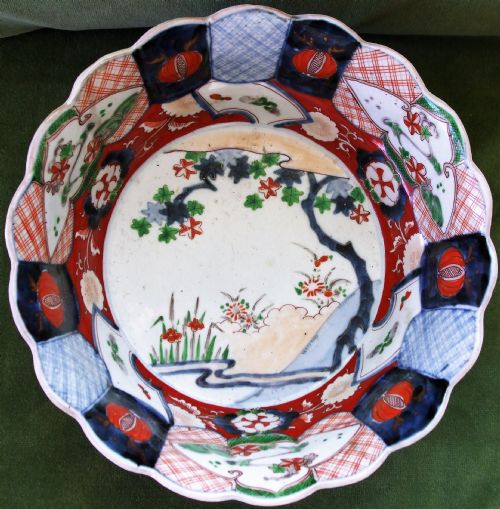
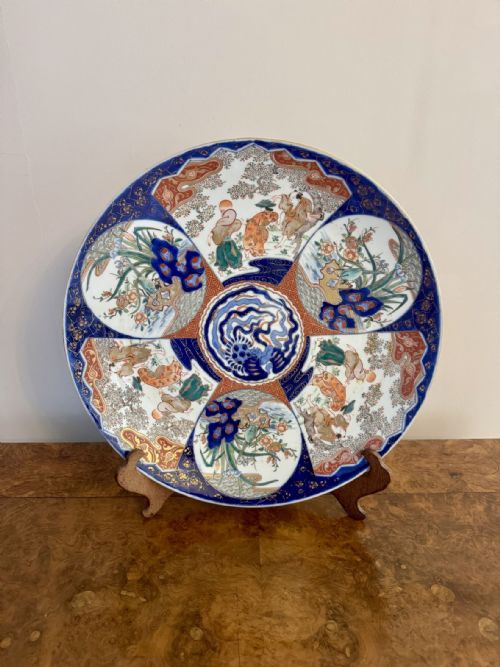
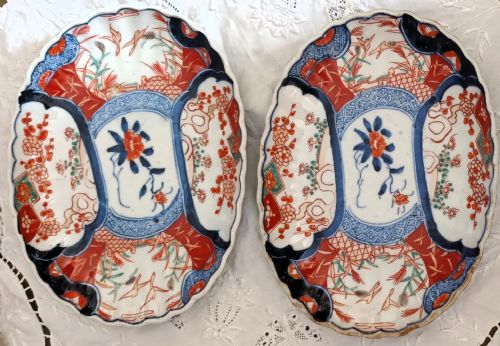
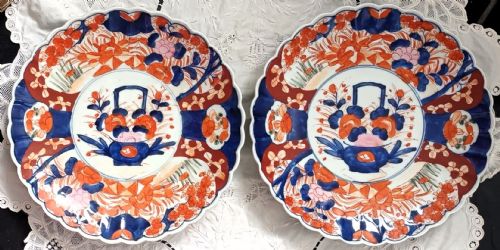
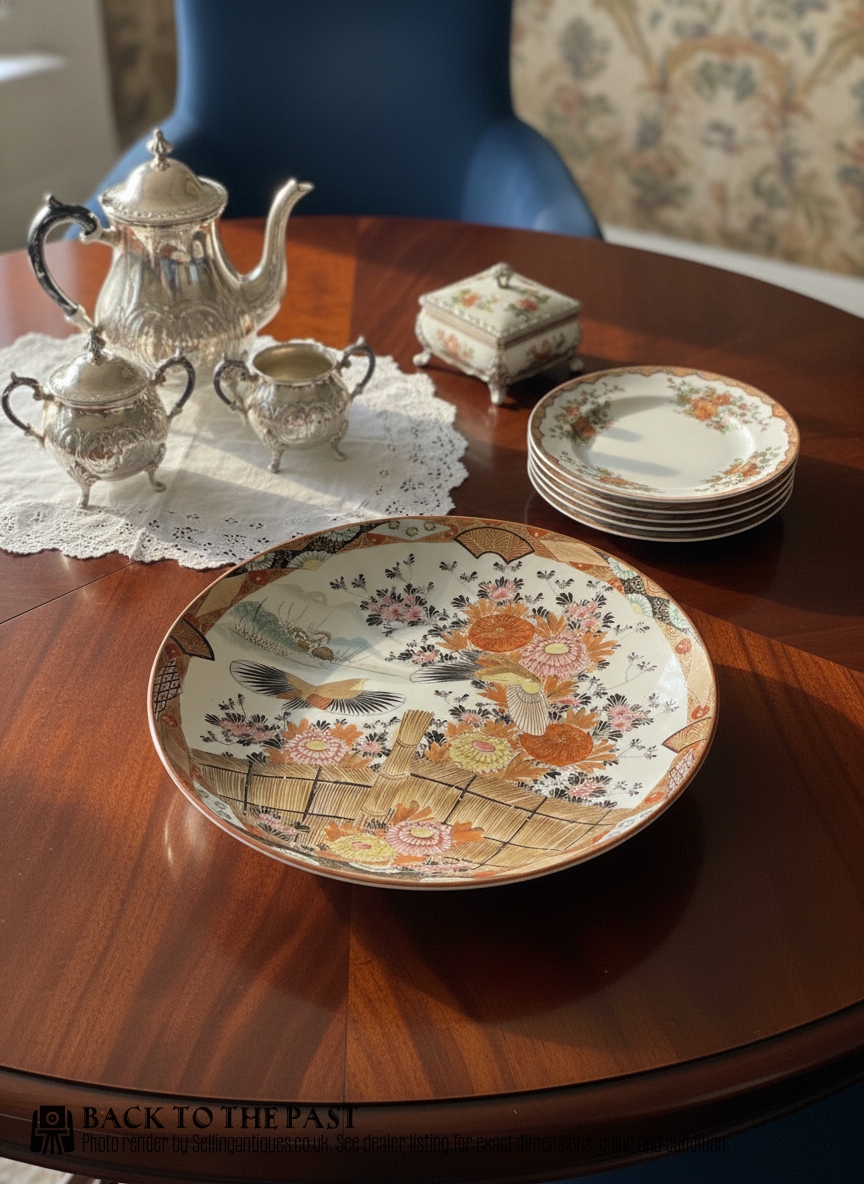
A hand painted japanese charger is a large decorative plate designed primarily for display rather than dining. These pieces arrive in various forms including decorative plates, chargers, and shallow bowls.
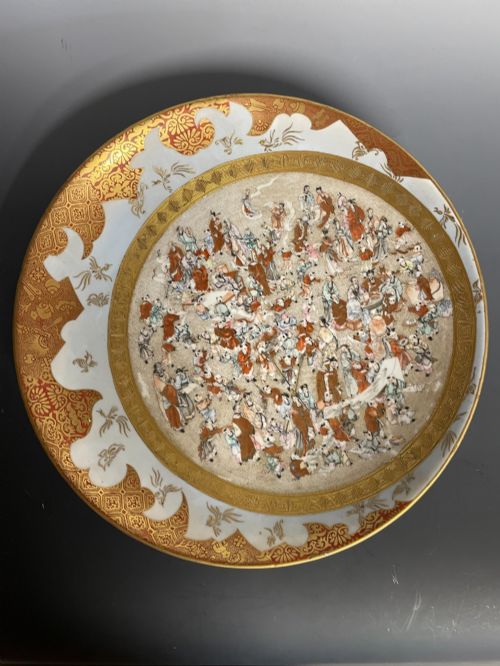
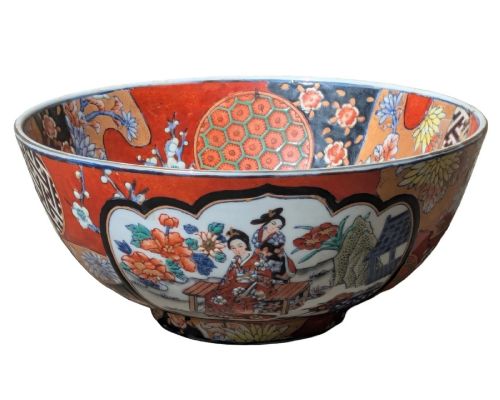
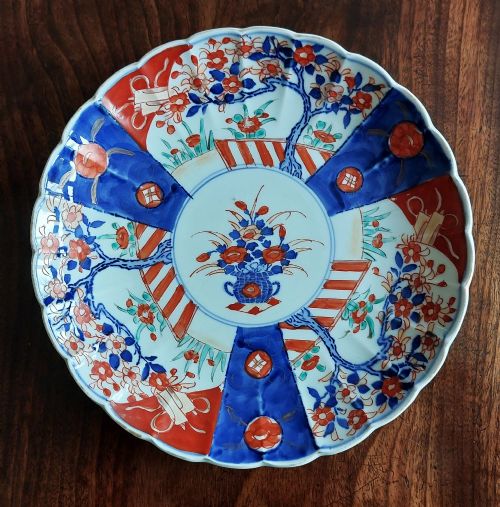
Buyers encountering this page most frequently meet Imari and Kutani wares dating from the nineteenth century, including the Meiji period and the year nineteen hundred. The inventory encompasses Satsuma and blue and white styles alongside classical Imari patterns.
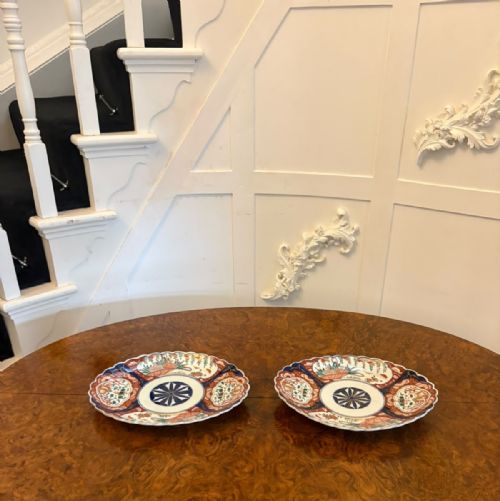
The objects originate from Japanese workshops and potteries, featuring substantial diameters suitable for central placement on tables or mounting on walls. Each item demonstrates traditional hand painted execution across porcelain surfaces.

How they were made
Artisans formed these pieces from porcelain, shaping large plates and shallow bowls before applying detailed hand painted decoration. The construction relies on durable ceramic bodies fired to withstand centuries of handling.
Makers embellished the porcelain using enamel, gold leaf, gilt, gilding, and gold gilt to create rich surface contrasts. These metallic and pigmented additions catch the light and define the intricate motifs across each charger.
Retail Price Guide 2026
Typical UK retail prices for hand painted japanese charger, calculated from the Sellingantiques database of over a million retail prices indexed since 2003. This retail price guide relies exclusively on Sellingantiques data; no external sources or auction records are used, so the figures do not describe the wider market.
One signed piece preserves the precise handwriting of Shozo in the glaze, whispering across the decades from a Japanese kiln.
What varies in quality
The refinement of the hand painted brushwork separates standard production from exceptional examples. Skilled artists achieved superior precision and depth in the floral, figural, and geometric compositions.
The application and preservation of gold leaf, gilt, and enamel determine the visual richness of the surface. Pieces featuring deliberate detail and signed maker attribution occupy the upper tier of the range.
Shozo
The Hand Painted Japanese Charger Glossary
- Charger
- A large decorative plate intended for display rather than everyday dining use. These substantial vessels anchor tables and cabinet displays.
- Imari
- A traditional Japanese porcelain style characterised by underglaze blue and overglaze iron red, complemented by gold and other colours. This distinctive palette defines many nineteenth-century pieces.
- Kutani
- A style of Japanese coloured porcelain known for bold pictorial designs and rich enamel palettes. These pieces often incorporate detailed figural or natural scenes.
- Meiji
- The period in Japanese history spanning from eighteen sixty-eight to nineteen twelve, associated with significant artistic export. Objects from this era display notable technical mastery.
- Gilt
- A thin layer of gold applied to the porcelain surface to highlight specific decorative elements. This technique adds warmth and contrast to the painted motifs.
Frequently Asked Questions
How were chargers displayed historically?
These large ceramic pieces were placed centrally on dining tables or hung on walls to demonstrate household refinement. Their generous size made them natural focal points in formal rooms.
Owners often utilised specialised stands or wall mounting wires to secure the porcelain safely. This method allowed the detailed painted surfaces to be viewed at eye level.
What defines Meiji period pieces?
Objects from the Meiji era reflect a period of intense artistic production and international export in Japan. Makers refined traditional ceramic techniques while adapting designs for foreign markets.
These works frequently combine intricate enamel painting with gold leaf accents. The era is recognised for technical ambition and varied decorative styles.
How do Imari and Kutani differ?
Imari porcelain relies on a characteristic palette of underglaze blue, iron red, and gold, featuring structured geometric and floral patterns. The aesthetic is bright and formally composed.
Kutani ware tends to employ broader pictorial narratives and heavier enamel work, often centring on natural scenes or figures. The two styles represent distinct ceramic traditions within Japanese production.
How should these plates be cleaned?
Maintenance requires gentle dusting with a soft, dry cloth to protect the delicate enamel and gold leaf. Moisture can degrade older gilded surfaces over time.
Harsh cleaning agents must be avoided entirely to preserve the original hand painted pigments. Careful handling ensures the longevity of the porcelain glaze.