


Hand Knotted Wool Trappings
These hand knotted wool trappings are tribal textiles and saddle covers shaped by Central Asian nomads, offering rich colour and pattern for your walls or floors.
Hand Knotted Wool Trappings
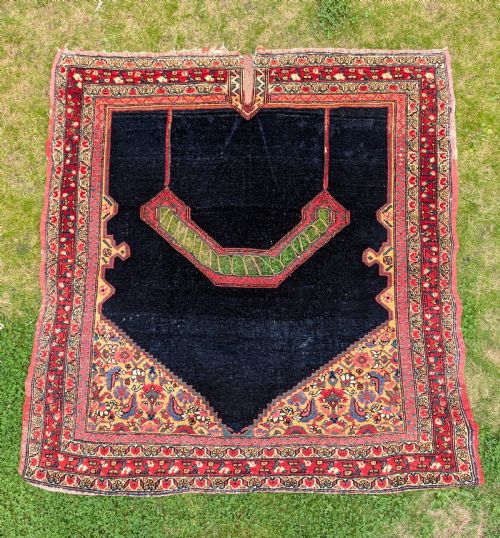
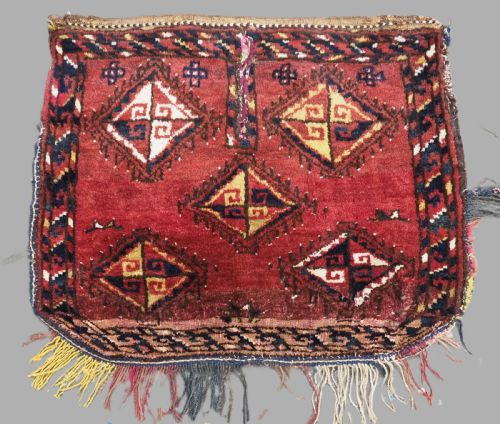
When you search for hand knotted wool trappings, you encounter functional woven objects created by nomadic and tribal groups across Central Asia. The pieces available here include saddle covers, rug bags, torba faces, and asmalyks originating from Turkmenistan, Uzbekistan, and Persia. These textiles served practical roles within tribal life, functioning as animal caparisons, storage bags, and tent furnishings.
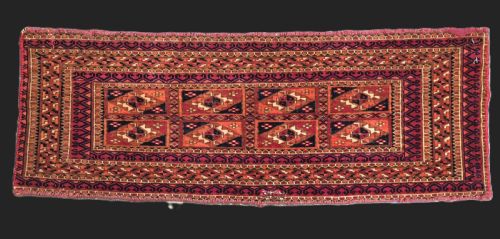
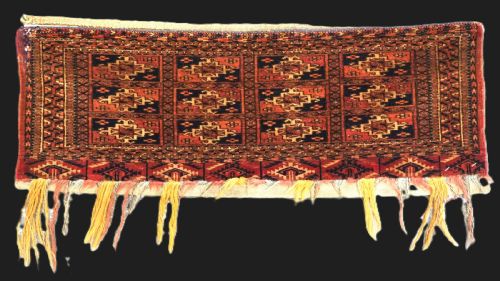
You are most likely to meet nineteenth century examples attributed to Turkmen tribes such as the Teke, Yomut, Ersari, and Saryk. These items display distinct tribal motifs including gul patterns, star in octagon designs, and rams horn motifs. Many survive as fragments of larger bags or complete torba faces retaining their original structural integrity.
What varies in quality
The distinction between ordinary and exceptional pieces lies in the crispness of the tribal design execution and the saturation of the natural dyes. Finer examples display meticulous knot density and well proportioned secondary motifs that demonstrate the weaver's deliberate control over the wool pile.
Preservation of the original format significantly influences the character of each trapping. Complete pieces retain their backing materials, original dimensions, and associated tassels, whereas fragments represent only the decorative face of the original bag or saddle cover.
Materials documented across the inventory consist entirely of wool, natural dyes, cotton, and hand-spun wool.
The Hand Knotted Wool Trappings Glossary
- Torba
- A small storage bag produced by Central Asian nomadic tribes. These rectangular wall hangings or tent bags typically feature repeated gul patterns across the face.
- Asmalyk
- A pentagonal or wedding trapping traditionally hung on the flanks of a camel during bridal processions. They display elaborate designs and substantial wool pile.
- Gul
- A primary medallion or repeating floral motif characteristic of Turkmen carpet weaving. Each tribal group utilises specific gul variations to signal identity and lineage.
- Mafrash
- A large rectangular storage bale or luggage bag used inside nomadic tents. Surviving examples often present as individual decorative faces detached from the original box structure.
Hand Knotted Wool Trappings: Frequently Asked Questions
What are hand knotted wool trappings used for?
These textiles served practical nomadic functions as horse and camel ornaments, saddle covers, or storage bags for household goods within tents.
Today, collectors typically display these smaller woven pieces as wall hangings or place them on low surfaces where their dense wool pile remains protected from heavy foot traffic.
How do I identify a Turkmen torba?
A torba is recognised by its wide rectangular format and the presence of repeated medallion designs known as guls arranged in horizontal rows across the face.
They usually feature deep red or madder grounds framed by intricate geometric borders that identify the specific sub tribe or oasis origin.
What is an asmalyk?
An asmalyk is a large decorative trapping shaped with a pointed or pentagonal outline, historically fixed to the side of a bridal camel during nomadic wedding ceremonies.
Due to their specific ceremonial role and elaborate full pile construction with tassels, they remain distinct from standard utility bags.
How do I care for antique wool trappings?
Maintain these textiles by keeping them away from direct sunlight and damp environments which can degrade natural wool fibres and fade natural dyes.
Gentle surface vacuuming without a beater bar removes accumulated dust while preserving the delicate structure of the hand knotted pile and attached tassels.