
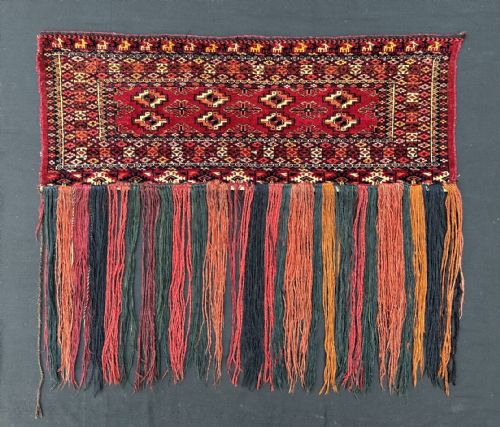
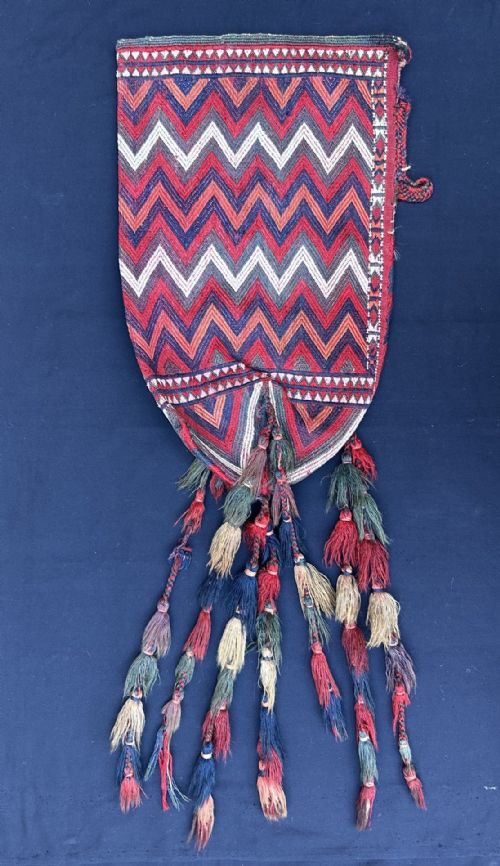


Vintage Turkmen Tent Bag
These vintage turkmen tent bag examples are tribal woven textiles from Central Asia, offering rich nomadic history and striking geometric designs for your walls.
Vintage Turkmen Tent Bag
A vintage turkmen tent bag represents the nomadic textile heritage of Central Asia, specifically originating from regions associated with the Tekke, Yomut, Ersari, and Chodor tribes. When you explore this selection, you encounter functional tribal items such as torbas, chuvals, kap pieces, and uk bash covers that once served practical storage purposes inside nomadic dwellings.
The objects most frequently met on this page date from the mid-nineteenth century through to the early twentieth century, spanning decades between eighteen fifty and nineteen hundred. These pieces showcase traditional formats including bag faces designed for hanging or display as tribal rugs and wall art.
The visual vocabulary relies heavily on tribal patterns like the ertum gul, curled leaf motifs, ikat designs, rams horn patterns, and large Salor guls. Each piece reflects the specific aesthetic and tribal identity of weavers working across the trans-caspian steppes and oases.
Materials and construction methods
These textiles are constructed primarily from wool and cotton foundations, utilising natural dyes to achieve deep and enduring colour palettes across the surface designs. The interplay of these organic materials creates the characteristic tactile structure inherent in authentic tribal weaving.
Weavers employed traditional techniques resulting in varying densities of weave, ranging from standard tribal work to exceptionally fine weaves found on specific chuval and torba faces. The structural integrity depends on the careful preparation of wool and the application of stable natural colouring agents.
Object types recorded across the inventory include torbas, chuvals, kap pieces, uk bash covers, and wall hangings originating from Turkmenistan and Central Asia.
Assessing quality in nomadic textiles
Quality in these tribal pieces rests upon the precision of the weave and the complexity of the design layout, where tighter structures and clearer execution elevate a textile. The visual impact of the primary motifs, such as guls or curled leaf patterns, dictates the artistic success of the individual item.
The condition of the wool pile and the vibrancy or depth achieved by natural dyes significantly influence the overall character of the piece. Surviving examples that retain crisp drawing and substantial structural integrity demonstrate superior craftsmanship from their respective tribal groups.
The Vintage Turkmen Tent Bag Glossary
- Torba
- A small storage bag produced by Turkmen and other Central Asian nomadic tribes. These pieces were traditionally hung inside tents for domestic storage.
- Chuval
- A large storage bag face created by tribal weavers. They often feature prominent guls and were utilised for bedding and household goods.
- Gul
- A medallion pattern or repeating floral motif used extensively in Turkmen carpet and textile design. Each tribal group typically employed distinct variations.
- Ak Chuval
- A specific type of white-ground chuval face produced by Tekke weavers. These pieces incorporate lighter colour fields.
- Uk Bash
- A tent band or decorative cover associated with nomadic structures. They form part of the traditional interior furnishings.
Vintage Turkmen Tent Bag: Frequently Asked Questions
What is a vintage turkmen tent bag?
A vintage turkmen tent bag is a woven nomadic textile originating from Central Asian tribes such as the Tekke, Yomut, and Ersari during the nineteenth and early twentieth centuries.
These items originally served as functional storage containers inside traditional tents before being appreciated as collectible tribal art and wall hangings today.
How were these bags used?
Nomadic families utilised these bags inside their dwellings to store bedding, clothing, and household possessions while keeping them organised off the ground.
Over time, many of these storage pieces have survived as individual bag faces or flattened panels suitable for display on interior walls.
How do I hang a textile on the wall?
Displaying these textiles safely involves mounting them using a custom sleeve and support rod or conservation-grade Velcro systems that distribute the weight evenly.
Avoid direct heavy nailing through the fabric to preserve the structural integrity of the wool and cotton foundation.
How do I identify different tribal styles?
Tribal attribution relies on examining the specific gul patterns, colour combinations, and structural characteristics unique to groups like the Tekke, Yomut, or Ersari.
Reference materials and documented examples help connect specific design motifs to particular oases and steppes across Central Asia.