
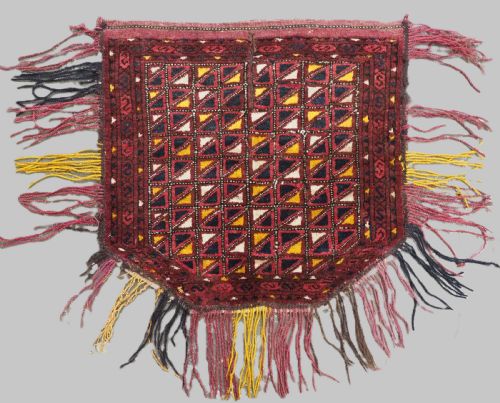
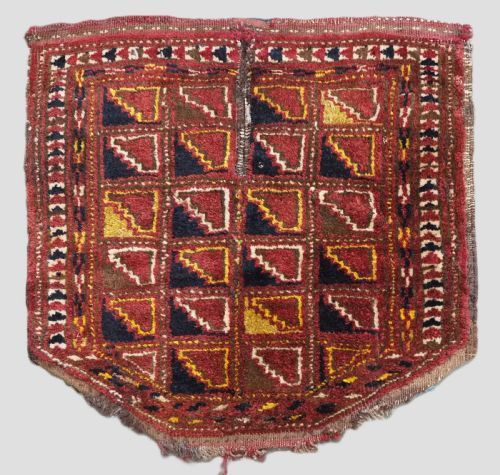


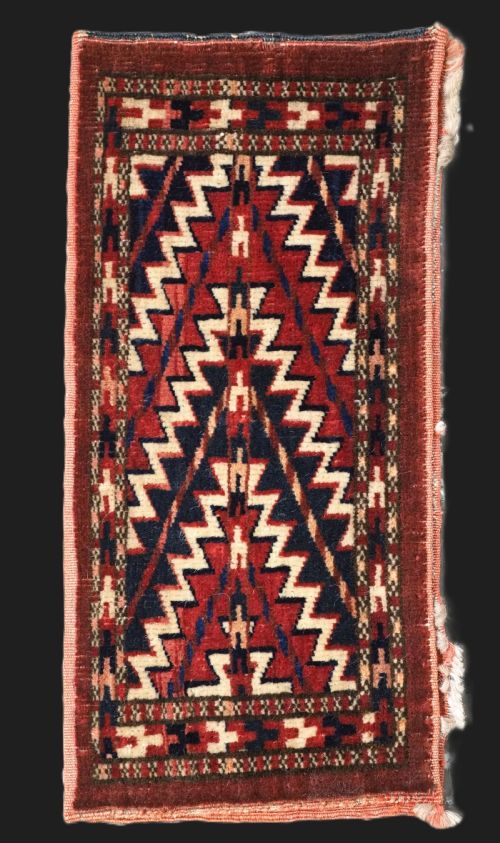


Geometric Turkmen Wall Hanging
These pieces of geometric turkmen wall hanging bring nomadic Central Asian history directly into modern rooms through rich tribal motifs.
Geometric Turkmen Wall Hanging
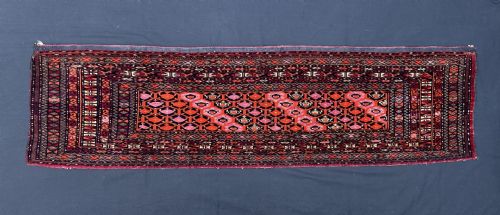
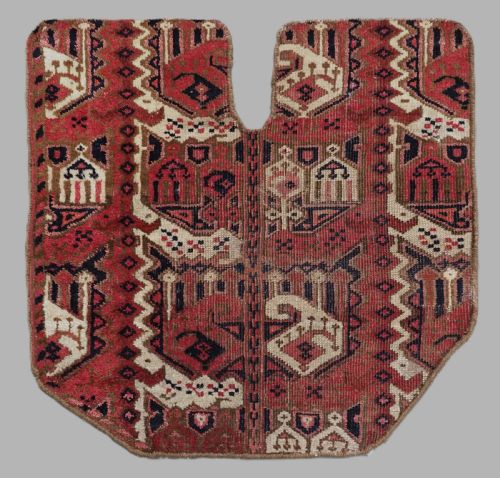
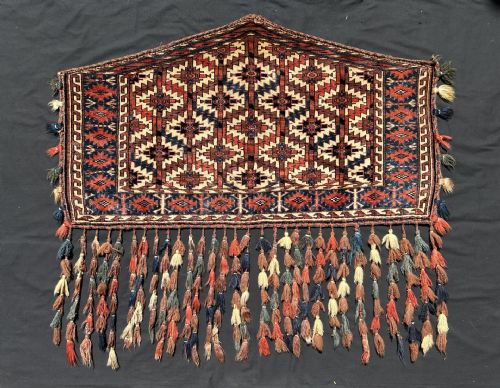
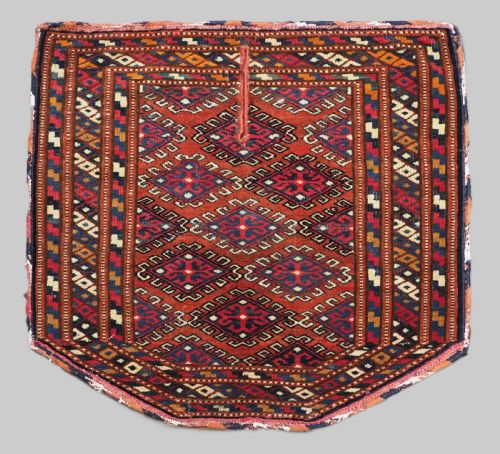
Production spans from the mid nineteenth century into the early twentieth century, reflecting traditional tribal weaving patterns. Common forms include torbas, chuvals, asmalyks, and okbash pieces, each demonstrating structured tribal layouts. The prevalent designs rely on repeated guls, star octagons, and curled leaf motifs suited for vertical display.
How They Were Made
Weavers utilised hand spun wool and cotton foundations, building resilient structures designed for nomadic survival. Natural dyes provided the rich palette characteristic of these tribal textiles, yielding deep reds, browns, and ivory grounds. Skilled hands executed pile knots alongside flat woven details to create texture and contrast.
Many items retain original elements such as plain weave backs, tassels, and structural sides that evidence traditional workshop methods. The integration of wool and natural colourants ensures the structural integrity visible in surviving examples from the Trans Caspian steppes.
Listings feature nineteenth and early twentieth century items composed of hand spun wool, cotton, and natural dyes from Yomut, Ersari, and Tekke tribes.
What Varies in Quality
Quality rests upon the precision of the tribal design execution and the depth of the natural dyes used within the wool. Examples featuring complex repetitive motifs like multiple guls or crisp star octagons demonstrate superior technical control by the weaver.
The preservation of original structural components, such as tassels and plain weave backs, elevates the standing of a textile. Finer knot density and clarity in the contrasting ivory or dark grounds distinguish the higher tier of tribal works.
The Geometric Turkmen Wall Hanging Glossary
- Gul
- A primary medallion or repeating motif used in tribal rug design. These geometric emblems often identify the specific tribe or clan that wove the textile.
- Torba
- A small storage bag traditionally hung inside a nomad tent. They feature detailed face designs while the backs often utilise plain weave.
- Chuval
- A large storage bag utilised for household goods within Central Asian dwellings. These pieces display extensive face patterns composed of repeating guls.
- Asmalyk
- A ceremonial pentagonal trapping hung on bridal camels during nomadic wedding processions. They display elaborate geometric ornament.
- Ensi
- A tribal door hanging placed at the entrance of a yurt. These textiles incorporate distinctive cross panel layouts.
Geometric Turkmen Wall Hanging: Frequently Asked Questions
What is a geometric turkmen wall hanging?
These pieces are historic nomadic textiles originally created as functional bags, tent furnishings, or door hangings by tribes in Central Asia. Artisans wove them from hand spun wool using natural dyes and structured geometric layouts.
Today, collectors mount these woven artefacts on walls to display their tribal patterns and rich historical context within modern interiors.
How do I hang a textile safely?
Mounting requires careful weight distribution to prevent stress on the historic wool and cotton foundations. Conservation grade Velcro stitching or specialised padded wooden battens provide secure support across the top edge.
Avoid direct display in bright sunlight to protect the natural dyes from fading over time.
Which tribes made these pieces?
Weavers from groups such as the Yomut, Ersari, Tekke, Saryk, and Sariq produced these nomadic textiles across the Trans Caspian steppes. Each tribe maintained distinct design preferences, structural forms, and colour combinations.
These tribal variations help collectors attribute specific pieces to particular regions along the Amu Darya or oasis settlements.
How old are these textile items?
The available pieces date primarily from the mid nineteenth century through to the early twentieth century. This period captures traditional nomadic weaving before commercial dyes and industrial methods altered local production.
Dates are estimated based on material wear, structural techniques, and stylistic evolution within the specific tribal groups.