
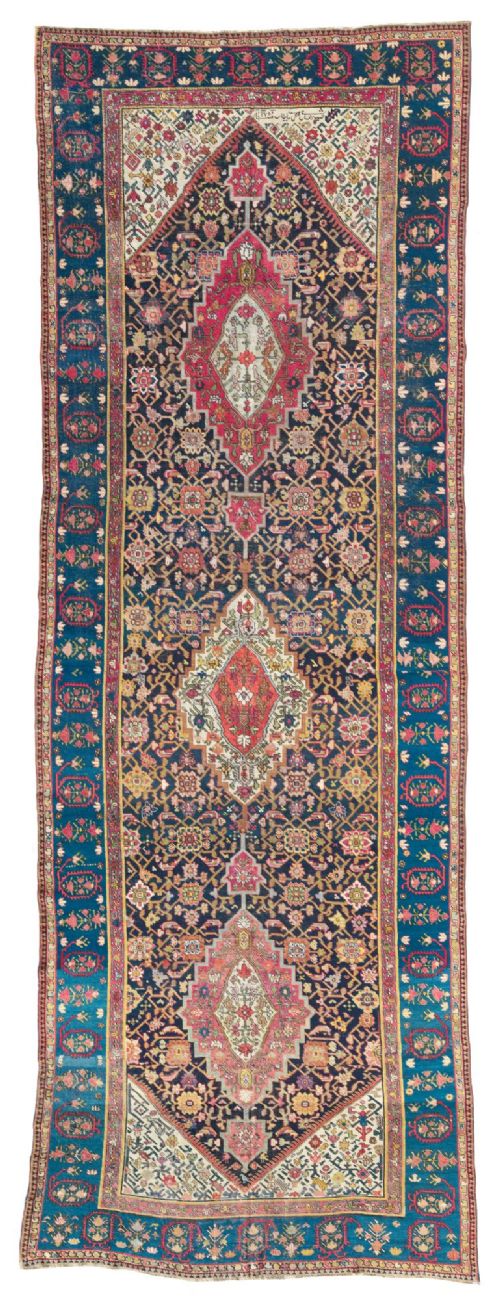
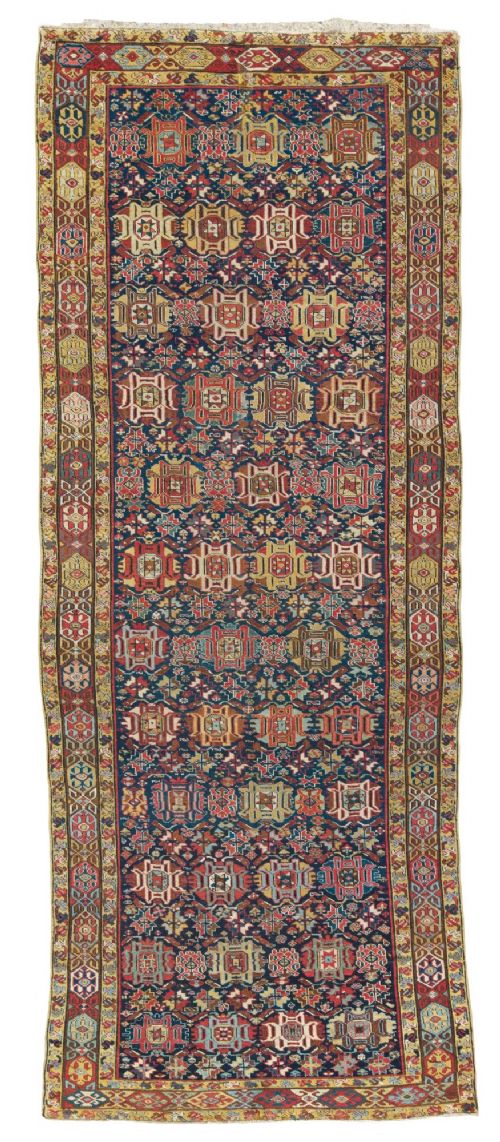


Hand Knotted Kelleh Carpet
A hand knotted kelleh carpet brings substantial tribal scale and rich regional patterning to a floor, offering durable wool construction shaped by generations of weaving traditions.
Hand Knotted Kelleh Carpet
A hand knotted kelleh carpet represents a distinctive format of large floor covering, traditionally longer than it is wide, originating from Persian, Kurdish, and Caucasian weaving centres. These generous pieces served functional roles in nomadic tents and village homes, where their substantial proportions defined central living spaces.
Buyers browsing this selection encounter nineteenth and early twentieth-century examples shaped by tribal groups such as the Kurdish, Bidjar, Karabagh, and Khamseh. The formats range from expansive carpets exceeding five metres to narrower runner proportions suited to gallery and hallway placement.
The aesthetic merges geometric tribal motifs with classical Persian compositions, showing influences from northwest Persian workshops and nomadic weaver imagination alike. Each piece displays the characteristic elongated rectangular field that distinguishes the kelleh from standard square or runner formats.
How they were made
These carpets rely on hand-spun wool for their tactile pile and durable foundation structures, paired with cotton warps and wefts in many town and village workshops. The natural wool provides resilience and absorbs traditional vegetable and natural dyes with deep variation over decades of use.
Weavers knotted the pile by hand onto vertical looms, employing dense knotting techniques that produced heavy, substantial textile structures capable of enduring heavy foot traffic. Edge finishes typically involve overcast side cords, while ends retain original flatwoven kilim segments where survival permits.
What varies in quality
Quality rests in the tightness of the knotting and the crispness of the drawing, which dictates how sharply the geometric or floral motifs resolve across the field. Finer wool preparation and careful spinning yield a lustrous pile that retains its suppleness and resists matting.
Colour saturation and the harmonious balance of natural dye palettes separate standard village weaving from exceptional tribal examples. The presence of well-balanced borders, such as the harshang or crab pattern, adds structural integrity to the overall design composition.
The Hand Knotted Kelleh Carpet Glossary
- Kelleh
- A large format carpet traditionally longer than a standard carpet but wider than a runner, suited to specific room proportions. This format originated in Persian and Caucasian weaving regions.
- Boteh
- A stylised almond or paisley motif representing a floral spray, cypress tree, or flame. This ancient symbol appears frequently in Kurdish and Persian tribal designs.
- Cloud band
- A ribbon-like motif of Chinese origin representing swirling clouds, incorporated into Caucasian and Persian border designs. It adds a dynamic linear element to the surrounding field.
- Warp
- The stationary vertical threads stretched on the loom that form the structural foundation of the carpet. Weft threads are interlaced across these warps to secure the knots.
- Kilim
- A flatwoven textile portion usually found at the top and bottom ends of a pile carpet. These woven strips protect the knotted pile from fraying.
Hand Knotted Kelleh Carpet: Frequently Asked Questions
How do I place a kelleh carpet in a modern room?
The elongated rectangular proportions make these carpets ideal for narrow reception rooms, long hallways, or anchoring furniture arrangements in open living spaces. Their substantial length naturally guides movement through a room while providing a warm textural foundation.
Allow sufficient floor margin around the edges to let the border patterns frame the space properly. Pairing them with a quality underlay protects the historical wool foundation from direct friction against hard flooring.
What is the difference between Kurdish and Caucasian kellehs?
Kurdish examples typically feature dense, robust wool construction with earthy tones and traditional boteh or Herati motifs. They reflect the utilitarian demands and tribal heritage of mountain weavers.
Caucasian pieces from regions like Karabagh often display brighter, more saturated primary colours with bold geometric medallion layouts. Their drawing tends to be more graphic and abstract compared to softer Persian village styles.
How do I clean an antique kelleh carpet?
Gentle surface vacuuming without a rotating brush roll prevents dust accumulation within the wool pile. Professional specialist cleaning remains essential for addressing deep soil or spills without risking dye migration.
Avoid chemical spot treatments or excessive moisture, which can weaken old cotton foundations and natural wool fibres. Regular rotation ensures even exposure to light and wear patterns across the floor.
How do I date an older kelleh carpet?
Dating relies on assessing the palette of natural dyes, the structural handling of the wool, and the specific tribal or regional drawing style. Nineteenth-century examples often show subtle abrash colour variations resulting from small dye batches.
Structural traits such as wool quality, hand-spun inconsistencies, and end finish construction provide further clues to the era of manufacture. Comparing regional motifs with documented tribal weaving helps narrow the decade of production.