


Red Kurdish Runner Rug
These robust wool textiles bring tribal character to hallways and long spaces through enduring nineteenth and early twentieth-century craftsmanship.
Red Kurdish Runner Rug
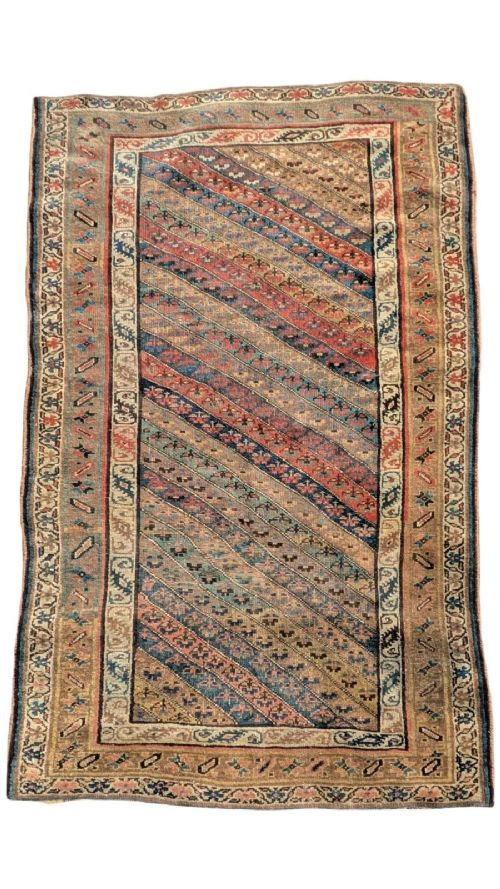
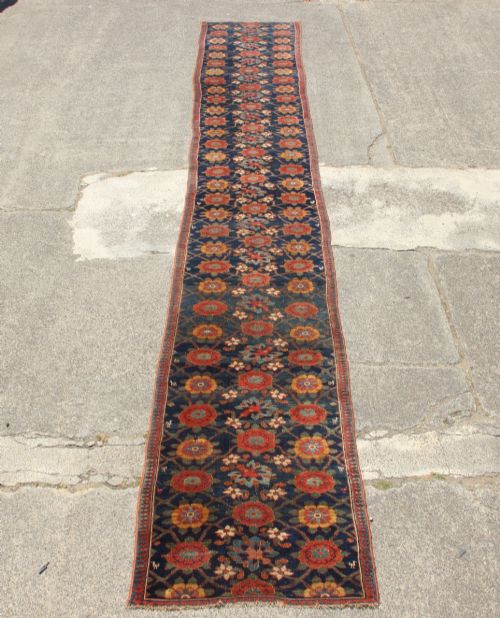
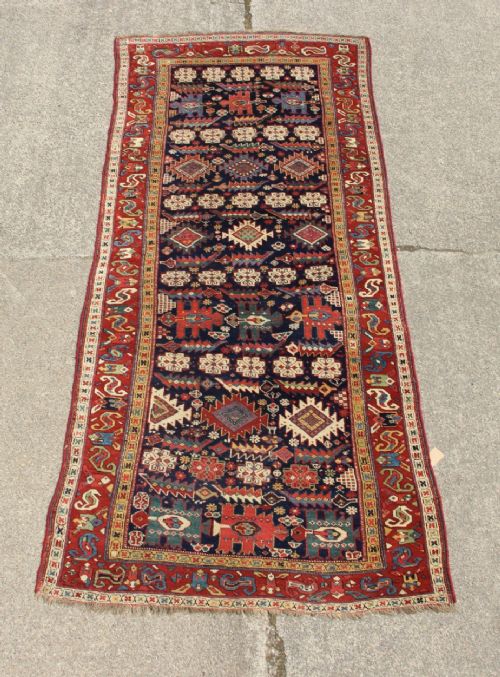
When searching for a red kurdish runner rug, a buyer looks at elongated tribal floor coverings woven across Persian and Caucasian regions during the nineteenth and early twentieth centuries. These pieces typically display narrow formats suited to corridors and halls, grounded in deep red tones shaped by Kurdish weavers.
The selection ranges from early examples dating to the mid-nineteenth century up to pieces made around the nineteen-thirties. Forms include specific tribal formats such as Kelleh carpets and narrow hallway runners featuring geometric patterns or traditional motifs.
Materials and construction
These textiles rely principally on wool and hand-spun wool for their resilient piles, combined with cotton foundations in specific regional pieces. The spinning method of the wool dictates much of the surface texture and durability seen across the surviving items.
Weavers utilised traditional tribal knotting techniques handed down through generations in regions spanning North West Persia and East Anatolia. The integration of local dye traditions produced the characteristic red ground colours that define these floor coverings.
Certain narrow runners preserve the quiet footsteps of nineteenth-century nomadic weavers who encoded tribal histories into everyday floor coverings.
Distinctions in quality
The standard of a runner depends upon the fineness of the knotting and the crispness of the tribal design execution. Tighter structures and more carefully prepared hand-spun wool create greater resilience under foot.
Design complexity and regional attribution also influence the character of each piece. Finer weave counts and well-preserved borders distinguish the upper tier of these tribal textiles from simpler utility items.
The Red Kurdish Runner Rug Glossary
- Runner
- A long, narrow carpet format designed specifically for hallways, corridors and staircases. These pieces measure significantly longer than they are wide.
- Kelleh
- A large rectangular format traditionally produced in Persian weaving centres, positioned between standard rugs and full room-size carpets.
- Hand-spun wool
- Yarn twisted by hand rather than by industrial machinery, resulting in variable thickness and a characteristic tactile warmth in the pile.
- Bidjar
- A renowned weaving region in Persia celebrated for producing exceptionally dense, heavy carpets and runners with durable foundations.
- Senneh
- A town and surrounding district in Persia known for fine, intricately patterned weaving utilising distinctive geometric layouts.
Red Kurdish Runner Rug: Frequently Asked Questions
Where were these runners made?
The pieces originate primarily from Kurdish communities across North West Persia, East Anatolia, and regions such as Quchan and Bidjar. Weavers in these areas maintained distinct tribal design traditions.
Production spanned from the mid-nineteenth century into the early decades of the twentieth century, reflecting local cultural aesthetics.
How do I care for a wool runner?
Regular gentle vacuuming without a rotating brush helps maintain the wool pile and removes trapped dust. Professional cleaning suited to antique textiles preserves the natural fibres.
Placing the runner on an appropriate underlay prevents sliding and reduces friction against hard flooring surfaces.
What designs appear on these rugs?
Motifs include geometric patterns, Mina Khani layouts, garden designs, and traditional tribal symbols. Turkmen güls and figurative elements also appear on specific regional examples.
Red ground colours dominate the compositions, framed by detailed borders that enclose the central field.
How can I tell the age of a runner?
Dating relies on material analysis, including the presence of hand-spun wool and natural dye variations typical of nineteenth-century production. Structural characteristics and regional knotting styles also provide chronological clues.
Comparative study of known pieces from periods spanning eighteen-fifty to nineteen-thirty helps establish likely production decades.