
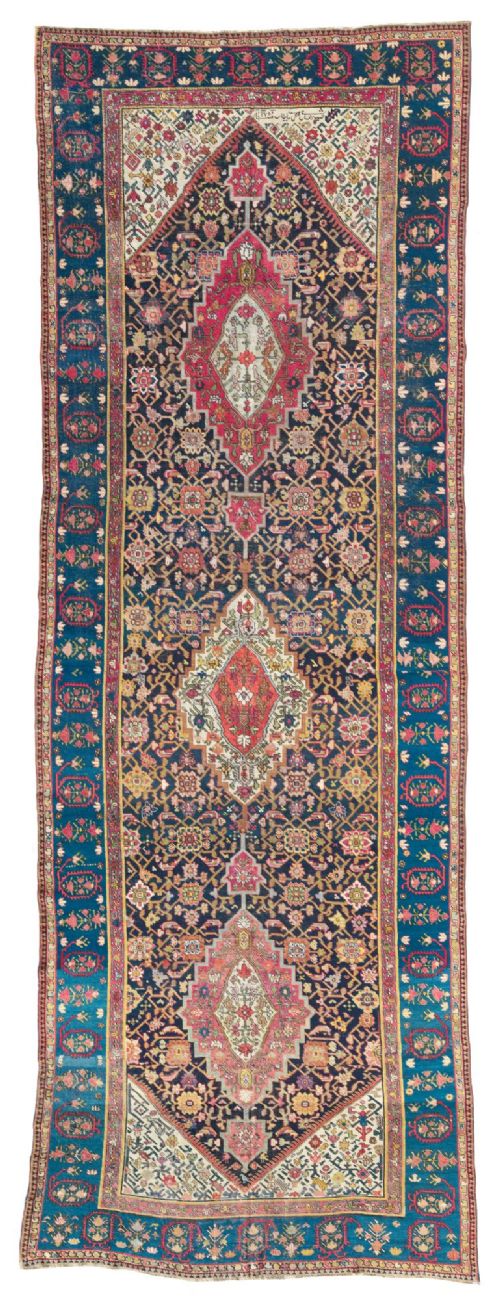


Antique Persian Kelleh
An antique Persian kelleh is a long format carpet intended for extended rooms, bringing traditional tribal and village weaving traditions straight into a home.
Antique Persian Kelleh
An antique Persian kelleh is a distinctive long format carpet, bridging the proportions between a standard area rug and a room-sized carpet. These elongated pieces emerge from various nineteenth and early twentieth century weaving traditions across Persia, particularly from tribal and village centres such as Bidjar, Malayer, Kurdish regions, and Khamseh.
The format is specifically designed for corridors, long reception rooms, or gallery spaces where standard square carpets fail to fit. Visitors to this page will frequently encounter Kurdish, Bidjar, and Malayer examples that display characteristic narrow proportions, often measuring over three metres in length.
Makers produced these long carpets using traditional village and nomadic designs, ranging from geometric tribal patterns to elaborate tree of life motifs, shrub lattices, and harshang borders. Each piece represents a functional long floor covering adapted to the architecture of traditional Persian homes and grand halls.
How they were made
Weavers constructed these long carpets using hand-spun wool and cotton foundations, employing durable knotting techniques suited for heavy daily use in corridors and halls. The combination of resilient wool pile and sturdy cotton warps provided the structural strength required for elongated formats.
Craftsmen utilised natural materials for both foundation and pile, incorporating hand-spun wool that absorbed local vegetable dyes with deep variation and rich tone. The resulting textiles display robust physical structures designed to withstand centuries of foot traffic while retaining structural integrity.
Antique Persian Kelleh Retail Price Guide 2026
Typical asking prices for persian kelleh among the pieces listed under this phrase on Sellingantiques today, from the lower quarter to the upper quarter. They describe what is for sale here now, not the wider market.
Some weavers quietly slipped miniature human figures and stray animals into the shrub lattices just to keep the long journey interesting.
What varies in quality
Quality in these long carpets depends heavily on the fineness of the weave, the crispness of the drawing, and the depth of the palette. Tighter knots and more precise geometric or figurative drawing distinguish superior weaving centres like Bidjar and Faraghan from simpler village productions.
The Antique Persian Kelleh Glossary
- Kelleh
- A traditional Persian carpet format defined by a long, narrow rectangular shape well suited to corridors and extended rooms. These pieces typically maintain a proportion significantly longer than they are wide.
- Bidjar
- A renowned Persian weaving centre known for producing dense, heavy carpets with exceptionally durable structures. Pieces from this town often feature robust geometric designs and tight knotting.
- Boteh
- A traditional Persian motif resembling a curved almond or pear shape, frequently incorporated into textile designs. This symbol appears widely across village and tribal long rugs.
- Senneh
- A town in western Persia celebrated for fine, delicate weaving and intricate tribal designs. Carpets attributed to this centre often display precise shrub and lattice compositions.
Antique Persian Kelleh: Frequently Asked Questions
What is an antique Persian kelleh?
An antique Persian kelleh is an elongated carpet format historically used in long rooms, corridors, and grand hallways. These textiles combine traditional village and tribal weaving methods with narrow proportions.
They serve as functional floor coverings designed specifically for spaces where standard rectangular rugs are too wide or short. The format accommodates the architectural demands of long corridors while displaying regional Persian artistry.
How do I style a kelleh in a modern home?
A kelleh fits naturally in narrow spaces such as hallways, long corridors, and gallery rooms where standard carpets do not reach. Their elongated dimensions also make them effective for anchoring furniture arrangements in extended living areas.
Placing the carpet in a low-traffic or moderate-traffic zone preserves the wool pile while showcasing the detailed border work and central field design. The narrow format helps visually stretch short rooms or accentuates the length of expansive hallways.
How can I tell different regional styles apart?
Regional styles reveal themselves through specific design motifs, border arrangements, and structural characteristics. Bidjar pieces often exhibit dense, heavy construction, whereas Malayer and Kurdish examples frequently feature shrub lattices or boteh designs.
Examining the border patterns, such as harshang crab motifs or dragon borders, provides clear clues to the weaving origin. Colour palette variations and wool preparation further distinguish carpets from different Persian provinces.