






Hand Knotted Chuval
A hand knotted chuval is a traditional Turkmen storage bag woven with distinctive tribal guls, prized for its intricate geometric artistry and historical textile depth.
Hand Knotted Chuval
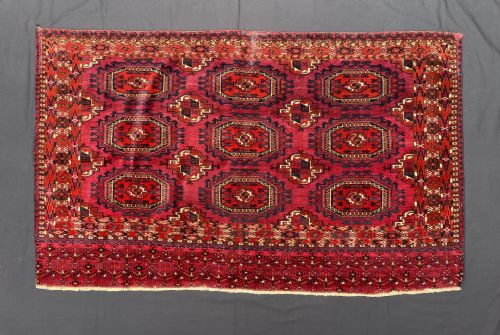
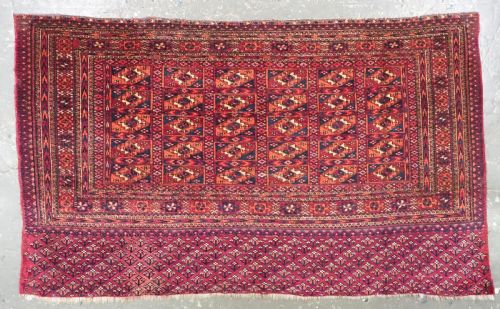
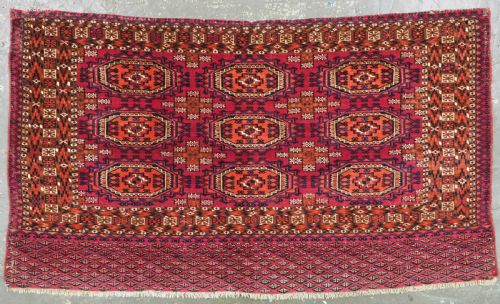
A hand knotted chuval represents a specific form of tribal trapping originating from Central Asia, traditionally utilised as a large storage bag within nomadic tents. Buyers encountering these pieces on this page will primarily find antique faces or complete examples created by weavers from various Turkmen groups such as the Tekke, Yomut, Ersari, Saryk, and Salor.
The format typically showcases repeating primary motifs known as guls, arranged in grids across the surface. Surviving examples range from complete pieces retaining their plain weave backs to individual faces and textile fragments dating from the mid-eighteenth century through to the early twentieth century.
Materials and construction methods
The construction relies fundamentally on wool, knotted by hand to create a dense pile that faces outward during daily use. Natural dyes provide the enduring palette across these textiles, developing distinct patination over decades of age.
Many examples incorporate flat woven details and plain weave backs to balance structural durability with flexibility. Specialised designs such as ikat patterns or specialised elem panels at the lower skirts appear within specific tribal traditions.
Hand Knotted Chuval Retail Price Guide 2026
Typical asking prices for hand knotted chuval among the pieces listed under this phrase on Sellingantiques today, from the lower quarter to the upper quarter. They describe what is for sale here now, not the wider market.
Listings span from the mid eighteenth century through to the early twentieth century, featuring wool and natural dyes across Turkmen tribal styles.
Evaluating quality and execution
Quality rests in the precision of the knotting and the crispness of the gul geometry. Finer density allows complex secondary motifs and sharp outlines to emerge clearly from the background wool.
The depth and saturation of the natural dyes distinguish superior examples, alongside the integrity of survival in complete pieces with intact backs and flat woven elements.
The Hand Knotted Chuval Glossary
- Chuval
- A large tent bag used by Turkmen nomads for household storage. These items formed an essential part of nomadic furnishings.
- Gul
- A primary medallion motif repeated across Turkmen rugs and trappings. Each tribal group utilised distinct geometric variations.
- Elem
- The decorative lower skirt panel of a rug or bag face. This section often contains floral or geometric subsidiary designs.
- Torba
- A smaller storage bag compared to the chuval. These pieces were hung inside nomadic tents for personal items.
- Plain weave
- A simple unpotted structure forming the back or sides of a bag. This technique reduced weight and bulk for hanging.
Hand Knotted Chuval: Frequently Asked Questions
What is a hand knotted chuval?
A hand knotted chuval is a traditional nomadic storage bag produced by Turkmen and Central Asian tribes. They served practical domestic functions inside tents before surviving as collectible tribal textiles.
The surface design typically centres on repeating primary guls arranged in structured rows. Collectors value them for their tribal iconography and deep natural dye colours.
How were these bags used?
Nomadic families utilised these large bags to store bedding, clothing, and household possessions inside their dwellings. They hung against tent walls or stacked upon camels during migrations.
The durable wool pile and flat woven backs protected the contents from dampness and wear. Today, surviving examples function primarily as wall art or floor displays.
How do I identify different tribes?
Tribal attribution relies on the specific gul shapes, border arrangements, and secondary ornamentation. Tekke, Yomut, Ersari, and Saryk weavers each employed distinct design vocabularies.
Examining the colour palette and structural format helps narrow the origin. Expert analysis of the knotting style confirms the specific Central Asian group.
How do I care for a textile?
Display these historic textiles away from direct sunlight to protect the natural dyes from fading. Gentle vacuuming without a rotating brush removes surface dust safely.
Professional textile conservationists should handle any deeper cleaning requirements. Proper mounting distributes weight evenly across the structure if hung on a wall.