
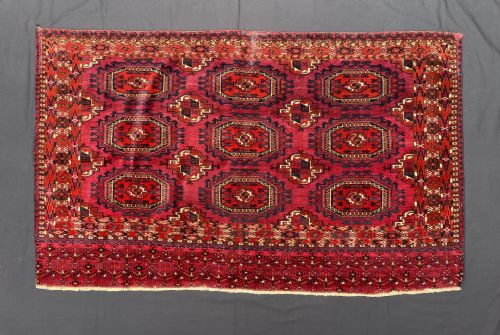


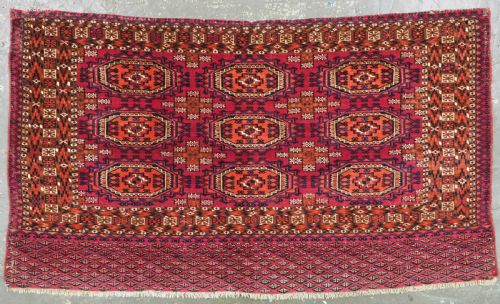


Hand Knotted Chuval Bag
A hand knotted chuval bag is a nomadic Central Asian storage trapping, prized by collectors for its rich wool pile and tribal gul motifs.
Hand Knotted Chuval Bag
A hand knotted chuval bag represents a traditional Central Asian tribal tent storage sack, woven to hold household belongings and bedding. The form ranges from complete bags retaining their plain weave backs to individual faces and textile fragments.
The most common examples on this page are antique Turkmen chuval faces attributed to tribal groups such as the Tekke, Yomut, and Ersari. These pieces originate from regions including the Akhal Oasis and Afghanistan, spanning dates from the mid-eighteenth century to around nineteen hundred.
How they were made
Makers utilised wool for both the pile and the foundation, combining dense knotting with flat woven details and plain weave backs. Natural dyes provide the palette across tribal and nomadic workshops.
Weavers constructed these large tent bags with specific structural layouts, incorporating repeating gul designs and lower elem panels. Individual fragments show the dense knotting techniques employed across Central Asia.
Some nomadic weavers included tiny accidental asymmetry in their repeating guls, ensuring the evil eye was successfully deflected from household storage.
What varies in quality
The sophistication of the gul design and the precision of the wool knotting distinguish the finest pieces. Examples featuring scarce motifs or Salor guls on Tekke foundations demonstrate superior workshop execution.
Completeness alters the character of the textile, with surviving plain weave backs and intact elem panels elevating an example. The depth and clarity of the natural dyes further separate standard production from exceptional works.
The Hand Knotted Chuval Bag Glossary
- Chuval
- A large Central Asian tent bag used by nomadic tribes for storage. These pieces were traditionally woven on horizontal looms using wool.
- Gul
- A repeating medallion or primary motif found in Turkmen rugs and trappings. Different tribal groups utilised distinct gul patterns.
- Elem
- The decorative lower panel of a chuval or rug, often featuring secondary geometric or plant-inspired designs. This section sits below the main field of guls.
- Torba
- A smaller Central Asian hanging bag used for domestic storage. These companion pieces share construction methods with larger chuval bags.
- Plain weave
- A simple unpiled textile structure forming the back and structural support of a chuval. This flat technique contrasted with the dense knotted pile face.
Hand Knotted Chuval Bag: Frequently Asked Questions
What was a chuval used for?
Nomadic families utilised these large bags inside tents to store bedding, clothing, and household possessions. They hung against the lattice walls or travelled loaded on pack animals.
Over time, the decorative faces were separated from their plain weave backs as the utilitarian sacks wore out or entered the collector market.
How do I identify a Tekke chuval?
Tekke examples typically feature precise rows of octagonal guls, often using deep madder red tones and fine wool knotting. Tribal attributions rely on structural details and specific secondary motifs.
Some pieces display Salor style guls woven by Tekke makers, showing the interaction between different Turkmen groups.
Are these pieces complete bags?
The selection includes both complete examples with their original plain weave backs and cut textile faces intended for display. Surviving complete pieces retain their functional form.
Many listings represent single faces or fragments that were preserved specifically for their visual artistry and woven detail.
How do I care for a textile fragment?
Keep textile pieces away from direct sunlight to protect the natural wool dyes from fading over time. Gentle vacuuming with a low suction attachment helps remove dust without disturbing the pile.
Mounting flat fragments on supportive backing allows them to be displayed safely as wall art within a home.