
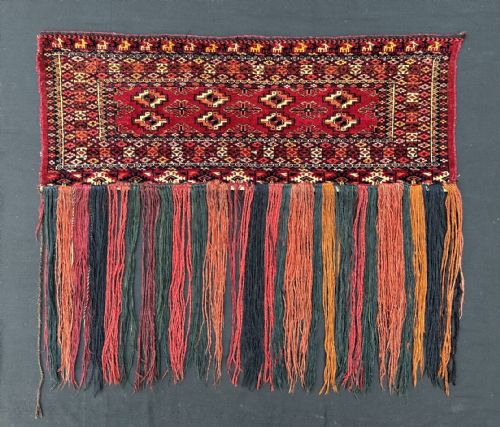
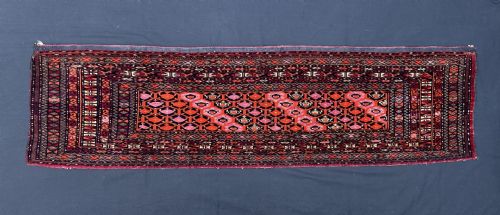
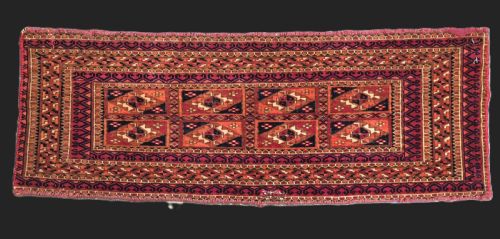


Turkmen Gul Bag Face
These Central Asian tribal weavings display complex medallion patterns known as gul bag face designs, offering collectors rich historical textiles from nineteenth-century nomadic cultures.
Turkmen Gul Bag Face
A turkmen gul bag face represents the utilitarian textile art of nomadic and tribal groups across the Trans-Caspian steppes, specifically produced by tribes such as the Tekke, Yomut, Ersari, and Saryk. Buyers searching this phrase typically encounter bag faces, torbas, chuvals, and mafrashes originating from the latter half of the nineteenth century and the early twentieth century.
These items functioned primarily as tent-bags and storage compartments within tribal dwellings, woven to hold household possessions before being separated from their original backs over time. The geometric medallions, or guls, identify the specific tribal lineage and regional weaving traditions of Central Asia, ranging from Merv and Yolatan oases to broader tribal territories.
Materials and construction
Weavers constructed these tribal items predominantly using wool foundations and pile, supplemented by natural dyes derived from local plants and minerals to achieve deep crimson, madder, and indigo tones. Cotton and occasional silk highlights appear in specific sections like white elements and secondary details, providing textural contrast against the dense wool pile.
The density of the weave varies considerably across the surviving examples, with finer pieces exhibiting extremely tight knotting and precise geometric drawing. Many examples survive as cut panels or faces, retaining hanging loops or remnants of their original construction structures from the nineteenth century.
Nomadic weavers frequently incorporated subtle asymmetry into their repeating medallions, ensuring evil spirits could not enter through a perfected design.
Evaluating the weaving
Quality in these tribal textiles rests upon the precision of the drawing, the crispness of the gul geometry, and the depth achieved through natural dye usage. Superior examples display balanced proportions in the main medallion field and secondary borders, showing careful planning by the weaver.
The handling of secondary details, such as elem panels at the lower border and the integration of cotton or silk accents, separates standard utilitarian work from master examples. Surface condition and pile preservation further distinguish pieces retained in domestic use from those experiencing heavy wear.
The Turkmen Gul Bag Face Glossary
- Gul
- A primary octagonal medallion repeated across Central Asian tribal rugs and bag faces. Each specific tribal group utilised distinct gul variations to denote clan identity.
- Torba
- A small horizontal wall-hanging bag used by nomadic tribes for storage inside the yurt. These rectangular pieces frequently survive as individual bag faces.
- Chuval
- A large tent-bag utilised for bedding and household goods storage by Turkmen tribes. They typically display multiple rows of major guls.
- Mafrash
- A rectangular storage container or trapan face produced by nomadic weavers. These items formed part of the camel or horse transport gear.
- Elem
- The decorative lower panel situated at one or both ends of a chuval or torba face. It often contains secondary tree or floral motifs.
- Aina gul
- A specific mirror-like gul design found primarily on Tekke and related tribal bag faces. This medallion style incorporates geometric quartering within the main octagonal form.
Turkmen Gul Bag Face: Frequently Asked Questions
What is a gul bag face?
A gul bag face is a woven panel from a nomadic storage bag featuring repeating medallion motifs. These panels represent distinct tribal groups from nineteenth-century Central Asia.
They served practical storage functions inside traditional felt tents before entering the antique textile market as independent decorative items.
How do I identify different Turkmen tribes?
Tribal attribution relies primarily on the specific shape and drawing of the gul medallions, along with the secondary border patterns. Tekke, Yomut, Ersari, and Saryk weavers each utilised distinct design vocabularies.
Palettes and material choices, such as the inclusion of white cotton or crimson silk, also help separate these regional traditions.
Were these pieces used on animals?
Many larger torbas and chuvals functioned as camel or horse transport bags during nomadic migrations. They hung against the flanks of pack animals to secure household goods.
Smaller bag faces also served inside the dwelling for storing domestic possessions and clothing.
How should I care for a textile?
Protect antique wool textiles from direct sunlight to prevent natural dye fading. Display them away from high-moisture areas and sources of direct heat.
Gentle vacuuming with a mesh screen covering the nozzle removes surface dust without disturbing the wool pile.