




Crimson Tribal Wall Hanging
When choosing a crimson tribal wall hanging, you examine woven textiles from Central Asian and Persian nomadic traditions created for domestic use.
Crimson Tribal Wall Hanging
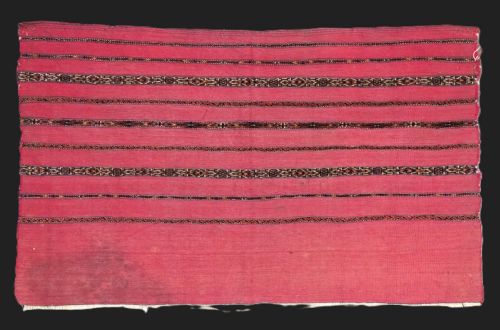
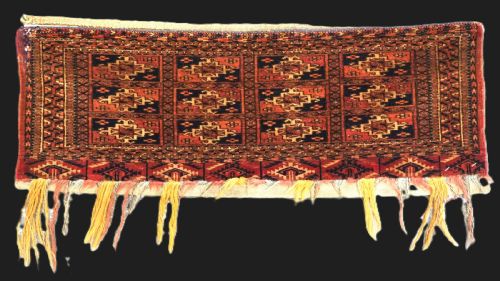
A crimson tribal wall hanging encompasses antique Turkmen, Uzbek, and Persian nomadic weavings originating from the nineteenth and early twentieth centuries. These textile panels, storage bags, and rug fragments display deep red hues derived from natural sources, created by tribes such as the Tekke, Yomut, Saryk, and Ersari.
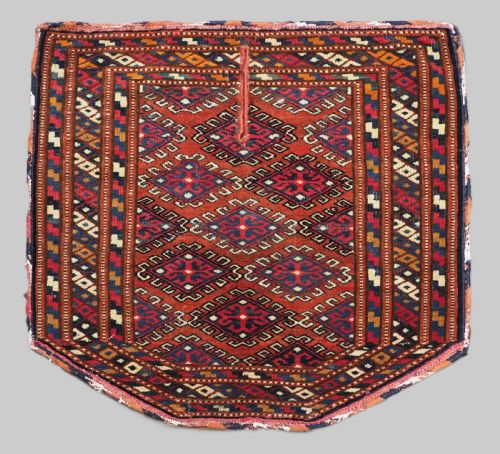
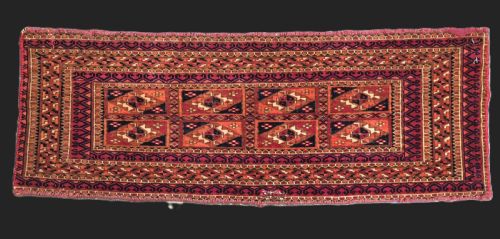
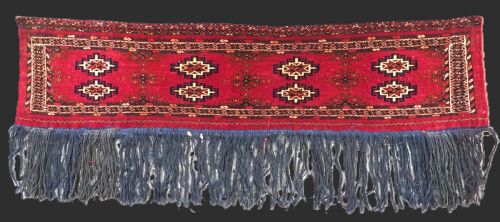
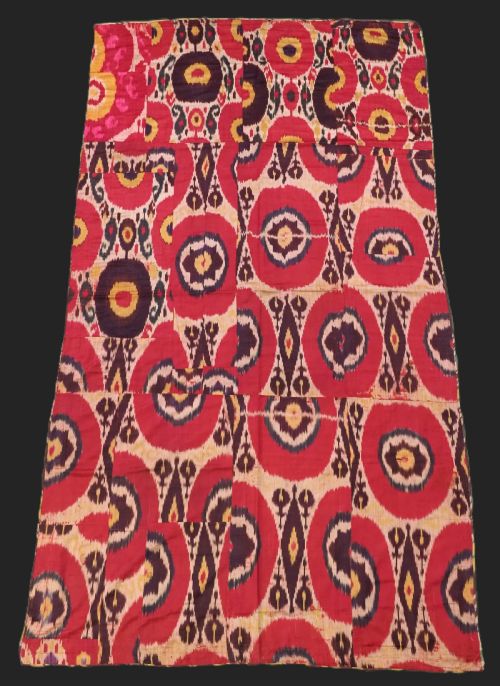
The objects frequently take the form of torba faces, chuval storage bags, saddle covers, and embroidered suzani panels. Originally woven for dowry purposes or household utility within nomadic camps, these textiles now function as decorative wall displays.
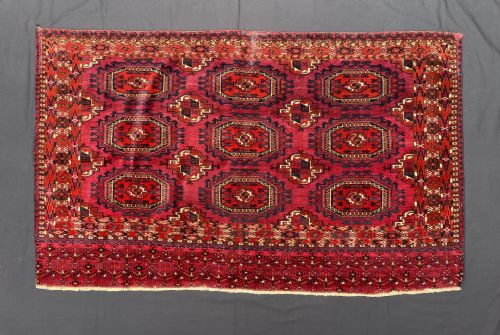
Most examples encountered here originate from Central Asian oases and steppes, spanning the 1850s to the 1920s. They combine intricate geometric guls with practical formats designed for tent interiors.
Materials and Techniques
The foundation of these weavings relies on hand-spun wool, cotton, and silk, manipulated through knotting, flat-weaving, and embroidery. Artisans utilised natural dyes to achieve rich crimson and madder tones that define the palette.
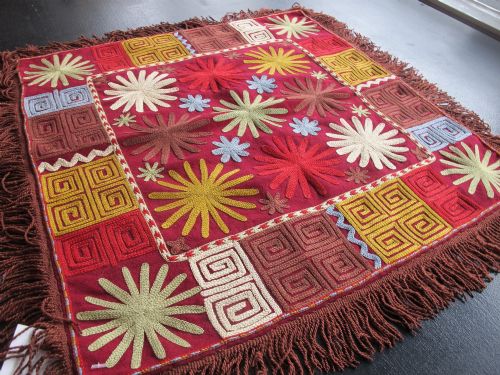
Needlework pieces, such as Lakai and Tashkent suzanis, employ silk threads on cotton or linen grounds with dense chain stitches. Woven pieces like torbas and chuvals utilise tight knotting techniques to secure complex geometric motifs.
Listings feature nineteenth-century Turkmen and Uzbek weavings created from wool, silk, and natural dyes.
Evaluating Quality
Quality rests upon the density of the weave, the precision of the drawing, and the vibrancy of the natural dyes. Finer knots and carefully executed guls indicate advanced technical skill during the weaving process.
The condition of the wool, the retention of original plain-weave backs or hanging loops, and the clarity of the crimson palette distinguish superior examples from standard specimens.
The Crimson Tribal Wall Hanging Glossary
- Gul
- A primary octagonal medallion or design motif repeated across Turkmen and Central Asian carpets. These tribal emblems often identify the specific weaving group.
- Torba
- A small rectangular storage bag created by nomadic weavers for domestic use inside tents. They frequently feature multiple guls and detailed borders.
- Chuval
- A large nomad tent bag utilised for bedding and household storage. Faces of these bags survive as decorative panels.
- Suzani
- An embroidered textile panel from Uzbekistan worked in silk on a cotton or linen ground. They typically display floral or star motifs.
- Ikat
- A dyeing technique where yarn is resist-dyed before weaving to create characteristic blurred pattern edges. These designs appear in Uzbek panels and Beshir torbas.
Crimson Tribal Wall Hanging: Frequently Asked Questions
What is a tribal wall hanging?
These items are antique nomadic textiles, including storage bag faces and embroidered panels, repurposed for interior display.
They originate from Central Asian and Persian tribal groups who wove them for domestic utility.
How old are these textiles?
The pieces available generally date from the mid-nineteenth century through the early twentieth century.
Earlier examples from the 1850s to 1880s reflect traditional nomadic production methods.
What materials were used?
Weavers utilised hand-spun wool, silk, cotton, and linen depending on the specific tribal tradition.
Natural dyes provided the deep crimson and red tones characteristic of these works.
How do I hang a textile?
Mounting is typically achieved by attaching a discreet fabric sleeve to the reverse side for a support rod.
Alternatively, conservation-grade Velcro or specialised display frames protect the structure of the piece.