






Hand Carved Wood Saint
These hand carved wood saint sculptures are devotional figures shaped from timber over centuries, offering collectors tangible fragments of religious history and folk art tradition.
Hand Carved Wood Saint
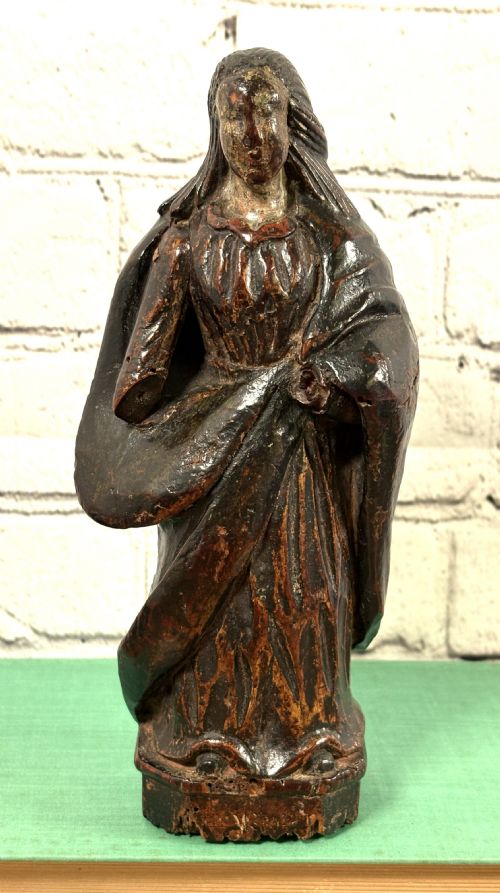
When you search for hand carved wood saint, you encounter devotional wooden sculptures and religious statues originating from various European traditions. These pieces range from late medieval church figures to nineteenth century folk art carvings.
The selections available here heavily feature oak and limewood, taking the form of specific figures such as Saint Jerome, Saint Anthony of Padua, and the Virgin Mary and Child. Figures span multiple centuries, including seventeenth century limewood and eighteenth century oak examples.
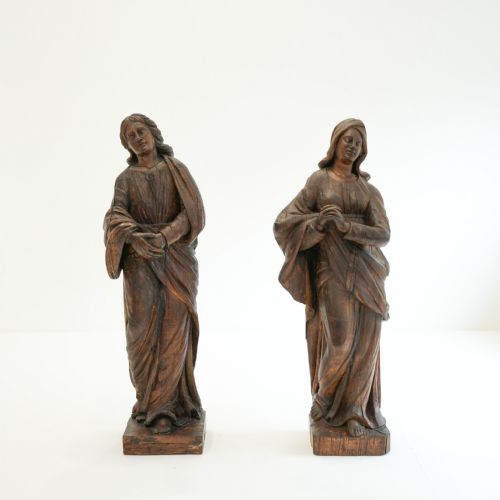
Origin points stretch across different regions, encompassing Italian folk art, German church pieces, and Croatian religious statuary. Buyers frequently find processional figures, pairs of saints, and standalone devotional sculptures.
How they were made
Carvers shaped these figures primarily from solid timbers like oak, limewood, and general carved wood using traditional hand gouges and chisels. The choice of wood dictated the fineness of detail achievable, with limewood allowing for intricate facial expressions and drapery.
Many surfaces received additional treatments including gesso preparation layers, polychrome paint, and applications of gold leaf. These finishes added vibrant colour and sacred dignity to the wooden cores, though centuries of handling often leave them patinated or partially worn.
Listings feature oak, limewood, gesso, paint, and gold leaf across periods ranging from pre sixteenth century to the twentieth century.
What varies in quality
Quality rests upon the sculptural competence of the carving, distinguishing confident anatomical rendering and expressive drapery from stiff, uninspired execution. Master carvers captured movement and human emotion in the grain, while lesser works remained rigid and formulaic.
The survival of original polychrome paint, gesso, and gold leaf significantly influences the character and integrity of a piece. Examples retaining authentic early surface decoration hold greater visual depth compared to those stripped or heavily repainted in later centuries.
Franz Keller
The Hand Carved Wood Saint Glossary
- Polychrome
- Painted in several colours. This surface treatment was common on wooden religious figures to bring realism and symbolic meaning to the garments and flesh.
- Gesso
- A plaster mixture used as a smooth base for paint and gold leaf. Carvers applied it to wooden sculptures to prepare the surface for fine decoration.
- Santos
- A carved figure representing a saint or holy person. These statues often served liturgical functions in processions or private devotion.
- Limewood
- A fine-grained timber favoured by historic woodcarvers. Its soft yet stable nature permitted deep undercut details without splitting.
Hand Carved Wood Saint: Frequently Asked Questions
How old are these wooden saint sculptures?
The pieces span a considerable timeline, reaching from pre sixteenth century church figures up to twentieth century works. Most examples date from the seventeenth, eighteenth, and nineteenth centuries.
Specific dating depends on stylistic clues, historical records, and the tool marks left within the timber during creation.
Where were these carved figures originally displayed?
Historic pieces often originated in European churches, chapels, and monastic settings as focal points for prayer and veneration. Some items also served domestic devotional roles in private homes or were carried in religious processions.
Regional styles often point directly to local workshop traditions in Germany, Italy, and Croatia.
Why do some figures retain paint while others are bare wood?
Many sculptures were originally finished with gesso, polychrome paint, and gold leaf to heighten their devotional impact. Centuries of cleaning, restoration, or aesthetic preference led some owners to strip the surfaces down to the raw oak or limewood.
Surviving paint fragments offer important clues regarding the original appearance and age of the carving.
How should I care for a historic wooden sculpture?
Keep wooden figures in stable indoor environments away from direct sunlight and sudden humidity shifts. Extreme dryness can cause historic timber to split, while moisture damages fragile gesso and paint layers.
Dust gently with a dry, soft brush and avoid applying modern polishes or cleaning agents to aged surfaces.