
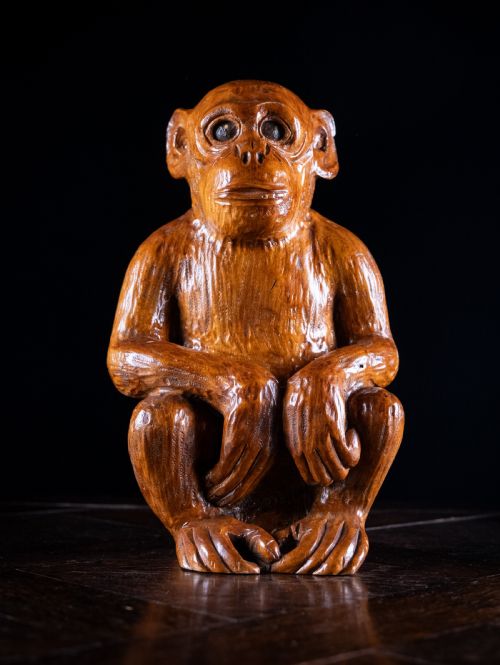
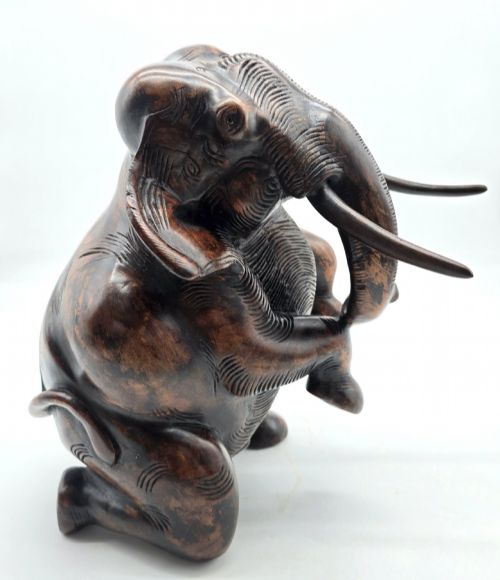

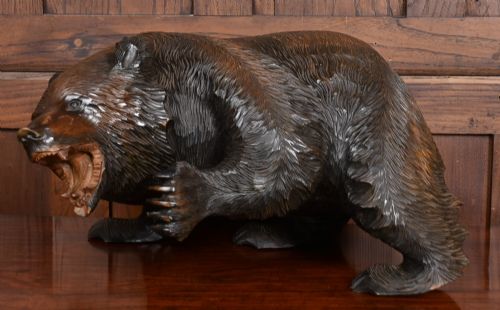
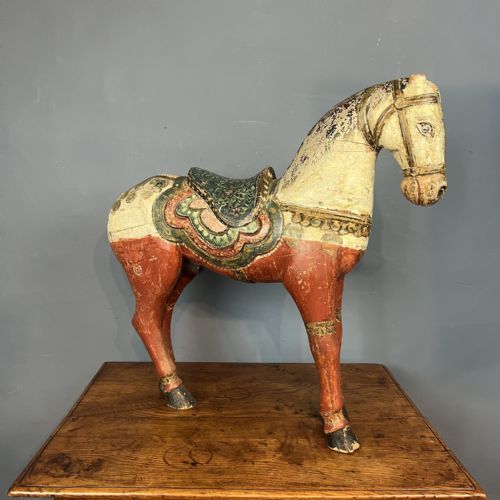
Hand Carved Wood Animals
These hand carved wood animals bring domestic character into a room through regional carving traditions spanning the nineteenth and early twentieth centuries.
Hand Carved Wood Animals
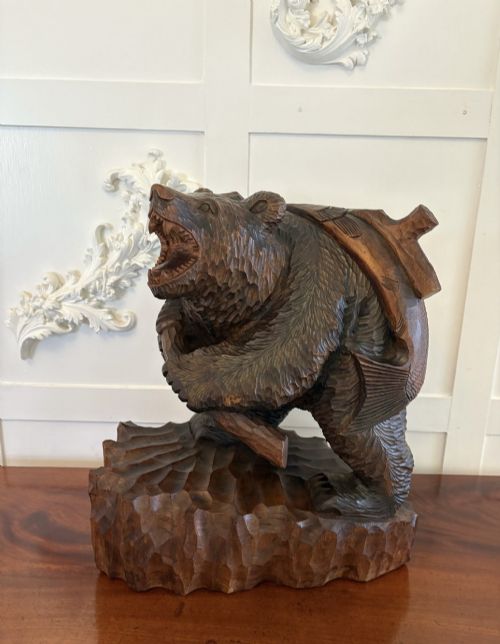
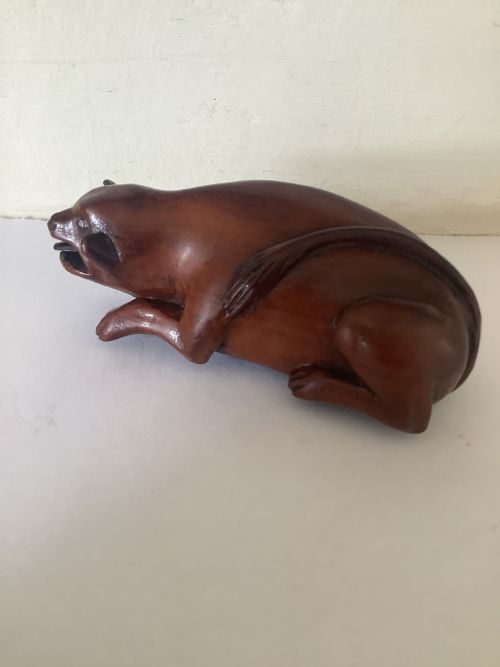
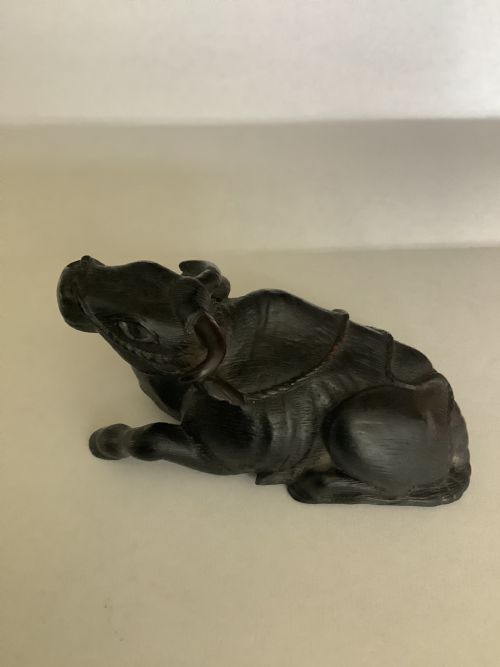
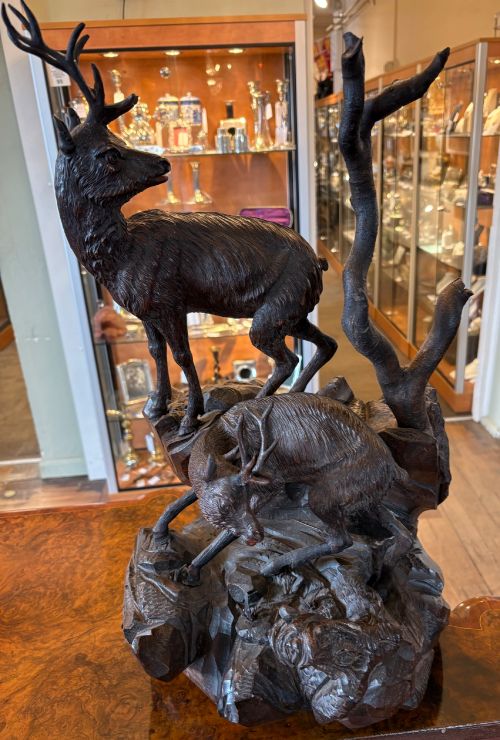
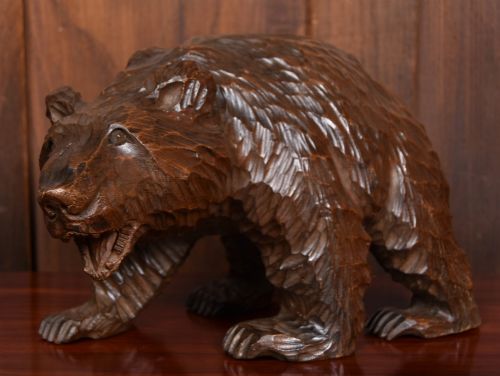
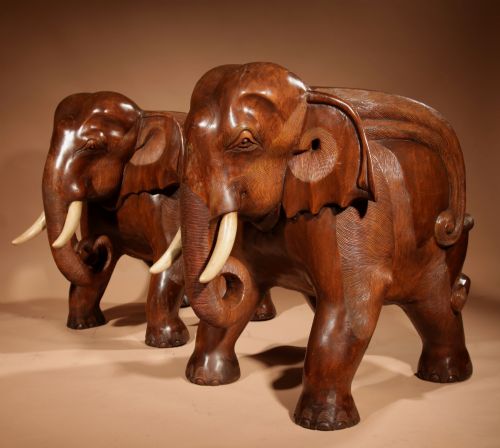
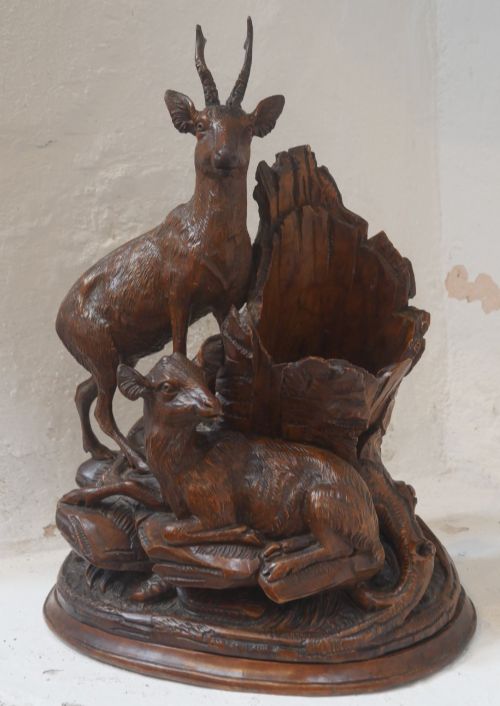
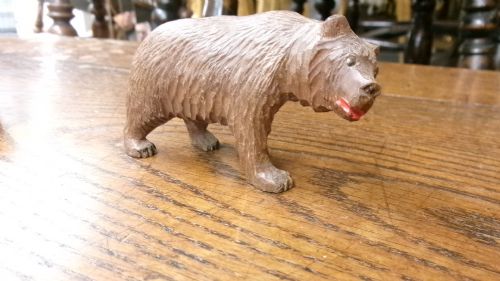
European examples frequently stem from the Black Forest region and the Alps, focusing on bears, deer, foxes, and owls executed in linden wood or limewood. Asian traditions contribute hardwood elephants, water buffaloes, and tigers from the Raj period alongside Japanese bears and folk art figures.
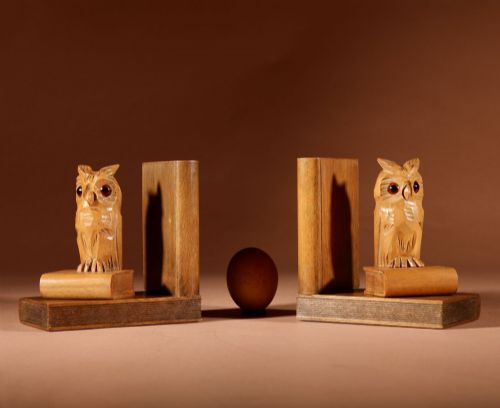
Functional items such as bookends, inkwells, and table lamps appear alongside purely decorative sculptures and wall carvings. Buyers encounter both naive domestic items and highly detailed professional studies shaped from walnut, teak, ebony, and mixed hardwoods.
How they were made
Carvers shaped these figures from linden wood, limewood, walnut, teak, and ebony using hand chisels and gouges to define muscular forms, fur texture, and anatomical detail. Softer woods allowed deep undercut foliage and realistic animal expressions, while denser hardwoods permitted fine polishing and sharp linework.
Stubborn bears stare back with tiny stud eyes while wooden owls hold court as inkwells.
What varies in quality
Quality rests upon anatomical conviction, the sensitivity of the carving tool marks, and the depth of the regional style. Superior pieces display fluid muscle tension, accurate skeletal proportions, and lively character in the animal's posture.
The choice of medium directly influences definition, with tight-grained linden wood and dense hardwoods preserving sharper details than softer pine or basic utility timber. The integration of functional elements, such as bookend bases or lamp fittings, distinguishes ambitious studio work from simple folk carvings.
The Hand Carved Wood Animals Glossary
- Black Forest
- A style of wood carving originating in the mountainous regions of central Europe, renowned for realistic animal studies, particularly bears, deer, and owls. These items often incorporate rustic leaf and branch motifs.
- Linden wood
- A pale, fine-grained timber favored by nineteenth-century carvers for its even texture and suitability for intricate detail. It resists splitting and holds crisp chisel edges.
- Folk art
- Objects created by self-taught or regional artisans outside mainstream academic traditions, prioritising expressive character over strict anatomical proportions. These pieces rely on direct carving methods and simple painted decoration.
- Raj period
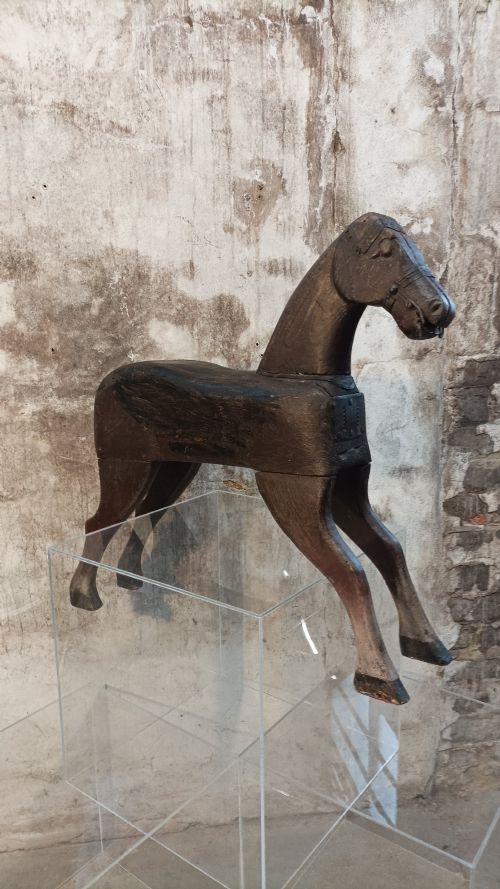
- The era of British administration in the Indian subcontinent, influencing decorative arts and furniture production. Pieces from this time frequently depict elephants and horses carved from dense tropical hardwoods like teak and ebony.
- Kibori Kuma
- Japanese wooden carved bears, notably produced in Hokkaido. These figures range from naive folk representations to detailed animal studies.
Hand Carved Wood Animals: Frequently Asked Questions
How do I identify Black Forest carvings?
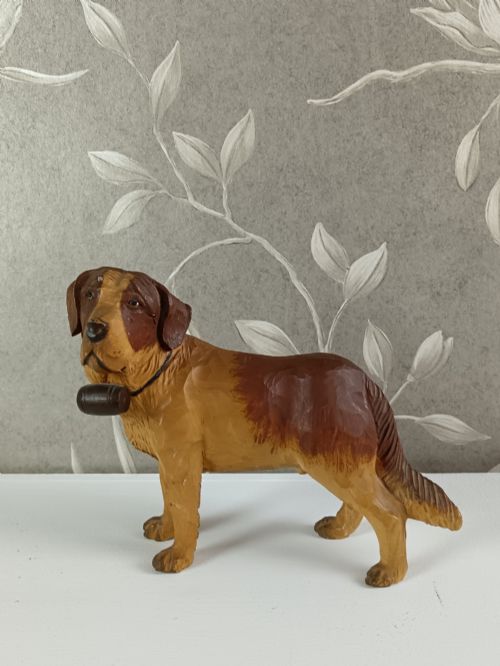
Black Forest carvings are typically rendered in linden wood or walnut and depict regional wildlife such as bears, deer, and foxes. They often feature naturalistic glass eyes and rustic botanical bases.
Many pieces double as functional objects including bookends, inkwells, wall mirrors, and table lamps. The carving style emphasises animated poses and textured fur achieved with deep chisel work.
What woods were used for these animals?
Carvers selected specific timbers depending on regional traditions and the intended level of detail. European workshops favoured linden wood and limewood for their fine grain and ease of shaping.
Asian and colonial pieces utilised dense hardwoods such as teak, ebony, and assorted regional timber to create weighty figures of elephants and water buffaloes.
Are these pieces dated accurately?
Dates rely on stylistic markers, construction methods, and period characteristics recorded across Victorian, Edwardian, and early twentieth century production. Pieces from the nineteenth century often display deeper patination and hand tool signatures.
Later items from the Art Deco period introduce streamlined forms or altered base constructions while retaining traditional hand carving techniques.
How should I care for carved wood animals?
Maintain stable indoor humidity levels to prevent timber from drying out, cracking, or separating at glued joints. Keep carved figures away from direct heat sources and strong sunlight.
Dust gently with a soft, dry brush to preserve the surface wax and natural patina without introducing moisture to the carved grain.