
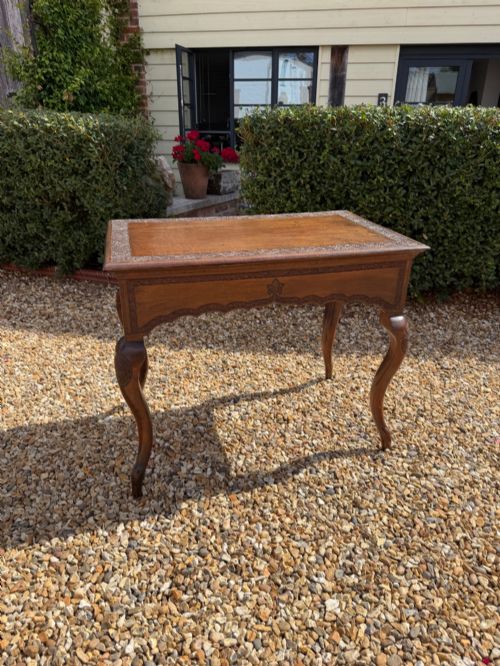
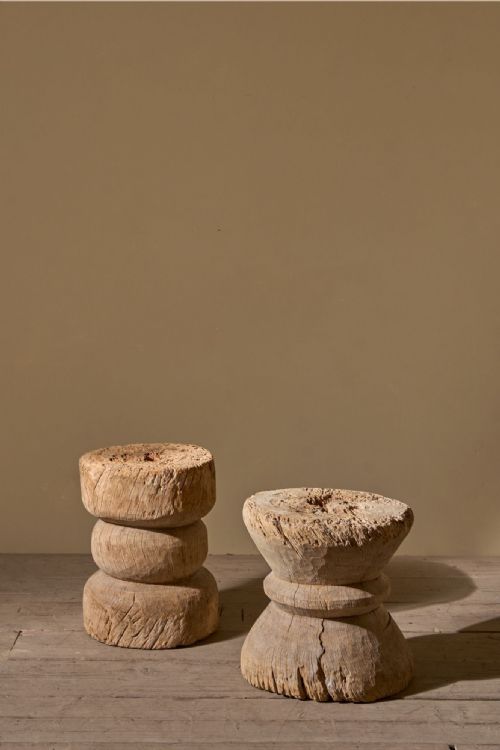
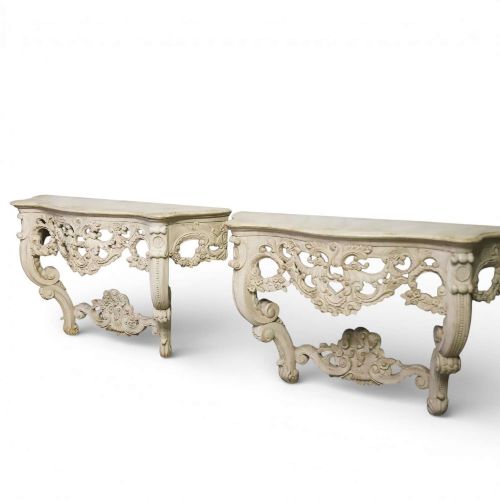
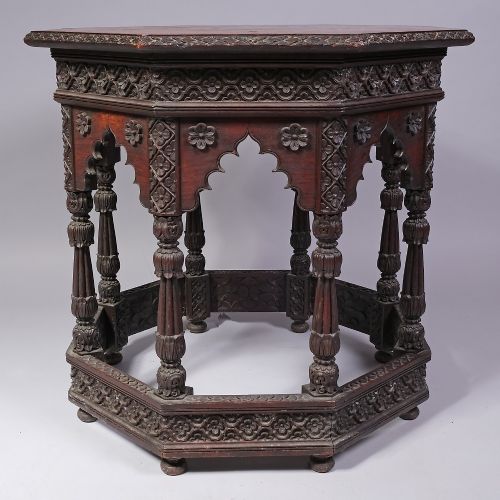
Hand Carved Side Tables
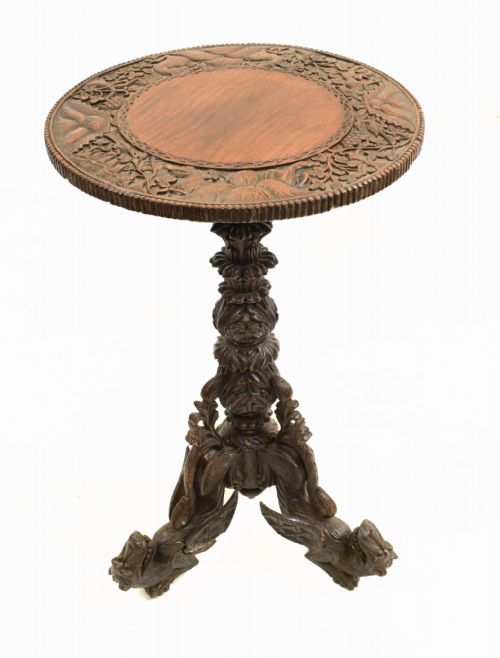
These hand carved side tables bring dense foliage, animal figures and rich timber into a room with genuine weight and history.
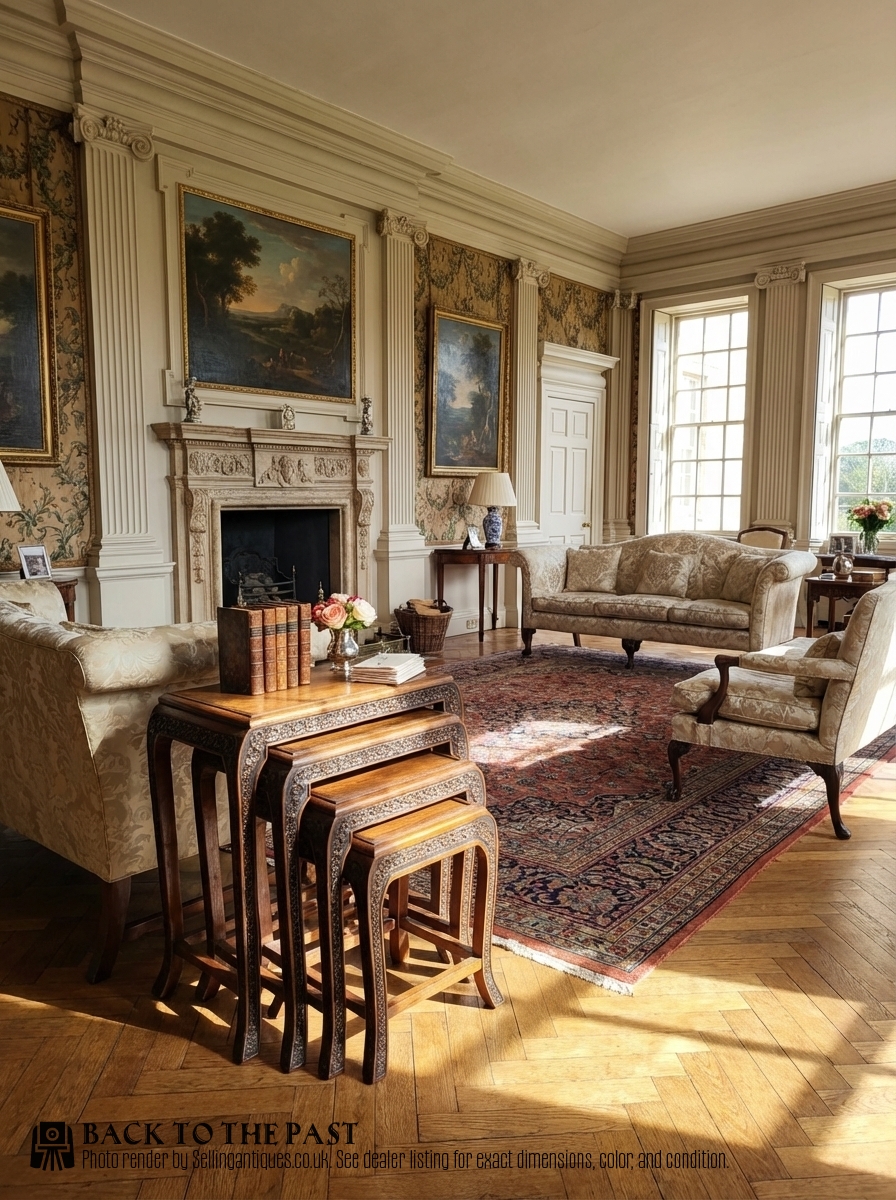
Hand Carved Side Tables
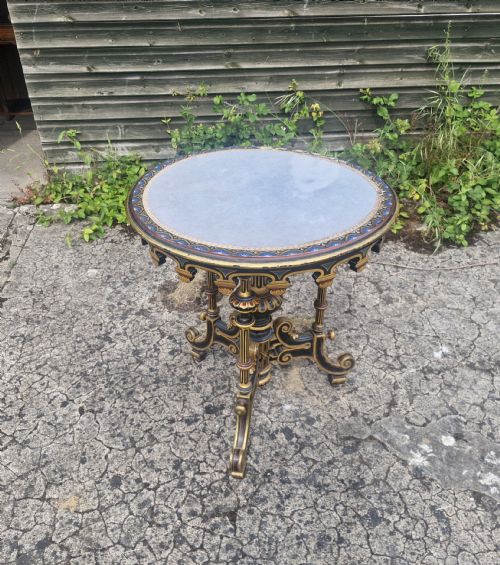
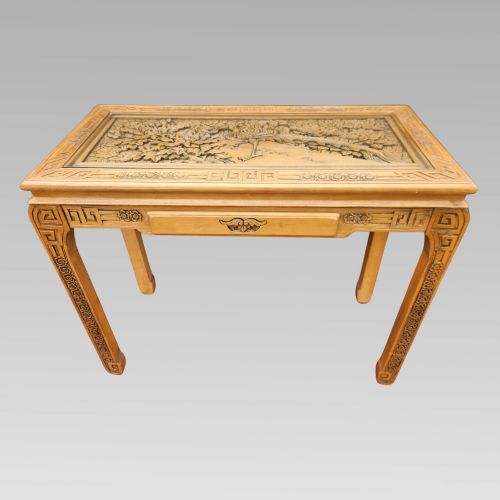
When you search for hand carved side tables, you are looking at items designed for occasional use, displaying deep surface decoration across various global and European traditions. The pieces appearing here span the nineteenth century through the early twentieth century, taking the form of side tables, occasional tables, console tables, coffee tables, and plant stands.
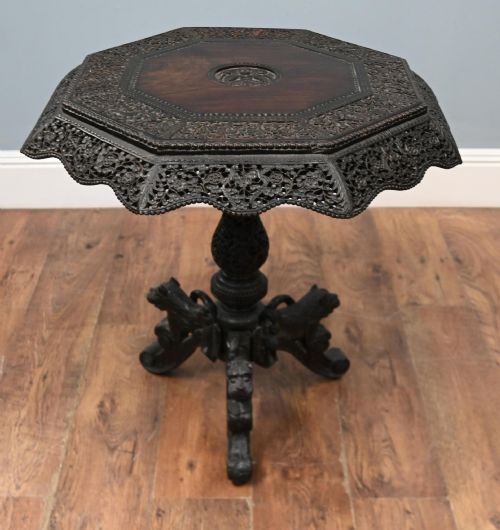
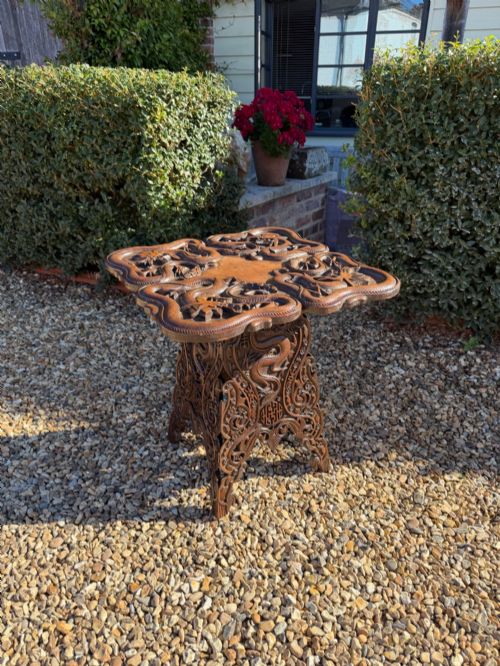
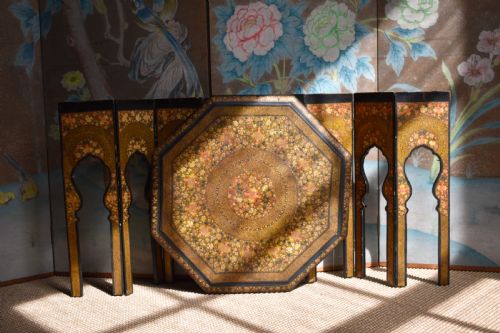
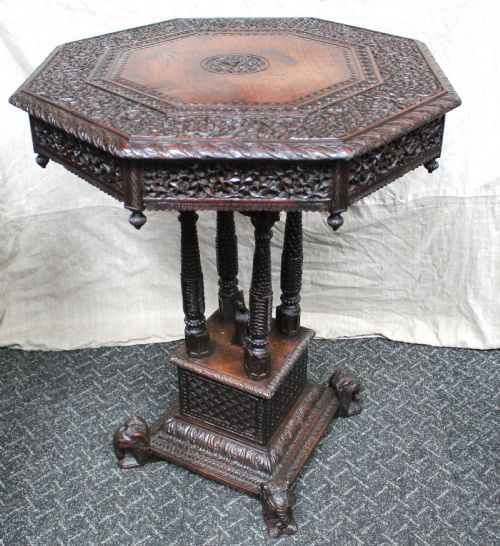
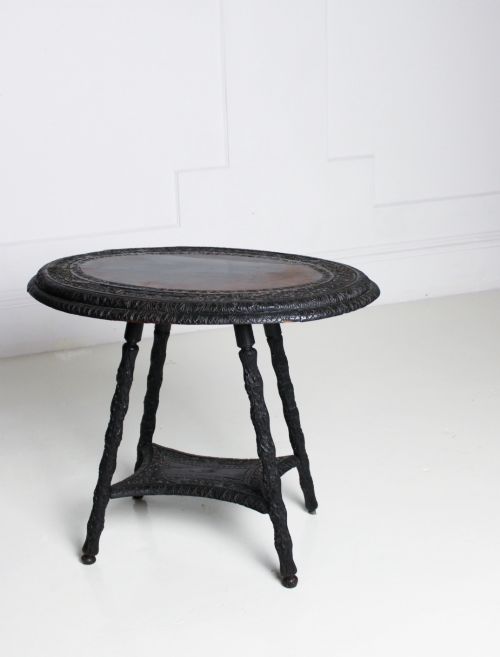
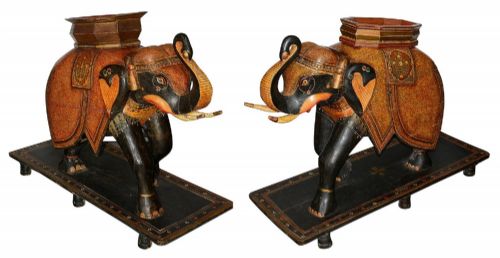
The most common examples you will meet on this page originate from Anglo-Indian, Chinese, Burmese, and Kashmiri workshops, alongside European oak and walnut pieces. These range from small octagonal elephant tables to folding teak lamp tables and painted occasional surfaces.
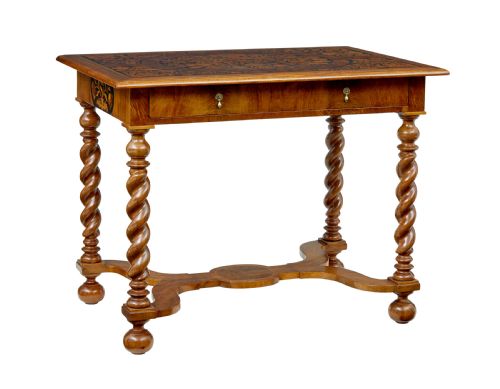
Makers utilised distinct regional forms, such as the Bombay Presidency teak tables supported by carved elephants or the folding frames designed for easy transport. Each piece reflects the specific decorative vocabulary of its origin, whether that is intricate foliate carving from Kashmir or bold structural turnings from English and French traditions.
How they were made
The materials recorded in these listings rely heavily on dense tropical hardwoods like teak, rosewood, and walnut, alongside regional timbers such as oak, elm, and general hardwood. Artisans selected these stable woods for their ability to hold microscopic chisel work without splintering.
Carving was executed entirely by hand using specialised gouges and chisels to create deep relief foliage, figures, and geometric borders. Some surfaces received secondary treatments including paint finishes, lacquer, antique white coatings, or inset copper panels to heighten the visual contrast.
Current listings feature materials ranging from walnut, teak, and oak to painted finishes, bone, copper tops, and marble inserts.
What varies in quality
Quality in these items rests primarily on the depth and crispness of the chisel work, where superior examples show sharp undercutting and lively detail in figures and foliage rather than shallow, mechanical pressing. The choice of timber also dictates grade, with dense, unblemished teak or figured walnut holding structural integrity far better than softer substitute woods.
Construction methods tell their own story, distinguishing workshop pieces joined with traditional pegging or sturdy folding mechanisms from simpler modern assemblies. Original finishes and intact surface decorations preserve the integrity of the piece far better than later over-painting or heavy sanding.
Liberty of London
The Hand Carved Side Tables Glossary
- Anglo-Indian
- A term describing furniture made in India during the British colonial period, often combining traditional Indian carving techniques with European furniture forms. These pieces frequently feature dense plant motifs and animal figures.
- Octagonal
- A geometric shape with eight sides, commonly found in tables originating from the Bombay Presidency and Kashmiri workshops. This format allows intricate border carvings to run continuously around the perimeter.
- Joint stool
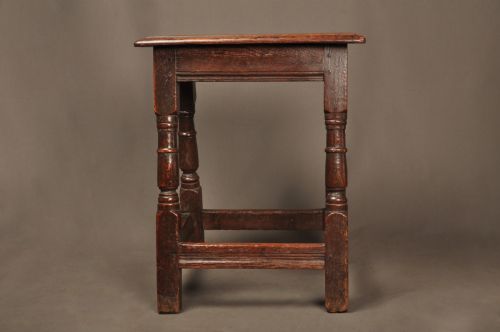
- An early form of wooden seating or small table constructed with mortise and tenon joints secured by wooden pegs. They demonstrate sturdy sixteenth and seventeenth-century carpentry methods.
- Tilt top
- A tabletop hinged to its pillar and base so it can be tipped vertically against a wall when not in use. This mechanism saved valuable floor space in nineteenth-century interiors.
- Bobbin turned
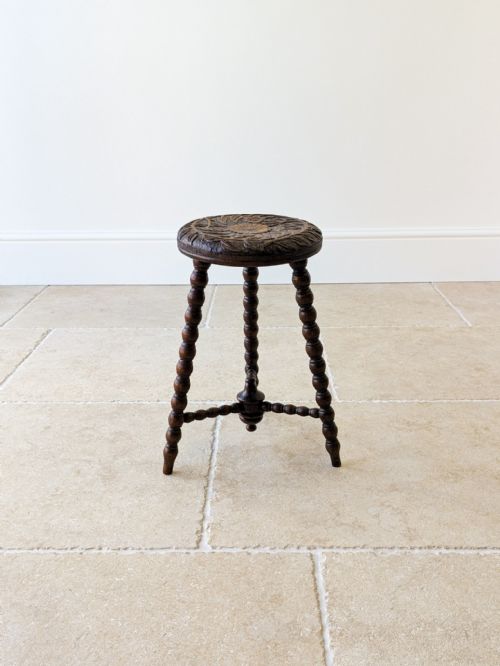
- A style of furniture leg or stretcher shaped on a lathe to resemble a series of wooden bobbins or spools strung together. It is a hallmark of seventeenth-century vernacular design revived in later periods.
Hand Carved Side Tables: Frequently Asked Questions
What were hand carved side tables used for?
These tables served various domestic functions, from holding heavy table lamps in Victorian parlours to displaying ornaments and serving tea. Smaller folding variants were especially practical for moving between rooms as household needs shifted.
In colonial and trade contexts, export pieces were designed to be compact and portable while offering a striking decorative surface for a drawing room or hallway.
How do I care for a carved wooden table?
Maintain the timber by dusting regularly with a dry, soft cloth to prevent dirt settling deep into the carved recesses. Avoid applying modern liquid polishes that can build up a sticky residue within the intricate chisel work.
Keep the piece away from direct heat sources and strong sunlight, which can dry out tropical hardwoods like teak and walnut, leading to shrinkage or splitting.
How can I tell the age of a carved table?
Examine the underside and joints for tool marks, fixings, and timber shrinkage that indicate the age of the construction. Hand-cut dovetails, handmade screws, and natural timber oxidation point toward nineteenth-century or earlier origins.
Compare the carving style and wood species with documented regional examples, noting that nineteenth-century Indian and Chinese export pieces often display distinct patination and specific regional motifs.
Are these tables sturdy enough for daily use?
Most hardwood examples possess dense, durable structures capable of handling normal everyday placement of cups, books, or lamps. However, pieces with intricate protruding elements like elephant tusks or delicate pierced foliage require careful placement to avoid accidental knocks.
Folding mechanisms and tilt-top hinges should be checked to ensure they lock securely into position before placing any weight upon the surface.