


Nested Tea Tables Set
A nested tea tables set brings together clever space-saving design and varied woods like mahogany, teak, and satinwood across multiple periods.
Nested Tea Tables Set
When you search for a nested tea tables set, you are looking at clever assemblies of smaller tables that slide neatly beneath one another when not in use. These pieces appear in forms such as nests of tables, nesting tables, and coffee tables.
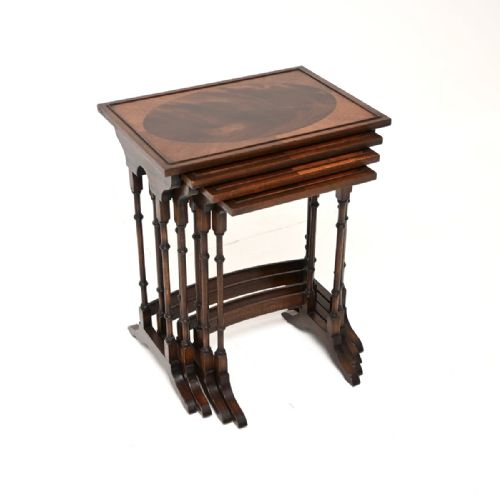
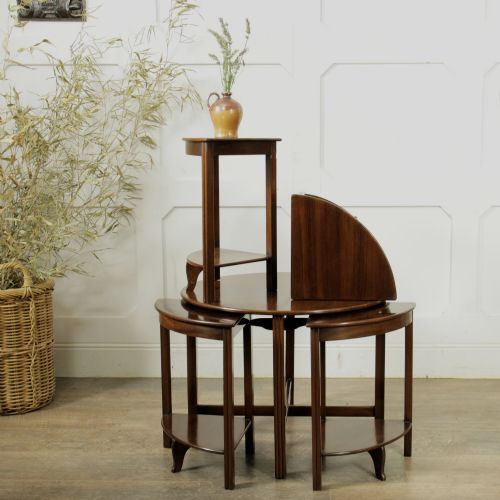
The version you are most likely to meet on this page is an Edwardian or Georgian style mahogany set, though examples span from the 19th century through the 1920s and 1930s. Pieces range from four-table quartetto sets to circular five-table arrangements and three-table sets in various timbers.
How they were made
Cabinet makers utilised solid woods and veneers, selecting mahogany, teak, satinwood, rosewood, and oak to construct these frames. Artisans shaped these timbers into rectangular, oval, and circular formats designed to stack tightly.
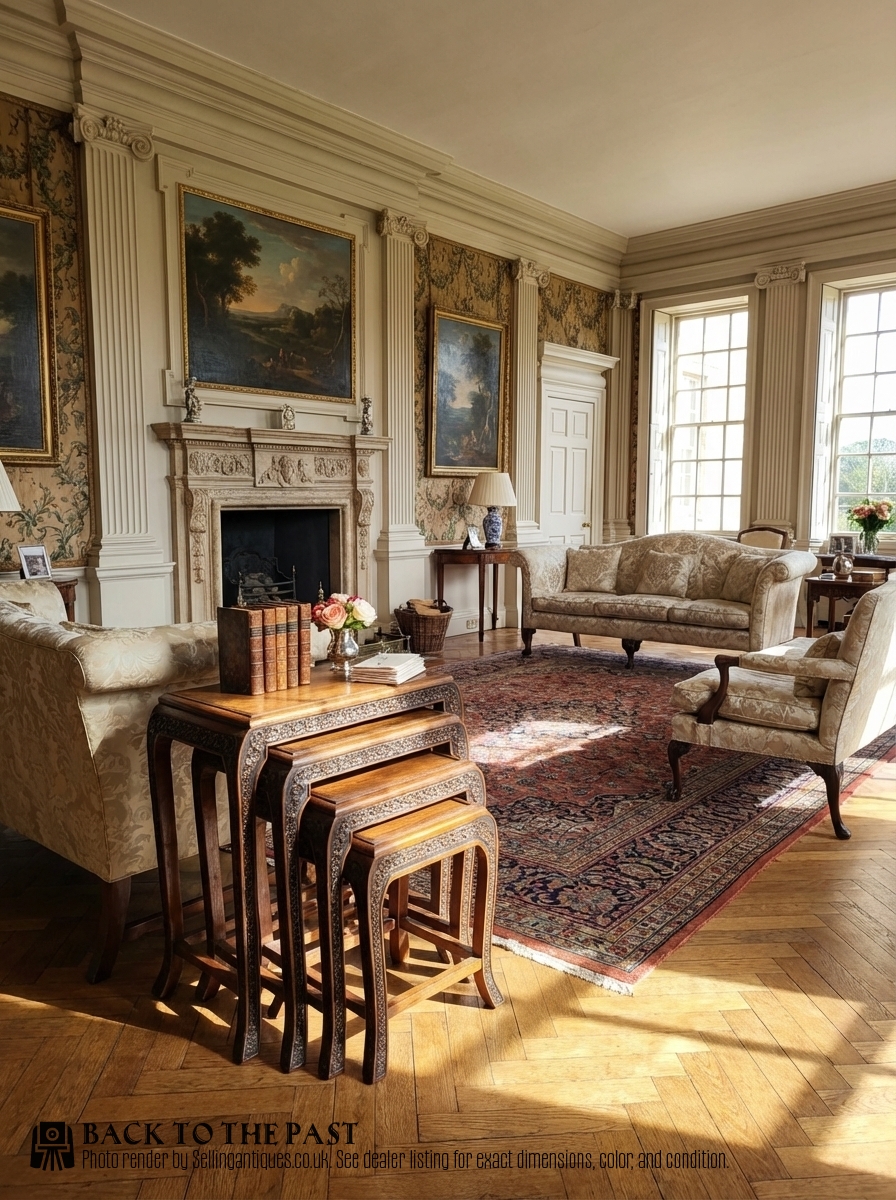
Decoration involved carving on hardwood and applying Chinoiserie lacquer or inlay work. Some Oriental examples feature detailed carved surfaces, while others incorporate glass tops or contrasting burr walnut.
Listings feature periods spanning from the Victorian era and 1880 through Edwardian designs up to the 1930s.
What varies in quality
The distinction between standard examples and finer pieces lies in the choice of timber and the precision of the joinery that allows each table to slide smoothly into position. Elaborate surface decoration, such as fine Chinoiserie lacquer or intricate carving, elevates a piece beyond plain utility.
The integrity of the nesting mechanism and the matching grain patterns across the set reveal the care taken during construction. Pieces utilising rarer materials like satinwood or burr walnut naturally represent the higher end of the range.
The Nested Tea Tables Set Glossary
- Quartetto
- A set of four matching tables designed to nest together. This term often appears in relation to Georgian style occasional tables.
- Chinoiserie
- European decorative art influenced by Chinese styles, frequently featuring lacquered surfaces. It appears on 19th-century tables in this selection.
- Nesting tables
- A group of graduated tables built to fit one beneath another. They serve as a space-saving solution for entertaining.
Nested Tea Tables Set: Frequently Asked Questions
What is a nested tea tables set?
A nested tea tables set comprises multiple smaller tables that slide neatly beneath the largest one to save space.
They offer a practical surface for serving tea or drinks and can be separated around a room when guests arrive.
How do I identify an Edwardian set?
Edwardian sets often feature lighter mahogany frames and refined proportions typical of the early twentieth century.
They frequently appear as circular arrangements of five tables or simple nests designed for drawing rooms.
What materials are used in these sets?
Common materials include mahogany, teak, oak, satinwood, and rosewood, sometimes enhanced with veneer or glass.
Some Asian and Oriental pieces utilise carved hardwood or Chinoiserie lacquer decoration.
How were these tables used originally?
They served primarily for serving afternoon tea, holding books, or displaying decorative items in period homes.
The nested design allowed households to expand their tabletop space quickly without cluttering the room.