


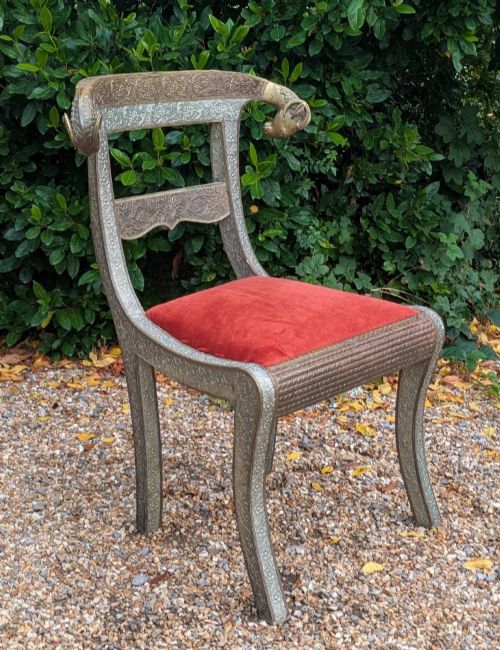
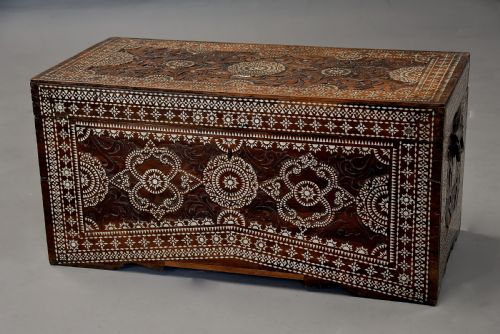
Indian Carved Furniture
Indian carved furniture brings together rich timbers and intricate hand-chiselled details, offering functional statement pieces with deep historical character.
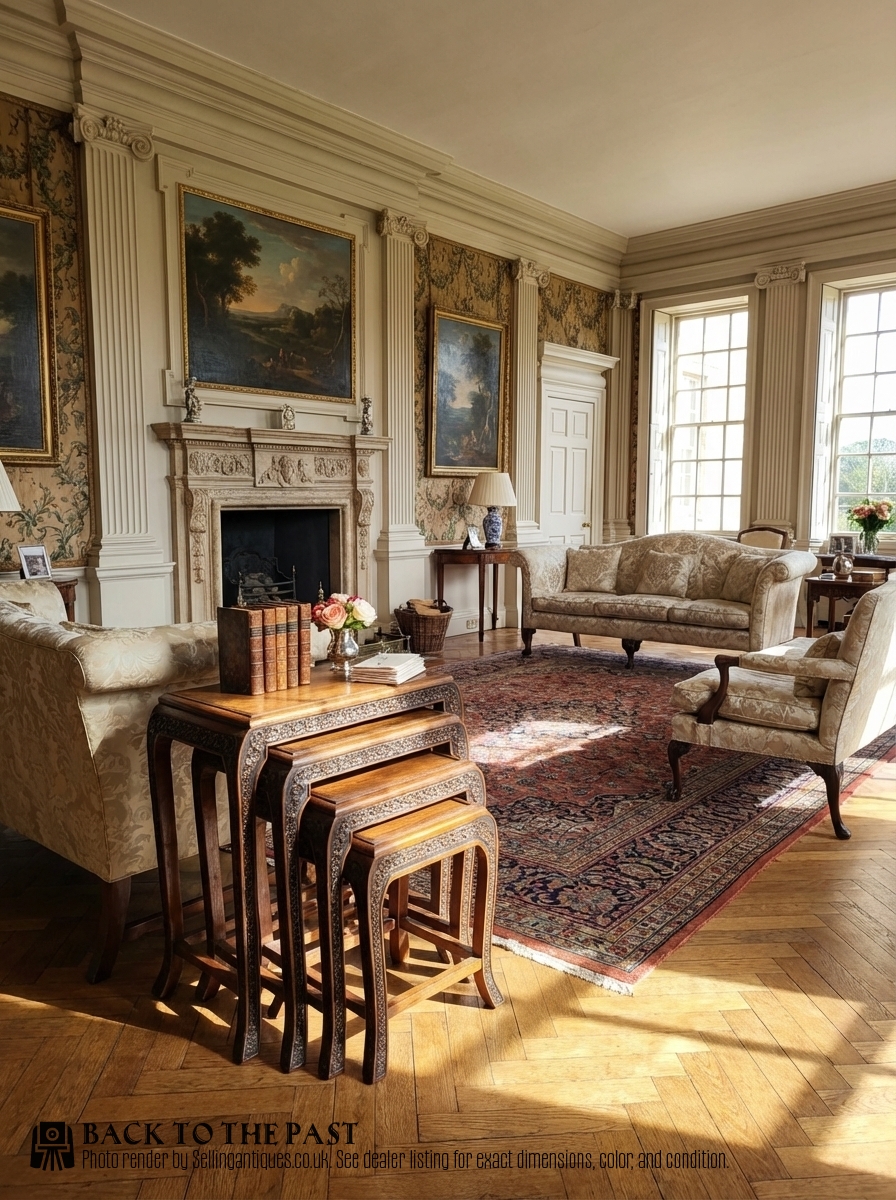
Indian Carved Furniture
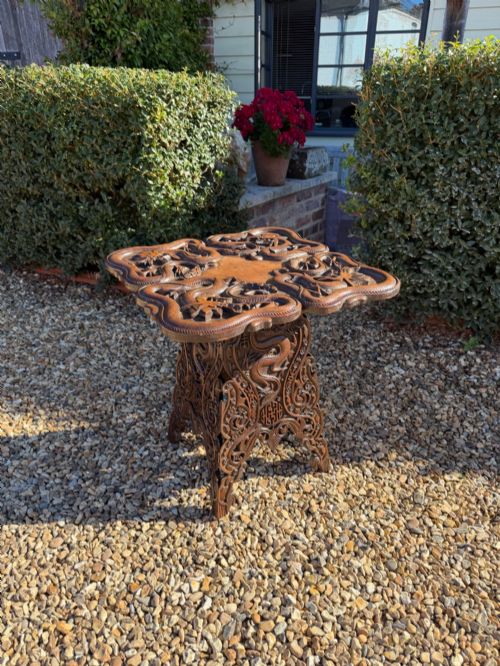
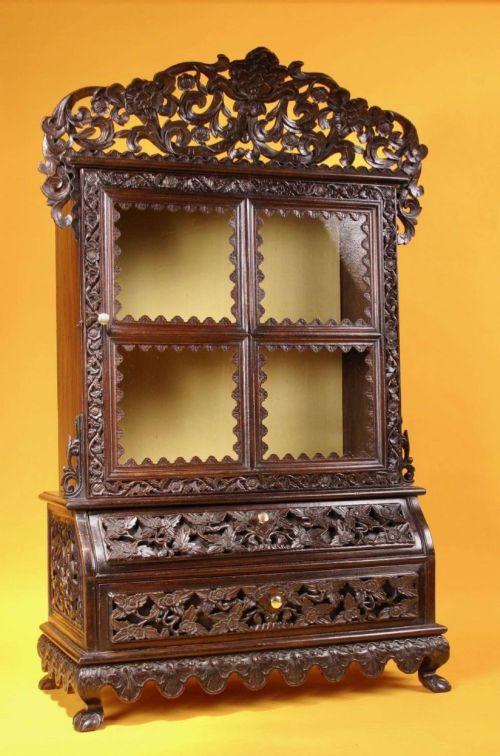
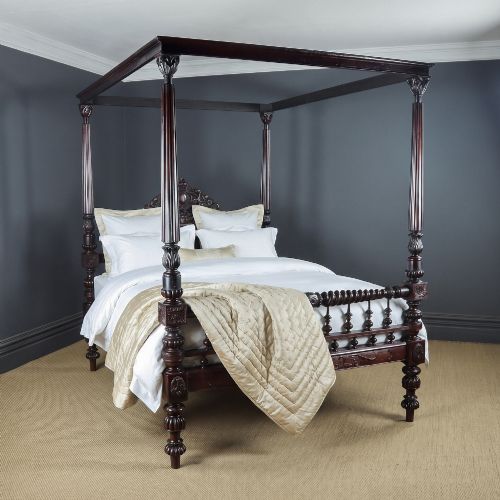
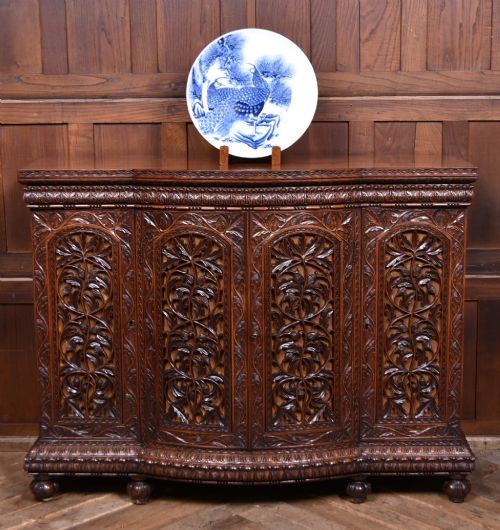
When searching for indian carved furniture, buyers encounter a diverse selection of items originating from the nineteenth and early twentieth centuries. These encompass utilitarian forms such as sideboards, storage cupboards, and four-poster beds alongside decorative occasional furniture.
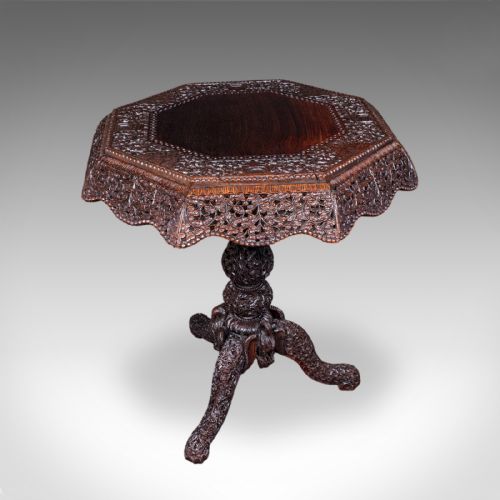
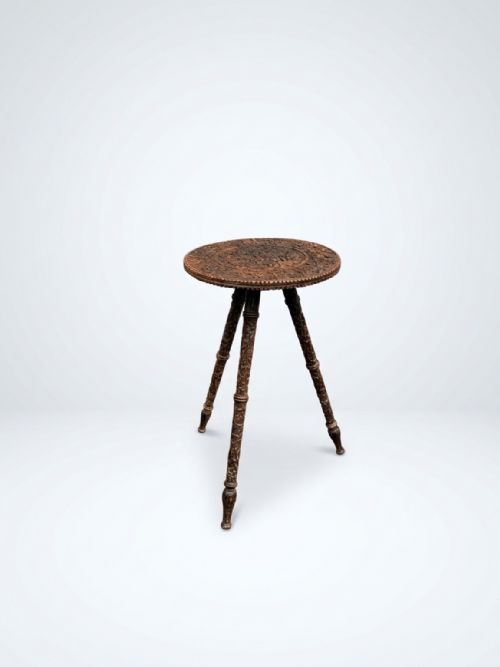
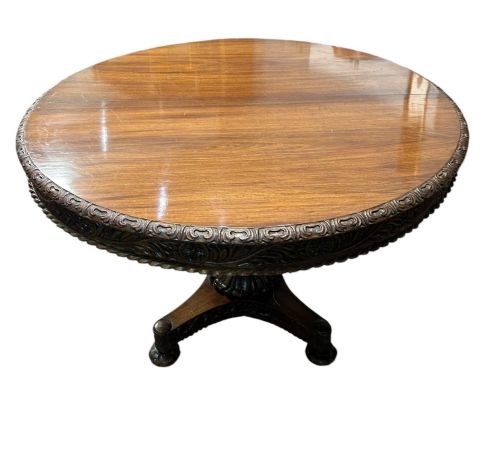
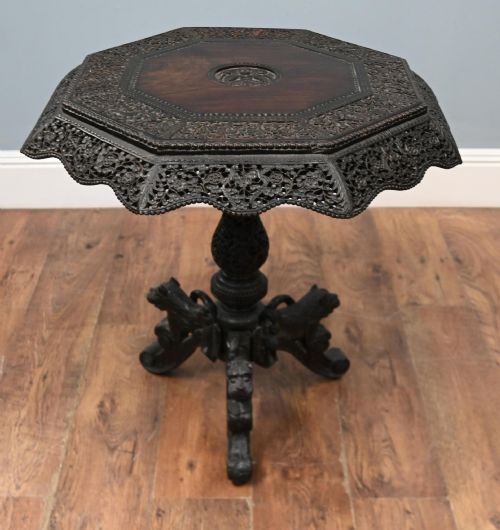
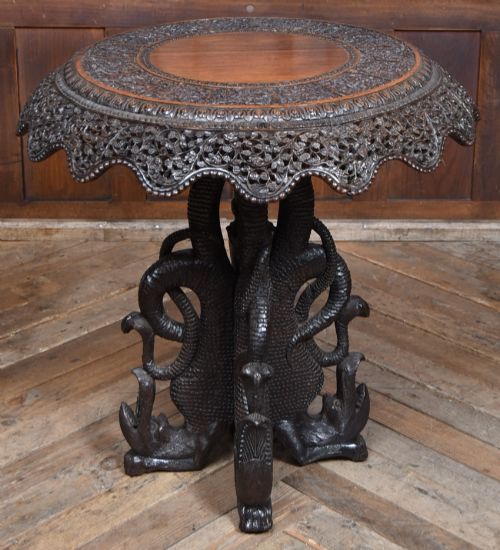
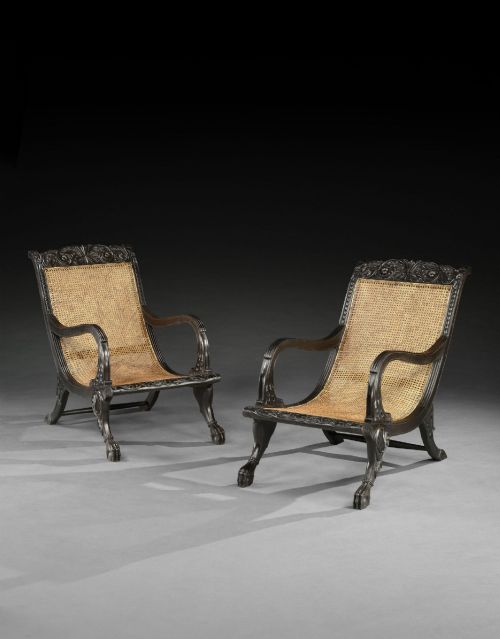
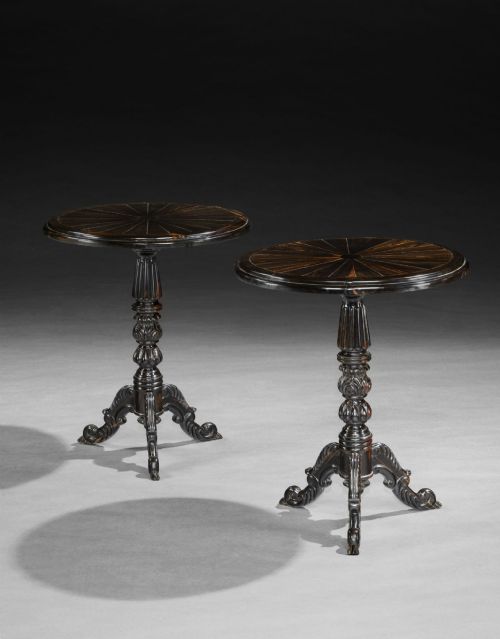
The objects frequently reflect stylistic influences from the Anglo-Indian, Moorish Revival, and traditional regional aesthetics. Tables, armchairs, and cabinets dominate the selection, often displaying dense surface ornamentation carved from dense tropical woods.
How they were made
Maker-craftsmen utilised dense regional timbers including teak, padauk, rosewood, and solid ebony as the structural foundation for these heavy items. These robust woods provided a stable canvas capable of sustaining deeply cut relief work without splintering.
Surface embellishment relied upon intricate hand-carving techniques, occasionally supplemented by inlaid brass wire, bone, or mother-of-pearl geometric patterns. Joinery combined traditional peg construction with heavy turning and applied mouldings suited to colonial and local domestic interiors.
Current listings feature nineteenth-century furniture utilising padauk, ebony, and teak alongside inlaid brass and bone materials.
What varies in quality
The standard of carving defines the primary distinction between ordinary production and finer items, with superior examples exhibiting crisp undercutting and well-defined motifs rather than shallow surface scoring. The selection of timber also dictates grade, where dense native hardwoods display finer grain and greater stability than secondary woods.
Proportion and structural integrity separate exceptional items from simpler utilitarian pieces. Original fittings, intact inlay work, and uncompromised joinery uphold the integrity of the piece over centuries of use.
Hoshiarpur·Galle District
The Indian Carved Furniture Glossary
- Hoshiarpur
- A town in Punjab renowned for intricate woodwork. Pieces attributed to this centre typically feature dense geometric inlays of brass or bone upon hardwood surfaces.
- Padauk
- A heavy tropical hardwood valued for its reddish-brown hue and durability. It was frequently utilised in nineteenth-century colonial furniture production.
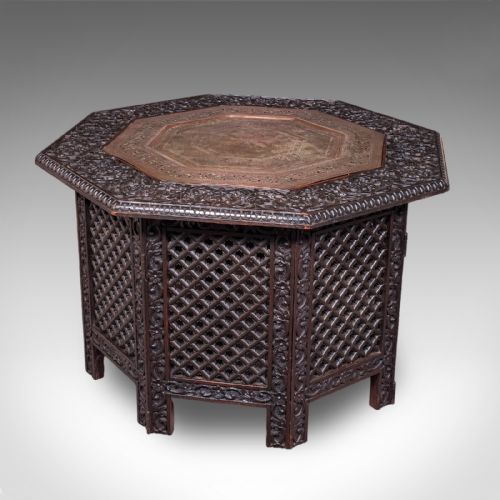
- Octagonal Table
- A frequent small-scale form featuring eight sides. These tables often incorporate folding bases and dense surface carving.
- Almirah
- A traditional freestanding cupboard or wardrobe used for storage. Examples often display reclaimed teak construction and substantial panel doors.
Indian Carved Furniture: Frequently Asked Questions
What periods do these pieces date from?
The available selection primarily spans the nineteenth century through the early twentieth century, encompassing Victorian and Edwardian production alongside colonial periods.
Craftsmen during these eras produced both traditional domestic forms for local use and specialised export furniture tailored for European markets.
How do I care for solid hardwood furniture?
These dense timbers require stable indoor humidity levels to prevent movement in the thick panels and intricate joints.
Routine maintenance involves dusting with a dry cloth and occasionally applying suitable natural waxes to nourish the dry wood grain.
Where were these items originally made?
Production centres spanned the Indian subcontinent and neighbouring regions, including workshops in Punjab, Ceylon, and Burma.
Makers incorporated regional stylistic preferences and locally available timbers, resulting in distinct stylistic groups such as Anglo-Indian and Ceylonese work.
How do I identify Hoshiarpur work?
Hoshiarpur items are distinguished by overall surface coverage consisting of intricate floral or geometric carving combined with contrasting inlay materials.
Tables and occasional pieces from this tradition frequently utilise octagonal tops and folding bases constructed from seasoned hardwood.