


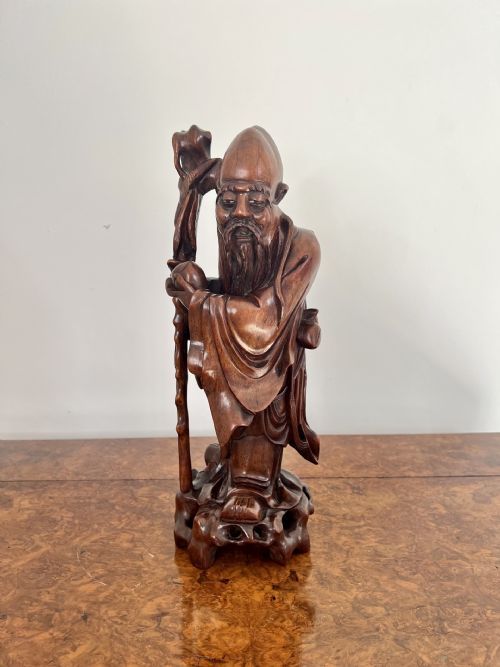


Hand Carved Asian Sculpture
Hand carved asian sculpture brings together traditional figures and landscapes shaped from timber, soapstone, and jade across several centuries.

Hand Carved Asian Sculpture
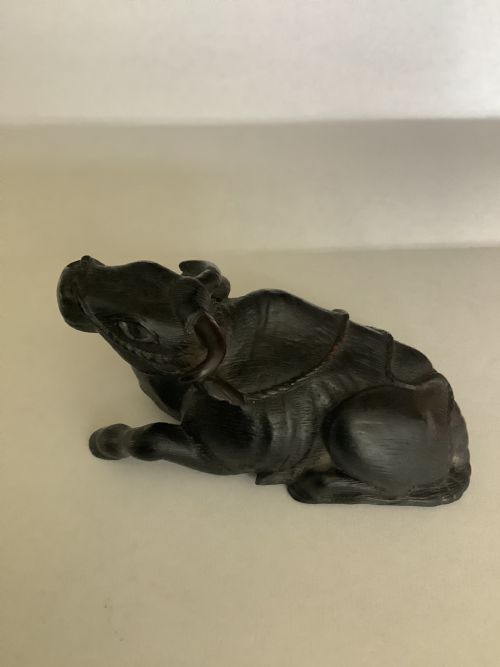
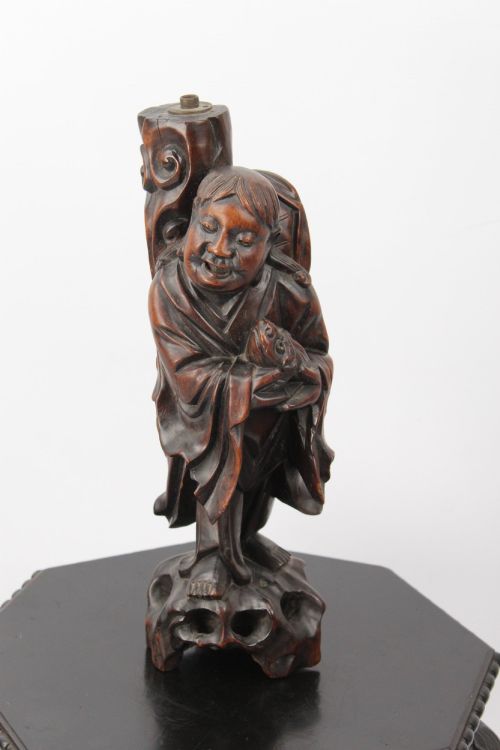
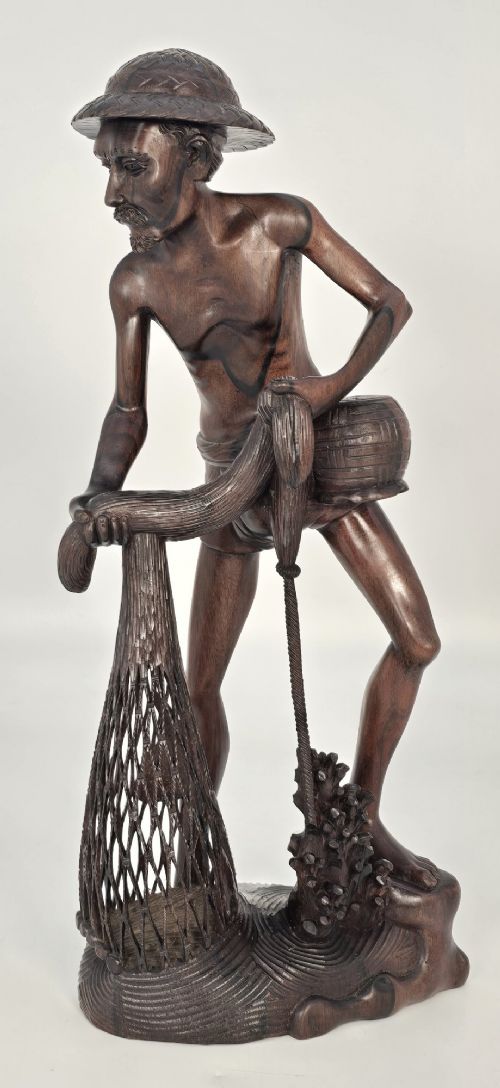
A hand carved asian sculpture comprises figures, deities, animals, and landscapes produced in workshops across China, Japan, and Burma. Buyers encounter figures of Daoist immortals, Buddha statues, temple guards, and fishermen rendered in organic materials.
The selections span centuries, incorporating pieces from the Qing Dynasty, Meiji Period, and earlier traditions. Forms range from miniature netsuke and okimono to substantial hardwood figures and mountain landscape displays.
Materials and carving techniques
Carvers utilise diverse timbers including boxwood, teak, burr root wood, and dense hardwoods to exploit natural grain patterns. Artisans also shape soapstone, white marble, and jade, following the contours of the raw material to define the subject.
Details emerge through intricate hand chiselling and piercing, whether depicting the scales of a mythical creature or the folds of a scholar's robe. Figures frequently incorporate fitted wooden stands or bases tailored to the specific contours of the sculpture.
Listings feature items dated from pre-sixteenth century pieces up to the 1930s, spanning multiple Asian traditions.
Distinctions in quality
Depth of relief and precision in facial expressions separate superior carvings from standard decorative objects. Master carvers capture subtle emotion in a figure and use the natural knots of root wood or the translucency of jade to enhance the composition.
Integration between the subject and the material dictates overall merit, where the grain or stone inclusion forms part of the landscape or garment. Condition of fine protruding elements and the preservation of original surface patination also influence distinction.
The Hand Carved Asian Sculpture Glossary
- Netsuke
- A small carved toggle fastened to the end of a cord connecting a traditional Japanese container to a kimono sash.
- Okimono
- A small Japanese freestanding ornament designed for display on a shelf or in a domestic alcove.
- Soapstone
- A soft, talc-based metamorphic rock utilised by carvers for seals and continuous landscape scenes.
- Foo Dog
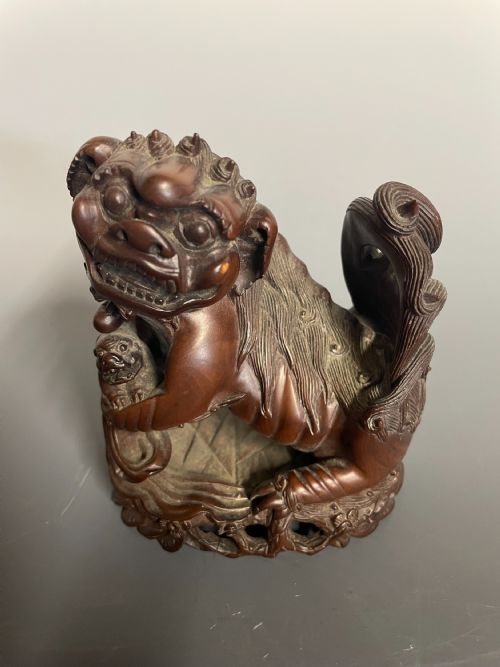
- A symbolic temple guardian lion depicted with a muscular frame, often carved in pairs from wood or stone.
- Root Wood
- Timber shaped from the gnarled underground growth of trees, retaining natural twists and hollows within the sculpture.
Hand Carved Asian Sculpture: Frequently Asked Questions
How do I identify a root wood carving?
Root wood pieces incorporate the natural twists, hollows, and organic shapes of the timber into the finished subject. Artisans adapt figures of scholars or mythical beasts to fit the existing contours of the underground growth.
Closer inspection reveals how the natural grain and knots form parts of robes or landscape elements. This integration of raw material distinguishes root wood from block timber sculptures.
What is the difference between netsuke and okimono?
Netsuke function as carved toggles with cord holes, historically attached to traditional Japanese clothing accessories. Okimono are purely decorative shelf sculptures without functional cord channels.
Both forms utilise boxwood and ivory, but their original purposes determine their classification. Collectors examine the base and proportions to confirm the category.
How should I care for soapstone sculptures?
Soapstone is a relatively soft mineral that requires gentle handling to prevent surface scratches and chipping. Dusting should occur with a soft, dry cloth without chemical cleaning agents.
Exposure to direct sunlight and moisture fluctuations should be avoided to maintain the stone surface. Proper placement protects the intricate carved details of seals and landscapes.
How do I date a hardwood carving?
Dating relies on tool marks, surface patination, style of attire, and the specific dynasty or period characteristics. Hardwood develops a deeper lustre and dry polish through handling over generations.
Comparing sculptural motifs with documented pieces from the Qing or Meiji eras provides reliable chronological context. Expert appraisal confirms the working methods and material age.