



Oriental Carved Wooden Ornaments
Oriental carved wooden ornaments bring tangible age and precise handcraft into a room, spanning figures, animals, and display stands from the nineteenth and early twentieth centuries.
Oriental Carved Wooden Ornaments
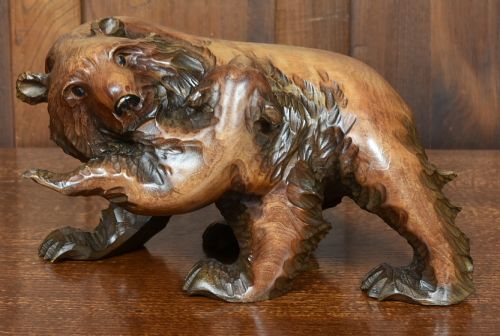
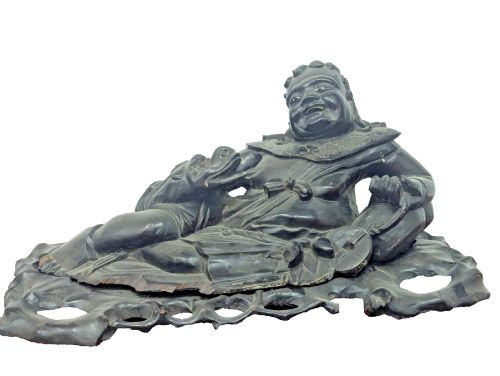
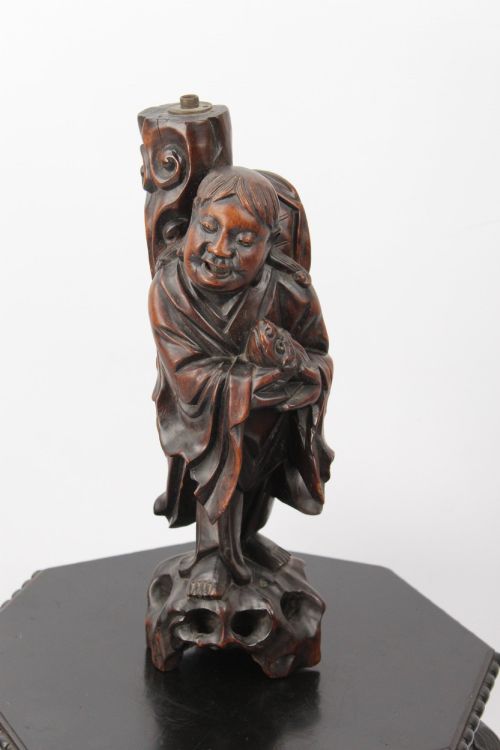
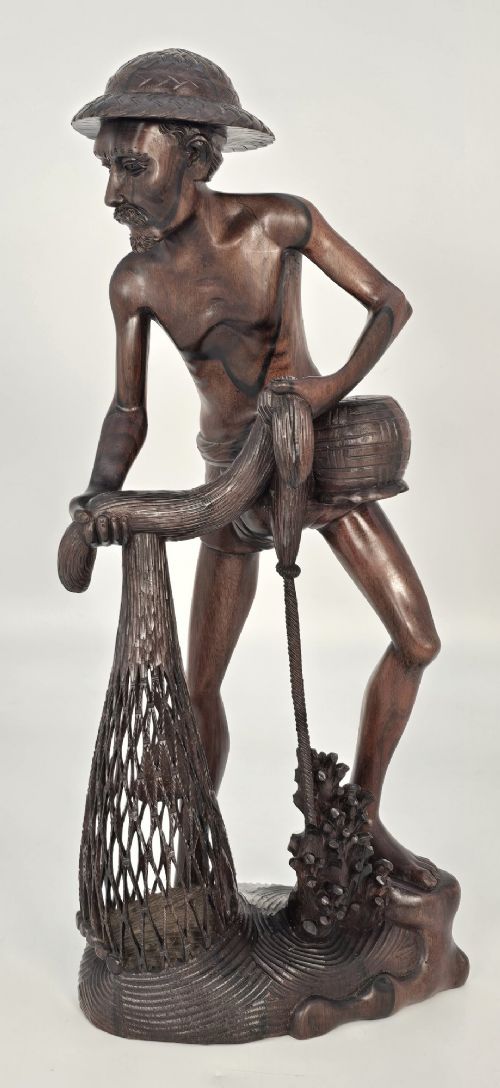
Oriental carved wooden ornaments encompass sculptures, figures, and display stands originating from Chinese and Japanese traditions across the nineteenth and early twentieth centuries. Buyers seeking these pieces encounter depictions of religious figures, mythical beasts, fishermen, and animals such as elephants, water buffaloes, and tigers.
The most common forms on this page include hardwood figures, root wood carvings, and specialised stands like bonsai display bases. These works derive from the Qing Dynasty, Japanese Meiji period, and traditional folk art contexts, reflecting distinct cultural aesthetics.
Makers focused heavily on naturalistic subjects, capturing the posture of a toad, the expression of a Laughing Buddha, or the dense muscle of a pack horse. Such items served as scholarly desk pieces, decorative sculptures, or architectural elements within domestic interiors.
Materials and construction
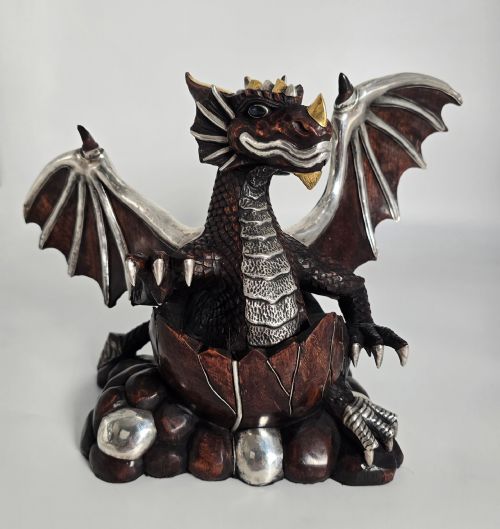
Carvers utilised dense hardwoods, boxwood, and root wood to achieve durable forms with sharp detail. The natural grain of the timber often dictates the flow of a dragon sculpture or the contours of a root wood Dogs of Fo figure.
Makers occasionally integrated mixed metals, bone, glass, or brass mounts alongside the primary wooden body to accent eyes, harness details, or decorative hardware. Hand-carving tools removed material incrementally to reveal complex textures in hair, scales, and drapery.
Oriental Carved Wooden Ornaments Retail Price Guide 2026
Typical asking prices for oriental carved wooden ornaments among the pieces listed under this phrase on Sellingantiques today, from the lower quarter to the upper quarter. They describe what is for sale here now, not the wider market.
Listings feature periods spanning from the early nineteenth century through the nineteen thirties, encompassing Qing Dynasty and Meiji period works.
Assessing quality in carved wooden pieces
The distinction between standard and superior pieces rests on the depth of the carving and the anatomical accuracy of the subject. Master carvers exploited the natural properties of the wood to articulate facial expressions, tension in limbs, and the texture of fur or clothing without relying on surface paint.
Proportion and stance differentiate workshop production from exceptional individual works. Pieces that display balanced composition, careful polishing, and deliberate handling of grain direction command greater visual weight and artistic merit.
The Oriental Carved Wooden Ornaments Glossary
- Hardwood
- Slow-growing timber that yields dense, durable material capable of holding intricate, sharp carved details. These woods resist general wear and maintain a dark patina over decades.
- Okimono
- A Japanese decorative statue designed for display on a shelf or in a tokonoma alcove. These figures traditionally depict animals, people, or legendary subjects.
- Root wood
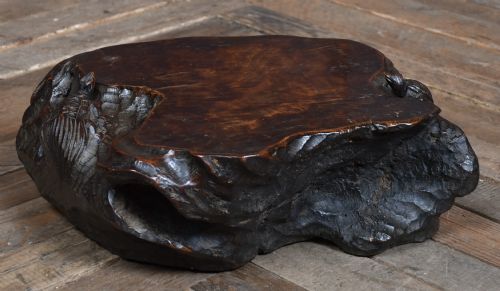
- Timber sourced from the root system of a tree, where natural gnarled growths and twists guide the carver. Craftsmen incorporate these organic shapes directly into the final sculpture.
- Qing Dynasty
- The final imperial dynasty of China, lasting from sixteen forty-four to nineteen twelve. Pieces from this era often carry formal traditional motifs and refined surface finishes.
- Meiji Period
- An era in Japanese history spanning from eighteen sixty-eight to nineteen twelve characterised by rapid artistic production and technical mastery in wood and ivory carving.
Oriental Carved Wooden Ornaments: Frequently Asked Questions
How do I clean an antique wooden carving?
Dust the surface gently with a soft, dry brush to remove particles from crevices. Avoid water, harsh chemical cleaners, or modern polishes that can degrade the aged patina of the timber.
Allow the natural oils of the wood to persist without interference. Minimal handling preserves the original finish and prevents unnecessary wear on delicate protruding parts.
Where should I place these ornaments at home?
Position wooden sculptures on stable flat surfaces away from direct sunlight and strong heat sources. Rapid temperature changes can cause timber to dry out and split over time.
Pair figures with complementary objects or place them individually on desks and shelves where the carved details receive adequate ambient light.
How do I tell Chinese and Japanese carvings apart?
Chinese pieces frequently emphasise symbolic religious figures, mythical beasts like the Dogs of Fo, and formal hardwood stands with deep undercutting. Japanese works often focus on naturalistic observation, capturing specific animals or daily life scenes with precise anatomical detail.
Examine the subject matter and stylistic conventions to identify the cultural origin. Maker techniques and regional toolmarks also provide clues to the workshop tradition.
What is the purpose of a bonsai display stand?
These carved wooden platforms elevate potted plants or small sculptures to create a focal point in traditional display arrangements. The shape of the stand often mirrors the organic contours of the object it supports.
Carvers shaped these stands from dense hardwoods to withstand weight while adding a complementary decorative border to the display.