
Hand Blown Glass
When you search for hand blown glass, you enter a world of shaped vessels, domestic tableware and decorative objects spanning centuries of furnace work.
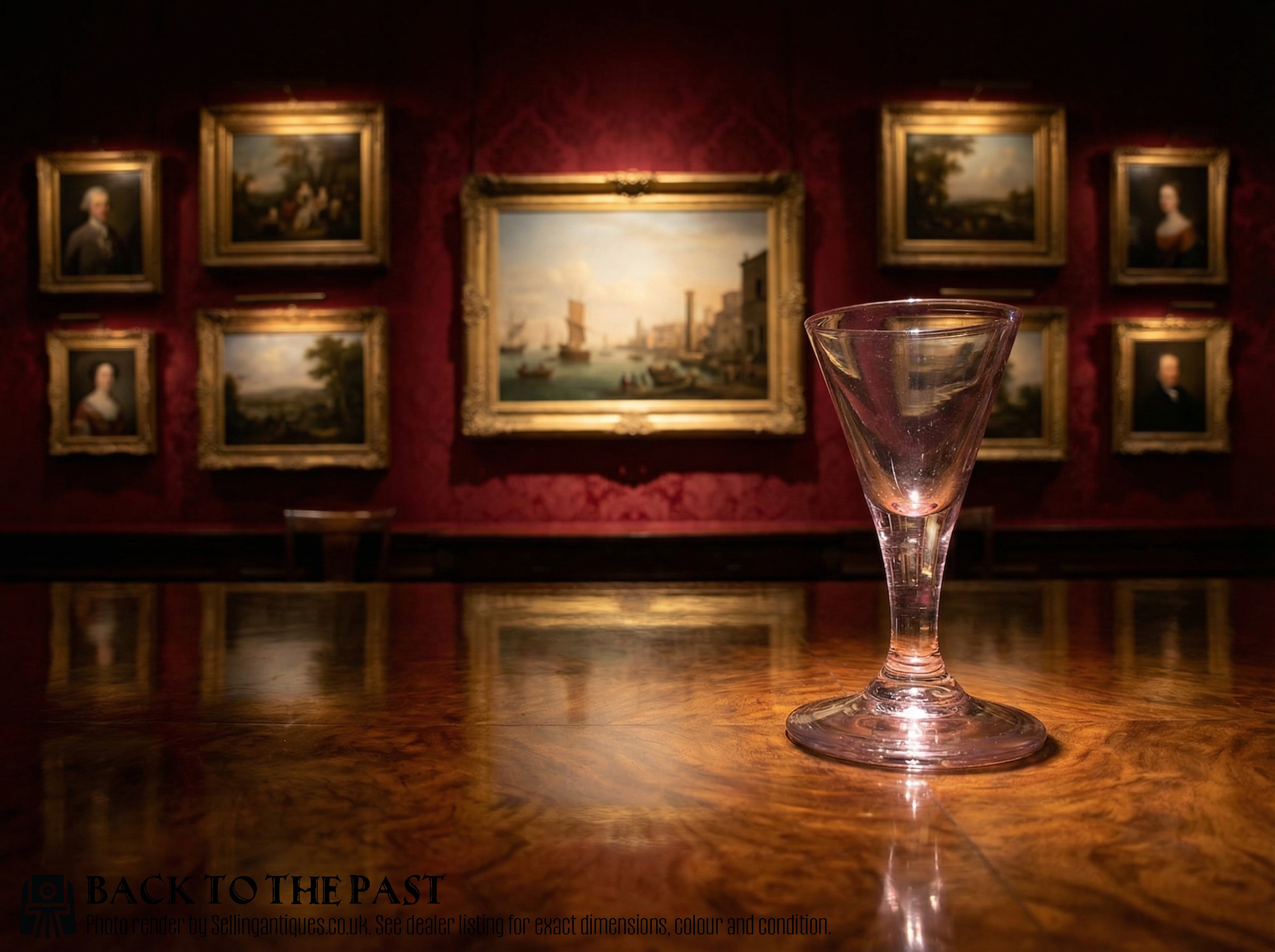
Hand Blown Glass
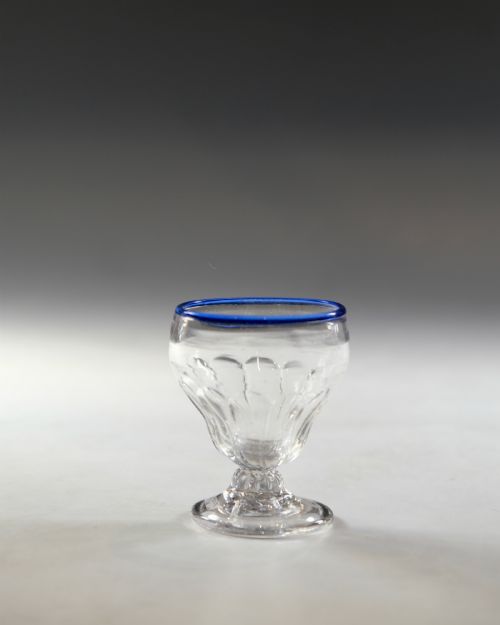
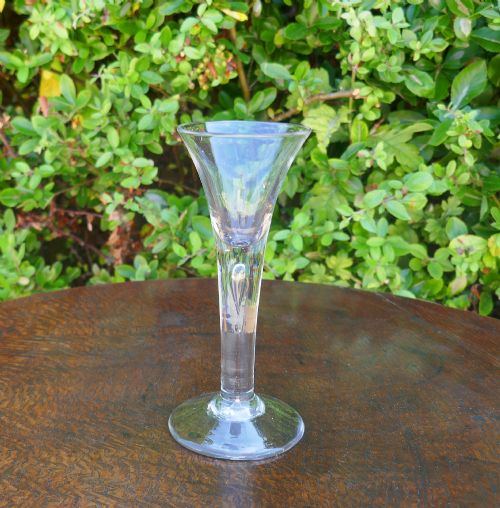
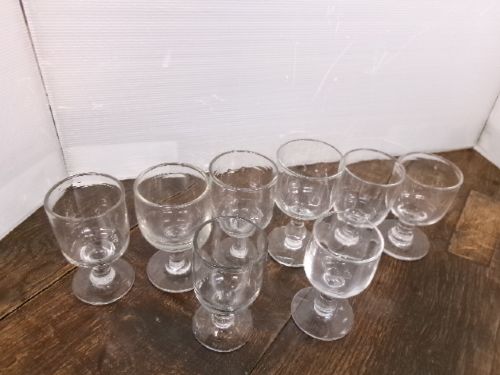
When you search for hand blown glass, you encounter functional vessels and decorative items shaped by breath and iron across multiple centuries. The selection ranges from domestic tableware like wine glasses and decanters to pharmacy carboy jars and large display domes.
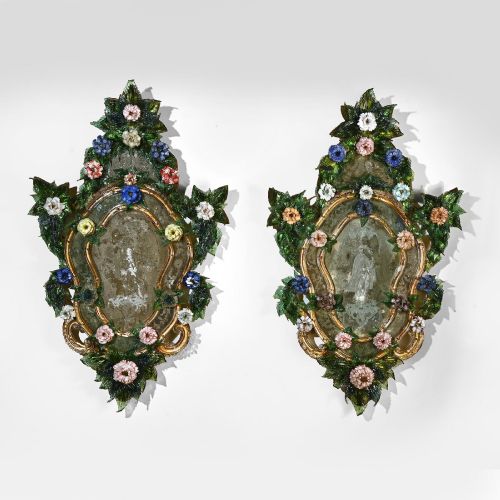
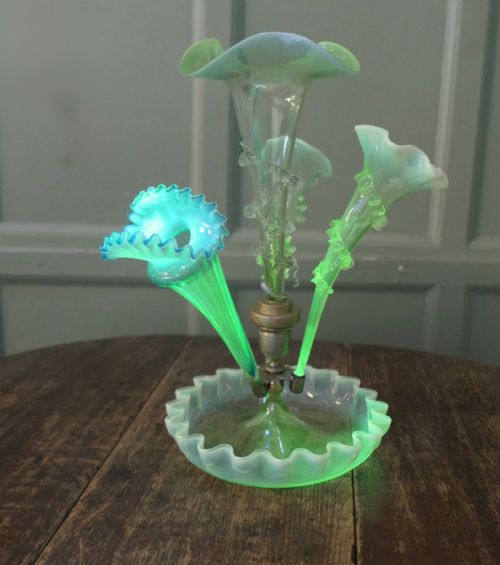
Georgian drinking vessels and decanters sit alongside Victorian cranberry glass jugs and early twentieth-century art glass vases. English, French, Venetian and Bohemian origins appear frequently in the record.
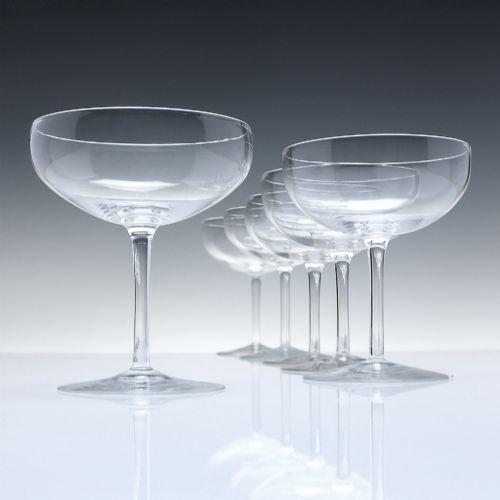
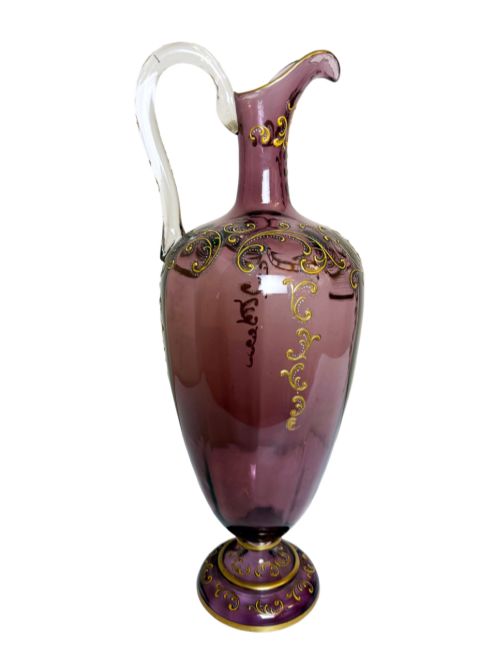
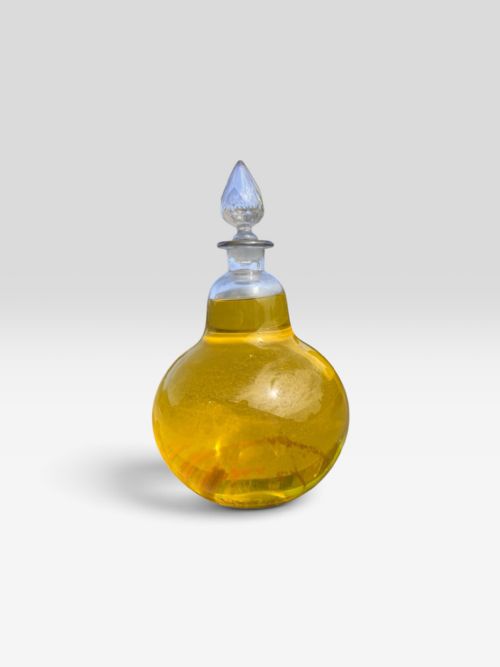
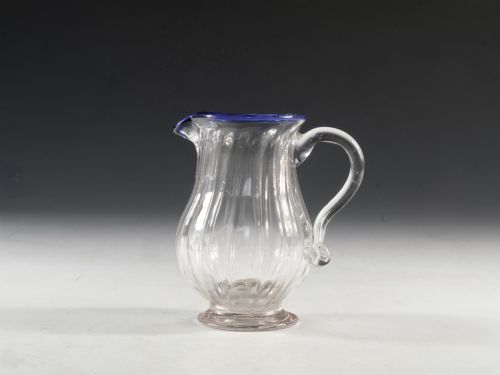
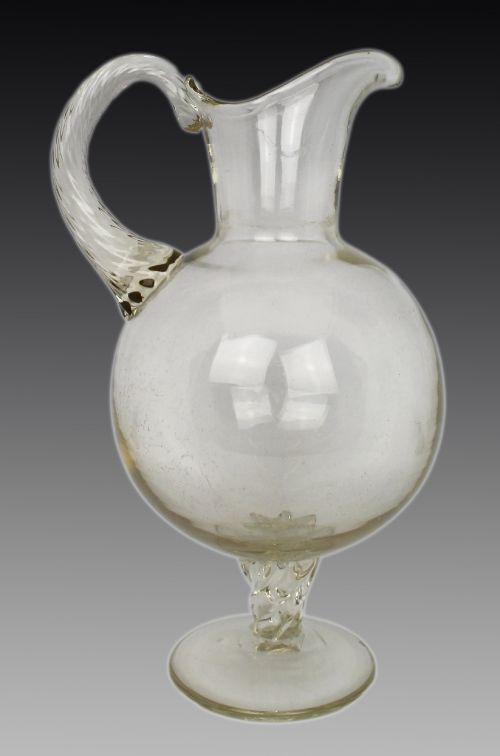
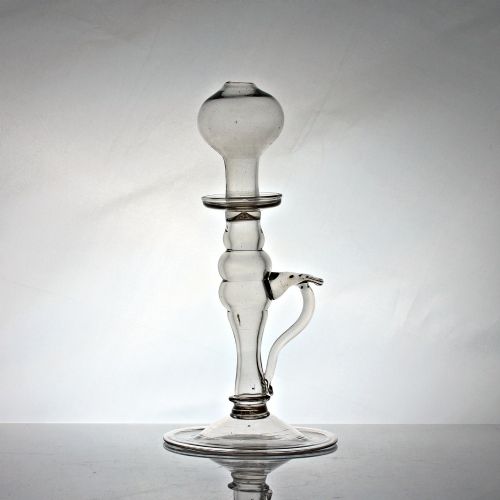
Domestic items include cream jugs, wine bottles, champagne coupes and oil lamps. Decorative examples encompass ewers, cornichon jars, glass hats and mantle ornaments.
How they were made
Molten material gathered on the end of a blowpipe is inflated by breath and manipulated with simple hand tools. Lead glass, clear glass, cranberry glass and uranium glass provide the varied palettes seen across the periods.
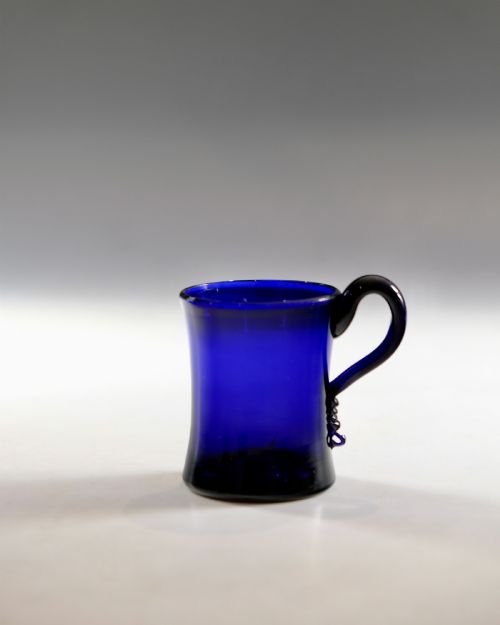
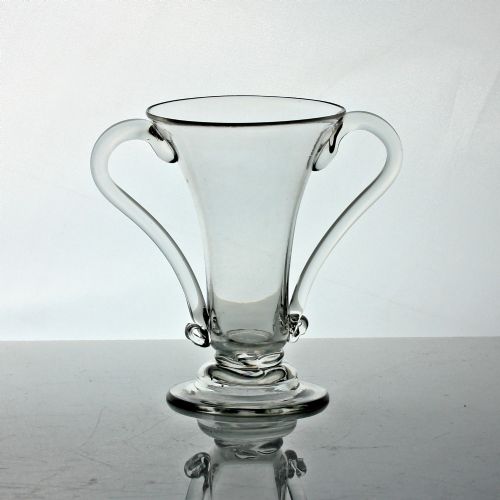
Makers added applied handles, trailed rims, folded feet and enamel painted decoration while the material remained hot or during subsequent cooling stages. Pontil marks on the underside indicate where workers snapped the finished vessel from the iron.
Several items record nineteenth-century ocularists utilising hand-blown glass eyes stored safely inside wooden boxes.
What varies in quality
The precision of form and the balance of weight separate standard production from finer creations. Delicate optical effects, such as air bubbles trapped deliberately in stems or even cane decorations, demonstrate superior furnace control.
Surface finish also distinguishes the range, from simple utility pieces to those enhanced with careful hand-painted gilt applique or detailed enamel scenes.
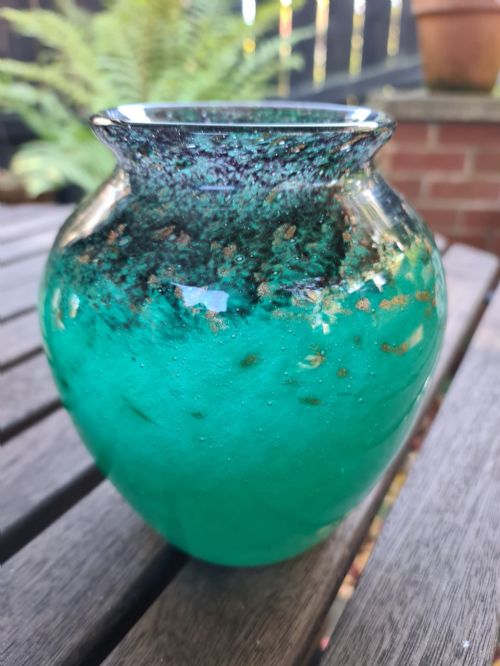
Harry Powell for James Powell·Richardsons of Stourbridge
The Hand Blown Glass Glossary
- Pontil mark
- The rough scar left on the base of a vessel where the punty rod was detached after blowing. This feature confirms hand-working methods on older glass.
- Carboy
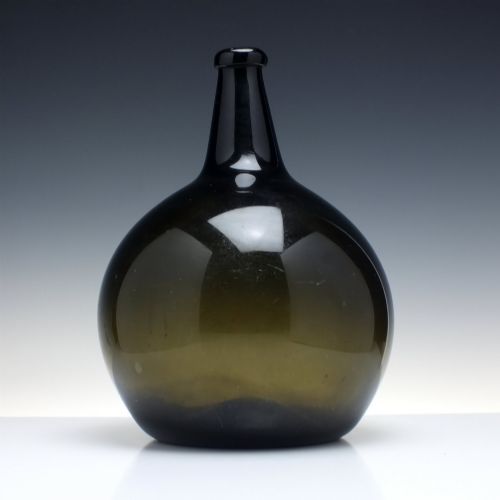
- A large, bulbous glass bottle traditionally used for holding liquids or chemicals in pharmacies. These heavy vessels often display natural bubbles and irregularities in the walls.
- Cranberry glass
- A rich red-pink glass coloured with gold chloride, popular during the Victorian era for tableware and decorative jugs. The shade varies from pale pink to deep ruby.
- Rummer
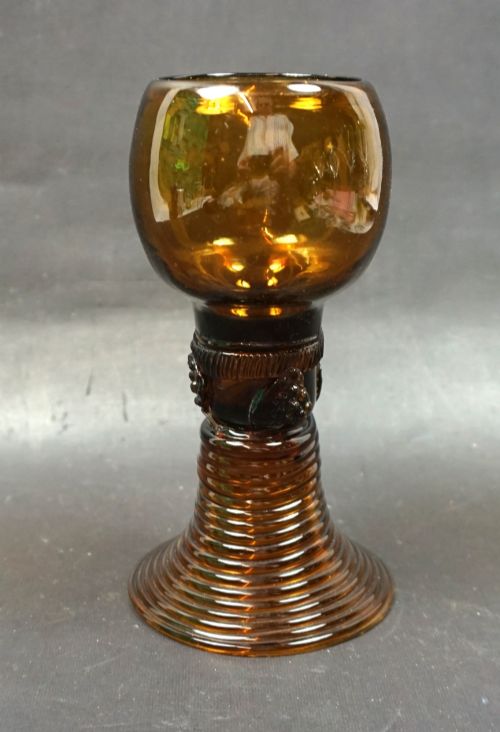
- A large, sturdy drinking glass used for wine, ale or punch during the eighteenth and nineteenth centuries. They usually sit on a short stem with a thick foot.
- Millefiori
- A glasswork technique producing multicoloured mosaic patterns resembling flowers. Italian artisans utilised thin glass canes fused together and sliced across.
Hand Blown Glass: Frequently Asked Questions
How do I identify older hand blown glass?
Look for a rough pontil mark on the underside and subtle asymmetries in the body that reveal hand-shaping.
Older pieces often exhibit tiny trapped air bubbles and minor thickness variations absent in modern machine-made items.
What were glass domes used for?
Large glass domes protected delicate Victorian ornaments, clocks and taxidermy from dust and damage in the home.
They sat upon ebonised wood or mirrored bases to display treasured interior objects.
How should I clean antique glass?
Wash pieces gently in warm water using mild soap and a soft cloth to protect fragile surfaces and enamel details.
Avoid submersing items with applied handles or gilt decoration in hot water for extended periods.
Why do some glasses have bubbles inside?
Gases trapped within the molten batch during furnace heating frequently formed small bubbles known as seed or air inclusions.
These natural occurrences demonstrate traditional production methods rather than manufacturing flaws.