
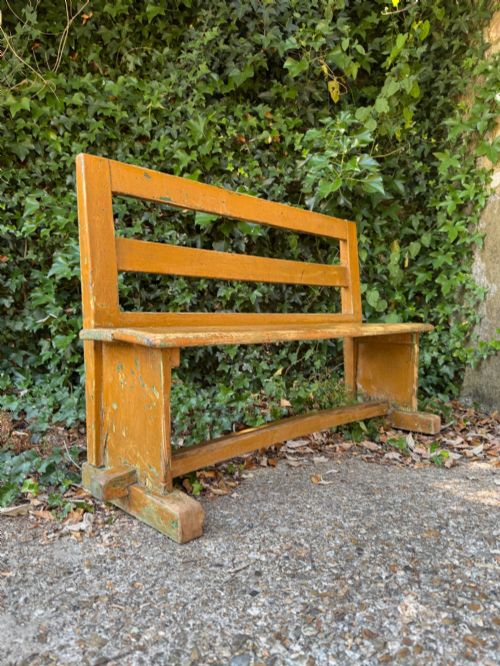
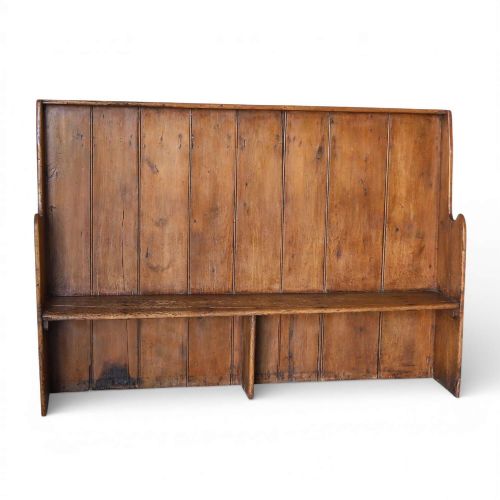
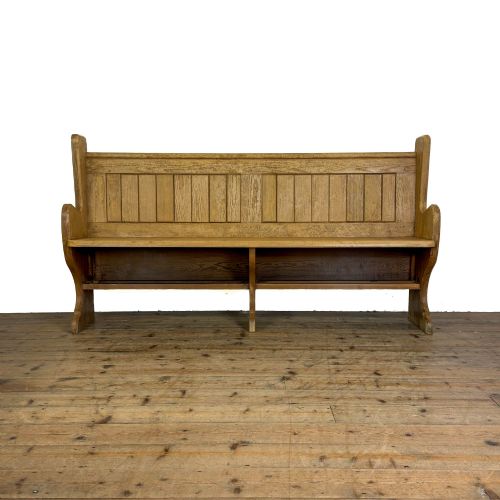
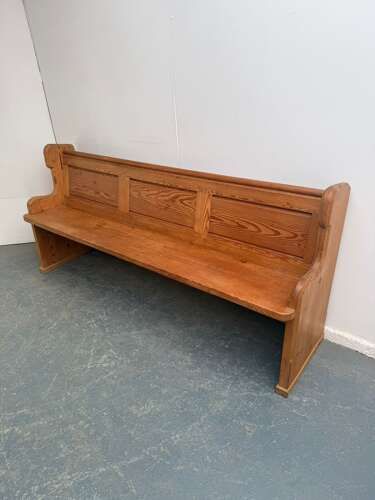
Hallway Wooden Pew
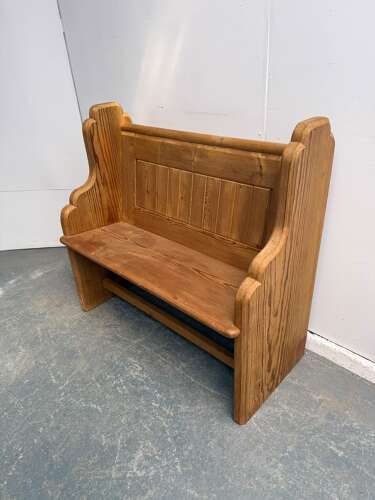
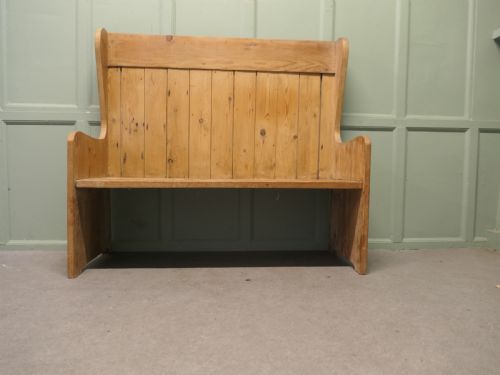
A hallway wooden pew provides sturdy seating and upright back support in an entrance passage, drawn from nineteenth-century church, chapel and country house origins.
Hallway Wooden Pew
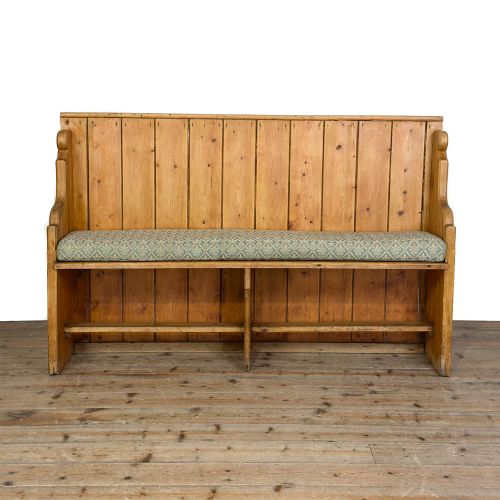
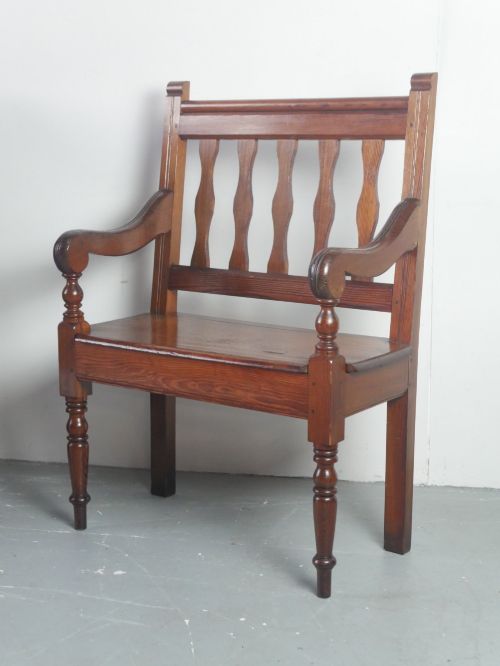
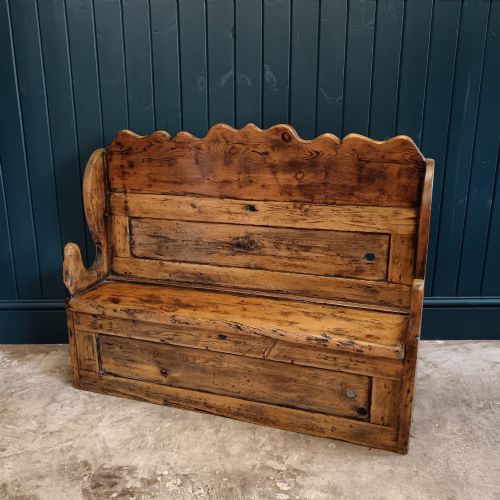
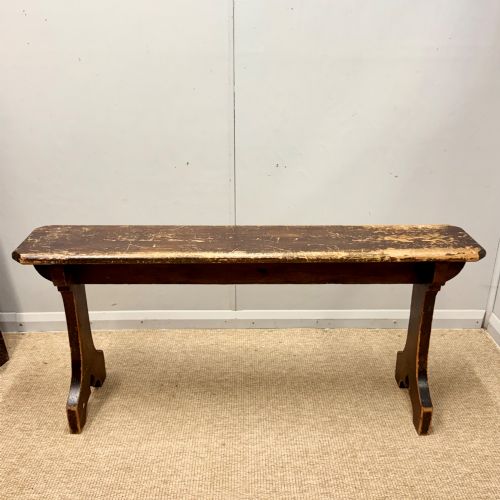
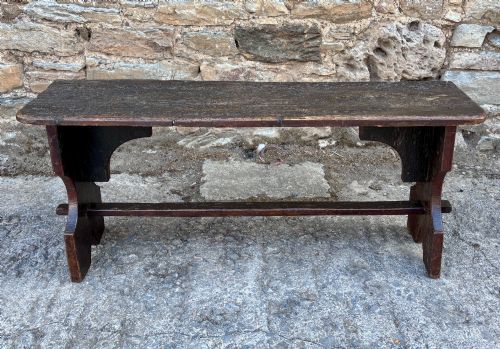
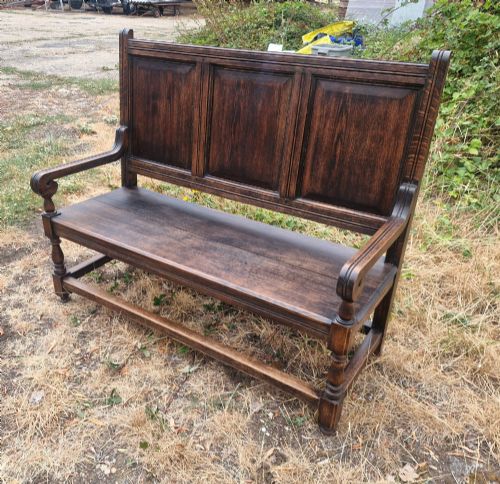
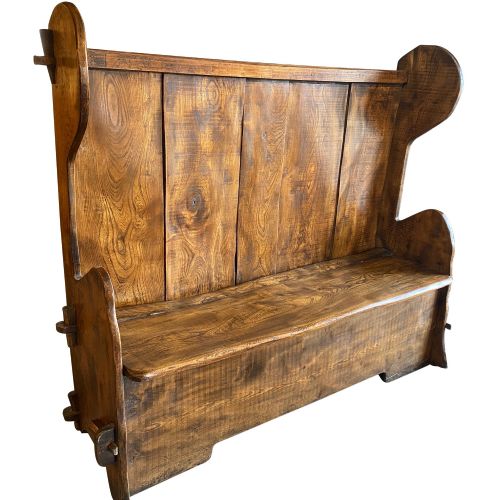
A hallway wooden pew encompasses long benches, high-back settles with storage boxes, and slim chapel seating designed for narrow thoroughfares. These pieces bridge ecclesiastical utility and domestic country house style, appearing frequently in nineteenth-century pine, oak, and elm.
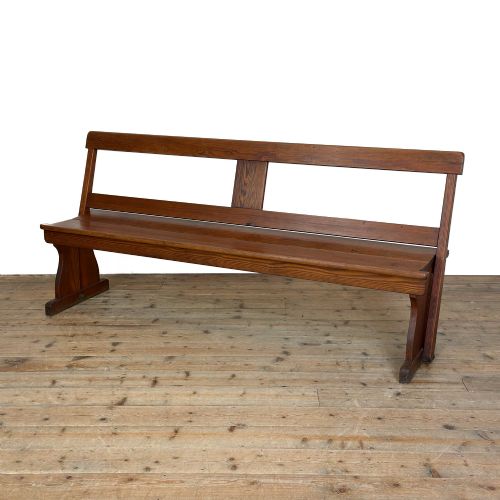
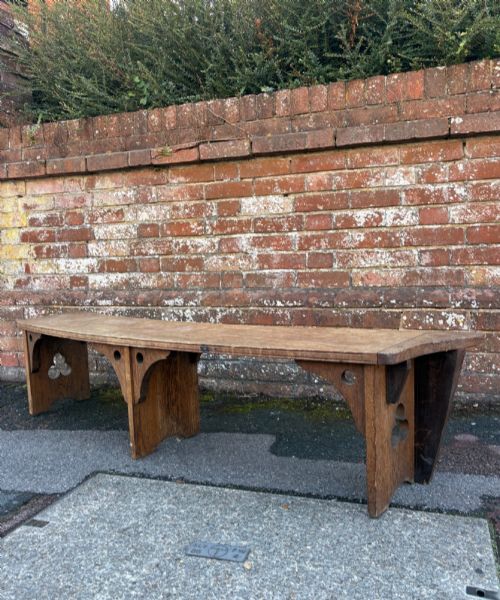
The selections span Victorian church pews, Edwardian panelled seats, and rustic farmhouse benches. Buyers encounter flip-over railway designs, curved Gothic Pugin-style oak benches, and painted Hungarian variants alongside straightforward timber forms.
Originating largely from the nineteenth century into the Edwardian era, these benches serve narrow spaces through compact depths and varied lengths. They function practically as corridor seating while carrying the distinct patina of church and tavern provenance.
How they were made
Makers utilised solid timbers such as pine, pitch pine, oak, elm, and walnut, selecting woods based on structural demand and regional availability. Carpenters joined panels and supports using traditional joinery, integrating storage boxes into settles and carving trefoils or linenfold details on Gothic revival pieces.
Surfaces received varying treatments including wax finishes to enhance honey brown patinas, alongside original blue or cream paint applications. Structural iron hardware occasionally reinforced hinges, flip-over mechanisms, and high-back framing.
Some chapel pews feature clever flip-over mechanisms, allowing nineteenth-century commuters or worshippers to reverse their seating direction instantly.
What varies in quality
The integrity of the original timber and the depth of natural patina separate utilitarian workaday seating from finer decorative pieces. Examples retaining original painted surfaces or distinct ecclesiastical provenance carry a stronger historical narrative than heavily restored counterparts.
Design complexity marks the scale of quality, ranging from plain boarded pine benches to elaborately carved oak settles with panelled backs and integrated storage boxes. Proportional balance for narrow spaces also dictates desirability, particularly in slim hall benches and compact chapel seats.
Pugin
The Hallway Wooden Pew Glossary
- Settle
- A wooden bench with a high back, solid arms, and often a storage box beneath the seat. This form provided draught protection in traditional hallways and fireside settings.
- Pew
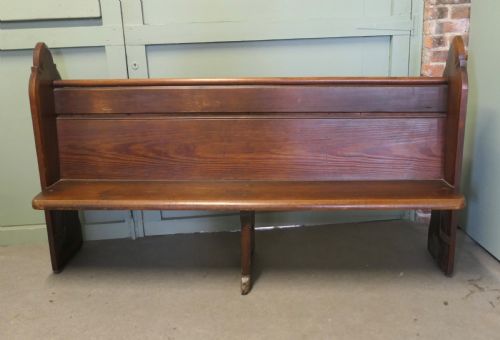
- A long wooden bench traditionally utilised in churches and chapels for seated congregations. They appear frequently in pine and pitch pine with straightforward linear forms.
- Patina
- The surface sheen and colour developed on wood over decades of handling and wax polishing. A natural honey brown tone indicates age and regular maintenance.
- Trefoil
- A three-lobed decorative carving resembling clover leaves, frequently found on Gothic revival and Arts and Crafts bench supports.
- Pitch pine
- A dense, resinous softwood sourced primarily from North America and utilised for durable nineteenth-century church seating.
Hallway Wooden Pew: Frequently Asked Questions
Where do hallway wooden pews fit best?
These benches suit narrow corridors, entrance halls, and boot rooms where linear seating is required without blocking passage. Their shallow depths allow them to sit flush against walls.
High-back settles also function effectively in larger living spaces or farmhouse kitchens, where the tall back panel provides shelter from drafts.
How do I care for a waxed pine pew?
Maintain the timber by applying a traditional beeswax polish occasionally to preserve the honey brown patina and protect the wood from drying out. Avoid placing antique seating near direct heat sources.
Dust regularly with a dry cloth and address minor marks gently without stripping the historical surface finish.
What is the difference between a pew and a settle?
A pew is an open bench originally made for churches or chapels, typically featuring a simple backrest and open sides. They rely on straightforward construction for communal seating.
A settle incorporates solid arms and a high panelled back, frequently enclosing a storage box beneath the seat for domestic utility.
How can I tell a Victorian pew from an Edwardian one?
Victorian examples often display heavier proportions, darker wax finishes, or Gothic revival carving styles. Pine and pitch pine predominate in nineteenth-century ecclesiastical seating.
Edwardian pieces tend toward lighter panelled oak designs and occasionally feature novel mechanical twists like flip-over seat backs.