
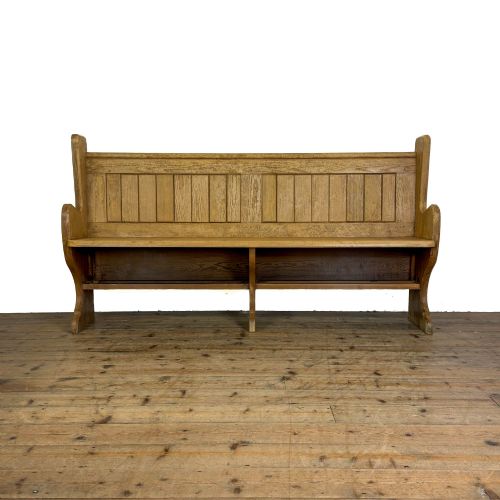
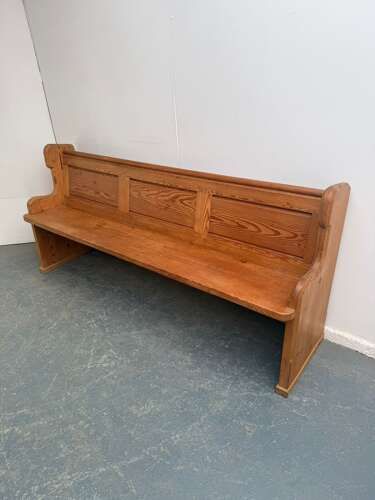
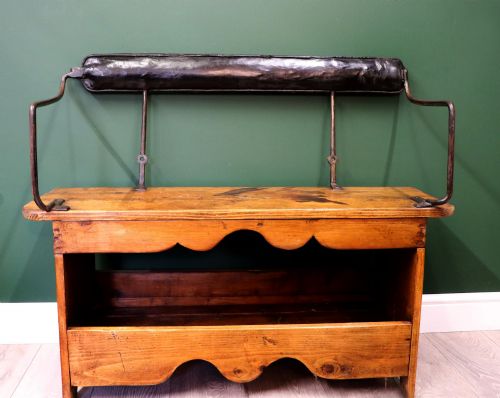

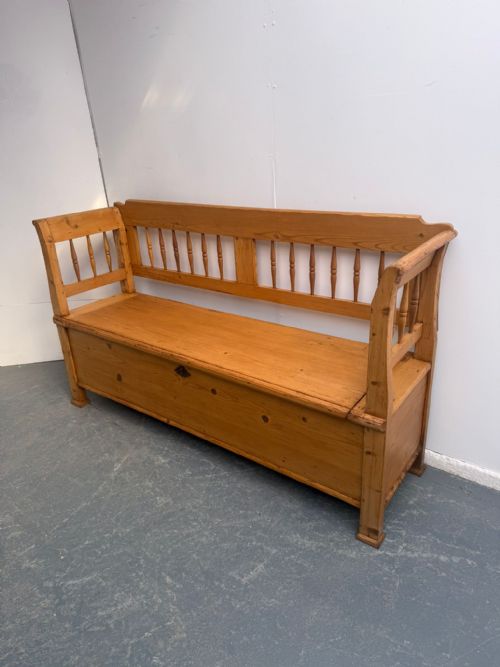
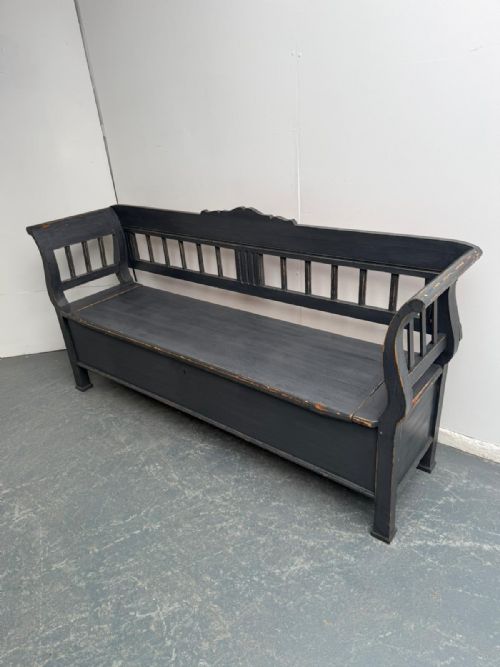
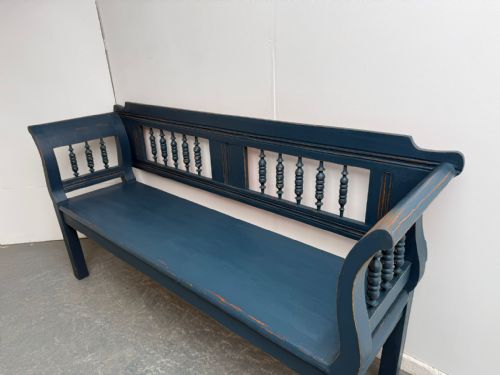

Victorian Pine Settle
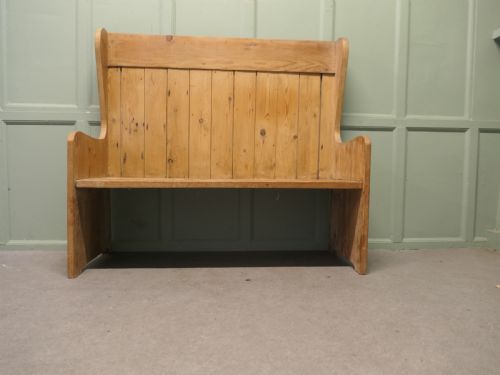
A victorian pine settle brings robust country utility and high-backed warmth to a hallway or kitchen.
Victorian Pine Settle
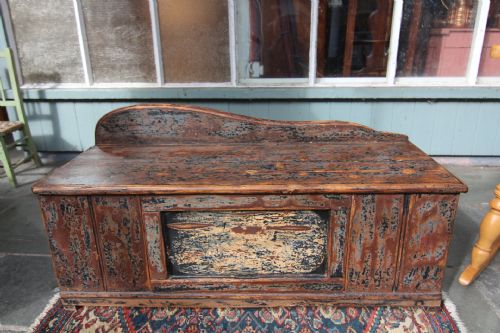
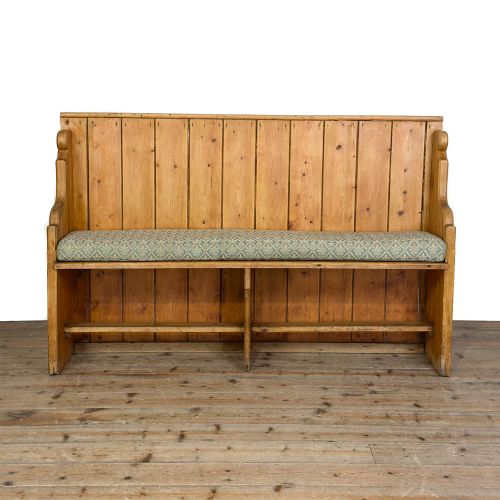
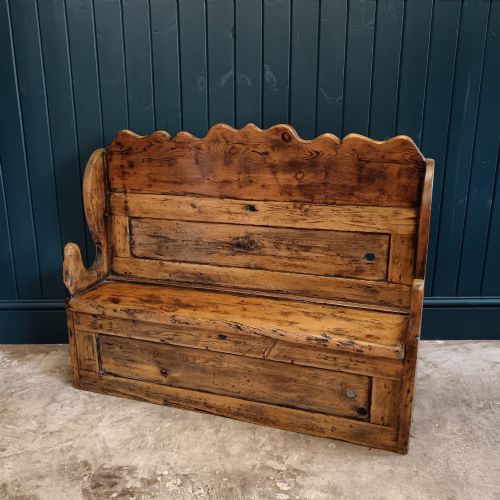
A victorian pine settle functions as a high-backed wooden bench, frequently incorporating a lidded box seat for storage beneath the squab. The form adapts traditional regional seating designs for domestic hallways, farmhouses, and public interiors.
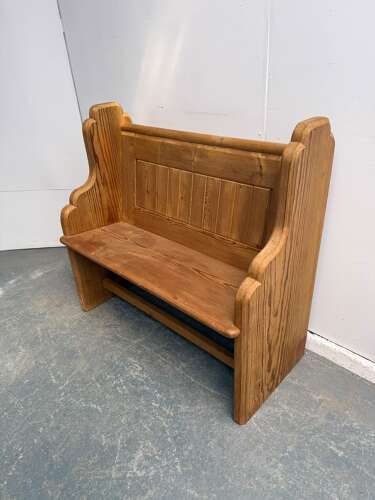
Most examples encountered here originate from the nineteenth century, spanning English country workshops, European provincial makers, and ecclesiastical settings such as chapels and schools. These seating pieces combine sturdy softwood construction with practical backrests designed to deflect draughts.
Materials and construction
Makers utilised native softwood timbers like standard pine and denser pitch pine, occasionally combining them with secondary hardwoods such as elm, oak, or walnut for structural resilience. Joints were typically pegged or pinned together to withstand heavy daily use in busy communal spaces.
Surfaces received either clear wax finishes to highlight the natural grain or coats of paint in colours including grey, blue, black, and cream. Many surviving pieces retain original polychrome or painted schemes applied during their working lives in domestic or institutional settings.
Several pews preserve the carved initials of school pupils and churchgoers who whittled away long sermons.
Elements of quality
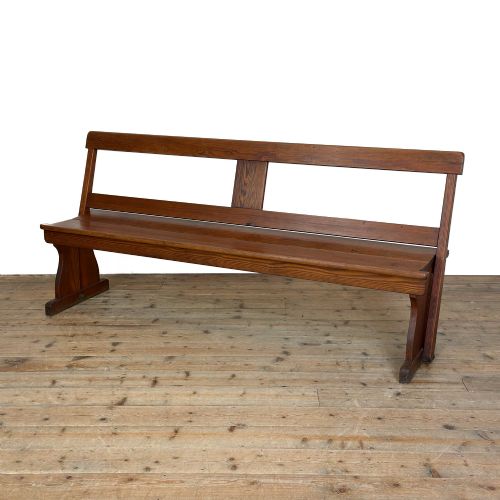
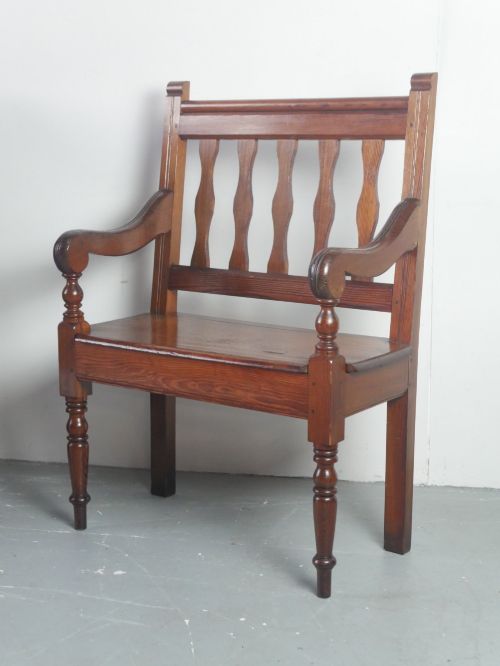
Proportion and scale dictate the visual success of a piece, with high-backed and barrel-backed variants offering superior architectural presence over simpler open benches. The integrity of original surface treatments, whether aged wax or historic paint, significantly elevates the character of the timber.
Construction details distinguish provincial vernacular items from institutional church pews, particularly where storage compartments, panelled backs, and spindle details remain intact. The clever integration of storage boxes and lift-up lids demonstrates greater joinery ambition than standard bench seating.
The Victorian Pine Settle Glossary
- Settle
- A wooden bench with a high back, solid arms, and frequently a box base designed to shield the sitter from draughts. This form dates back centuries before finding widespread domestic popularity in the nineteenth century.
- Pitch pine
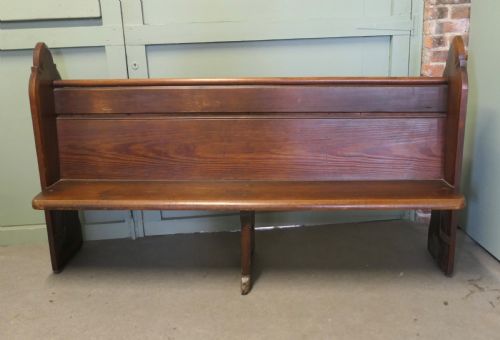
- A resinous North American softwood known for its durability and prominent grain patterns, frequently utilised for heavy institutional and church seating. It resists wear better than standard softwoods.
- Box settle
- A variant featuring a hinged seat lifting to reveal a storage compartment underneath. These pieces served dual purposes as seating and blanket or coat chests in modest homes.
- Monks bench
- A convertible piece functioning as both a table and a bench with a pivoting backrest. The top tilts forward to form a flat surface when needed.
- Polychrome
- Painted in multiple colours, often found on folk art pieces and decorated regional furniture. This treatment preserves the historic aesthetic of European country workshops.
Victorian Pine Settle: Frequently Asked Questions
Where did settlers typically stand?
These benches historically stood in farmhouse kitchens, draughty hallways, or tavern firesides where high wooden backs protected occupants from cold air.
Institutional examples also furnished chapels, railway waiting rooms, and schools across Britain and Europe.
How do I maintain the wax finish?
Apply a traditional beeswax polish sparingly using a soft cloth, then buff gently to maintain the natural sheen of the pine.
Avoid placing wooden furniture near direct heat sources or strong sunlight to prevent the timber from drying out.
Are these benches comfortable to use?
The upright timber backs encourage an upright posture, though many owners add loose cushions or squabs to soften the wooden seat.
Armrests and high panelled sides provide a secure and enclosed seating experience suited to long sittings.
How can I date an antique settle?
Examine the construction methods, tool marks, and fastener types used in the hidden parts of the frame, such as the underside of the seat.
Original paint layers and the natural patina of the pine also offer reliable indicators of nineteenth-century origin.