



Hallmarked Silver Cream Jug
A hallmarked silver cream jug is a small pouring vessel that brings functional elegance to the table.
Hallmarked Silver Cream Jug
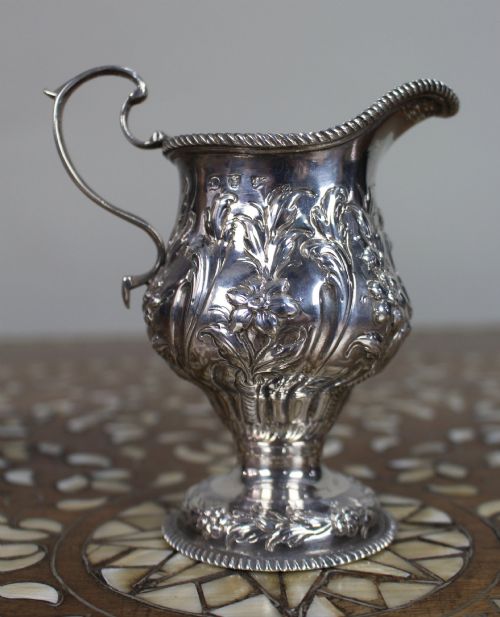
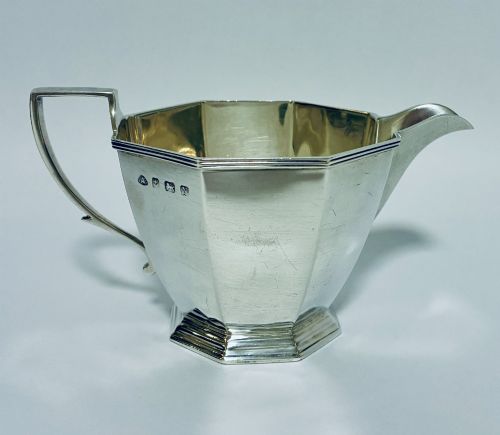
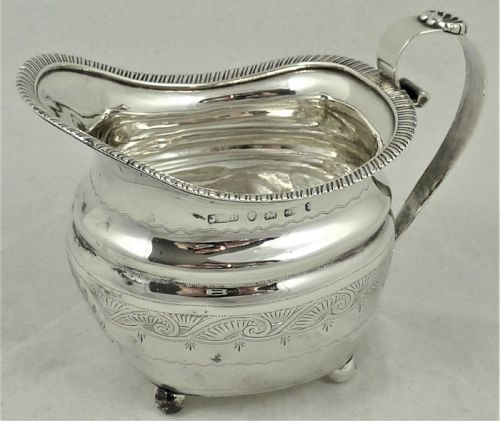
A hallmarked silver cream jug serves milk or cream at tea and coffee services, appearing across Victorian, Georgian, and twentieth-century periods. These vessels range from standalone pouring jugs to matching components within larger tea sets and strawberry services.
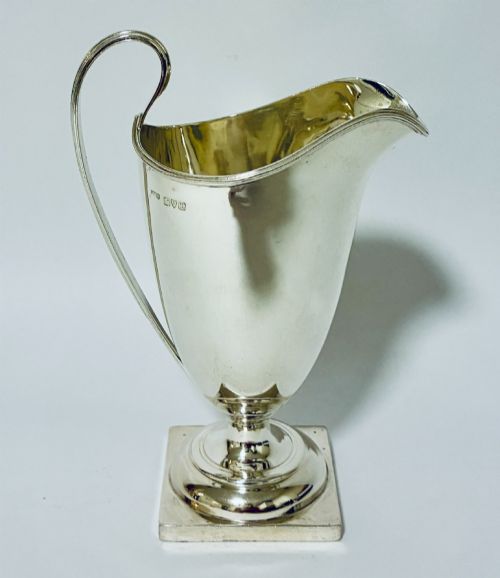
Victorian examples dominate the selection alongside Georgian and Edwardian pieces, showing diverse regional assay offices from London to Birmingham. Buyers encounter both simple domestic milk jugs and ornate foliate embossed or helmet-shaped designs.
Materials and technique
Makers fashioned these pieces primarily from sterling silver, occasionally incorporating silver-gilt finishes or interior gilding. Craftspeople utilised traditional techniques such as raising from sheet metal, casting handles, and hand engraving.
Assay office hallmarks stamped directly into the metal provide official verification of purity, maker marks, and dates of manufacture. Fitted presentation cases sometimes include auxiliary materials like wood, silk, velvet, and leather.
Listings span the Georgian, Victorian, and Edwardian periods, featuring sterling silver alongside occasional silver-gilt and fitted wooden or leather presentation boxes.
Quality and execution
The standard of a hallmarked silver cream jug depends upon the crispness of its chased or embossed ornamentation and the balance of its handle and spout. Heavier gauge silver provides a substantial weight in the hand that distinguishes finer specimens.
Pieces bearing marks from notable silversmiths or complete sets housed in original fitted boxes command greater attention from collectors. The legibility of the assay marks and the integrity of the silver surface further define the hierarchy of quality.
John Rawlings·George Unite·Robert Pringle & Sons·Joseph Craddock·Benjamin Smith·Harry Atkin·Adie Brothers Ltd·Charles Hougham·Peter & William Bateman·George Burrows·G L Connell Ltd·S Blanckensee & Co Ltd·Daniel & Charles Houle
The Hallmarked Silver Cream Jug Glossary
- Hallmark
- Official stamps applied by an assay office to guarantee the fineness of precious metal. These marks typically include symbols for the maker, city of assay, and year of testing.
- Sterling silver
- An alloy comprising ninety-two point five percent silver and seven point five percent other metals, usually copper. This standard ensures durability while maintaining the bright lustre of pure silver.
- Silver-gilt
- Sterling silver that has been coated with a thin layer of gold on the surface. This technique protects the interior of cream jugs from the corrosive effects of dairy acids.
- Assay office
- An official organisation charged with testing the purity of precious metals. British offices include London, Birmingham, Sheffield, and Edinburgh.
Hallmarked Silver Cream Jug: Frequently Asked Questions
How do I clean an antique silver cream jug?
Wash the jug gently in warm water with mild soap and dry it thoroughly with a soft cloth. Avoid abrasive pastes or harsh chemical dips that strip away desirable patination.
Store the piece in a dry environment away from direct sunlight to minimise tarnishing. Regular handling often maintains a natural, pleasing polish.
Are these jugs safe for daily use?
Sterling silver is chemically stable and suitable for serving dairy products like cream or milk. Many collectors use these vessels regularly for family meals and gatherings.
Ensure you wash and dry the jug promptly after use to prevent residues from resting on the metal surface. Modern detergents are generally safe if rinsed completely.
How do I read the hallmarks?
Locate the small stamped marks usually found near the rim, base, or handle of the vessel. Each stamp represents specific information including the maker's mark, standard mark, assay office, and date letter.
Reference tables of British hallmarks help translate these punch marks into exact years and towns. The leopard's head, anchor, or crown typically denote the testing location.
Why do some jugs have gilt interiors?
Silver-gilt interiors protected the base metal from tarnishing or reacting chemically when holding acidic liquids. Cream and milk contain organic compounds that can darken untreated silver over prolonged contact.
This gold wash also added an element of interior luxury to higher-end tea services. The contrasting golden hue remains visible inside the pouring lip.