


Haberdashery Counter Case
These robust haberdashery counter case pieces bring commercial heritage indoors, offering clear glass panes and sturdy timber frames designed to present small goods.
Haberdashery Counter Case
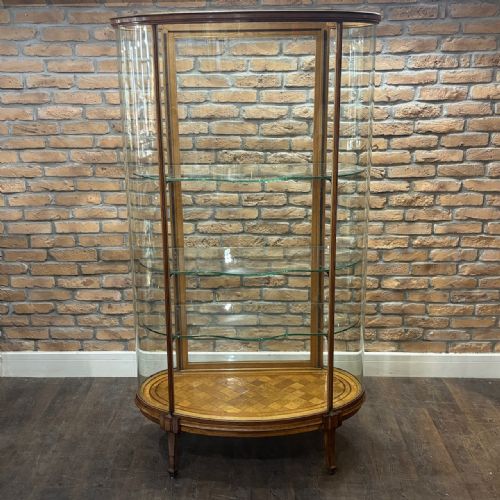
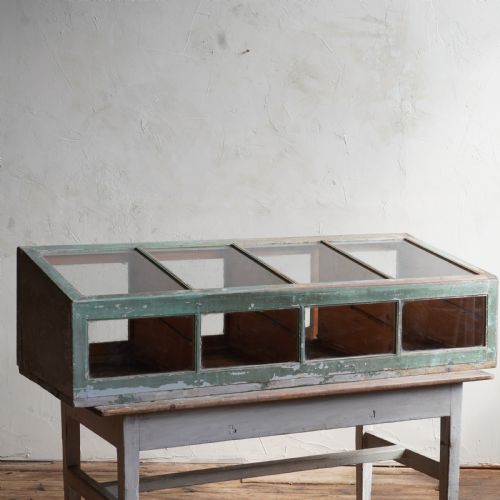
A haberdashery counter case is a glazed display unit originally built for retail shops, positioned on top of counters or serving as freestanding shop counters to showcase goods to customers. When searching for this phrase, a buyer encounters pieces originating from the Victorian and Edwardian eras through to the 1930s, spanning commercial designs built for utility.
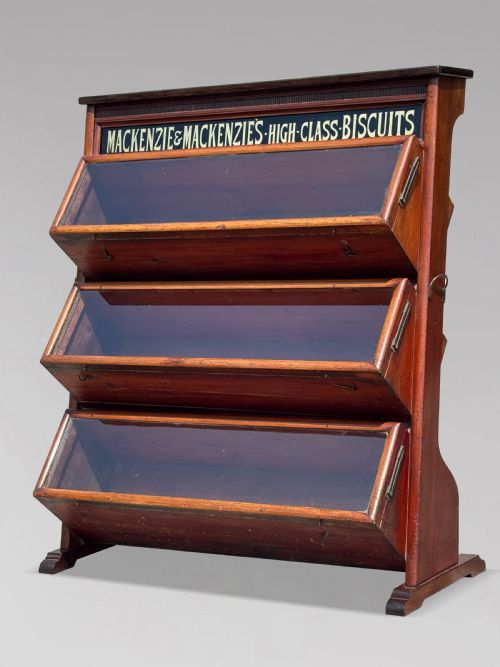
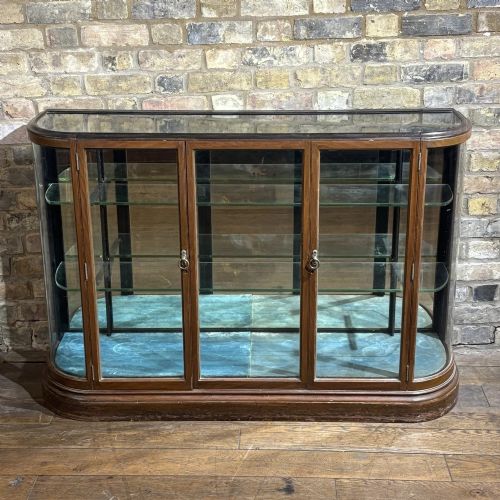
The versions most likely to be met on this page include mahogany and oak countertop display cabinets, alongside larger shop display counters and specialised cases bearing brand lettering for sewing cottons or confectionery. These range from bow end and pentagonal shapes to rectangular glass cases with timber or metal frames, reflecting the practical needs of past shopkeepers.
How They Were Made
Makers constructed these units primarily using dense hardwoods like mahogany and oak, paired with large glass panes to maximise visibility of the interior contents. Brass or aluminium framing also appears in later 1930s examples, providing a lighter structural skeleton for the glazing.
Joinery techniques focused on durability for daily retail use, incorporating panelled timber bases, hinged or sliding glass doors, and occasionally mirrored interiors to reflect light through the displayed items. Surfaces received polished wood finishes, painted treatments, or gold leaf lettering to advertise specific merchandise.
Several cabinets carry surviving advertisements for cocoa and biscuits, ready to tempt buyers who have already eaten dinner.
What Varies In Quality
The distinction between tiers of these pieces rests on the sophistication of the timber selection, the complexity of the cabinet geometry such as curved bow ends or pentagonal shapes, and the prestige of the original shop fitter. Plain utilitarian pine or basic oak framing sits at one end, while finely grained mahogany with specialised maker plates represents superior commercial craftsmanship.
Hardware and internal detailing further define the standard of a piece, with mirrored backs, bevelled glass panels, and original maker stamps indicating higher workshops. Alterations like later sign-written branding applied to timber panels also influence how closely a piece matches its original commercial context.
F. Sage & Co·John Stow Ltd·Ermen & Roby·Saml. Elliott & Sons·Quincy Showcase Works·E. Pollard & Co. Ltd
The Haberdashery Counter Case Glossary
- Vitrine
- A glass display cabinet or case designed for showing delicate objects or merchandise. These units rely on transparent panels on multiple sides to let light in.
- Bow end
- A cabinet design featuring a curved glass front and matching curved wooden frame at one or both ends. This shape softens the rectangular geometry of standard shop counters.
- Countertop
- Describing a smaller cabinet scaled to sit directly upon a retail shop counter for eye-level customer browsing. These pieces allow merchandise to be viewed without taking up floor space.
- Sign-written
- Lettering applied by hand to glass or timber surfaces to advertise products or brands. Examples include historical references to chocolates, sewing cottons, and food extracts.
- Shop fitter
- A firm or specialist carpenter responsible for designing and installing commercial interiors, display counters, and cabinetry. Prominent firms marked their work with metal plaques or stamps.
Haberdashery Counter Case: Frequently Asked Questions
What were haberdashery counter cases used for?
Shopkeepers utilised these glazed cases on serving counters to display small items like sewing threads, buttons, and accessories safely while keeping them visible to buyers.
Over time, merchants also used similar countertop units for confectionery, biscuits, and pharmaceutical goods to encourage impulse purchases.
How do I date a display case?
Dating relies on observing timber choices, construction methods, and hardware styles, with mahogany and heavy brass handles pointing to Victorian or Edwardian periods.
Later 1930s examples often introduce metal framing such as aluminium, alongside cleaner Art Deco lines and simpler commercial layouts.
Can I use these cabinets at home?
These glass and timber units adapt well to modern domestic interiors for displaying collections, ceramics, or books while protecting them from dust.
Their shallow depths and glass panels make them practical for tabletops, sideboards, or narrow hallways where floor space is limited.
What is sign-written decoration?
Sign-writing involves hand-painted lettering applied to timber or glass surfaces to display brand names, products, or company titles for advertising purposes.
Many commercial cases feature historical names related to chocolates, cocoa, or sewing cottons either from their original use or applied later.