


Antique Chemist Cabinet
An antique chemist cabinet brings heavy drawers and glass-fronted pharmacy storage straight from old apothecaries into your home.
Antique Chemist Cabinet
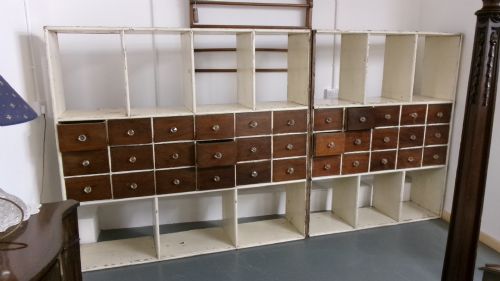
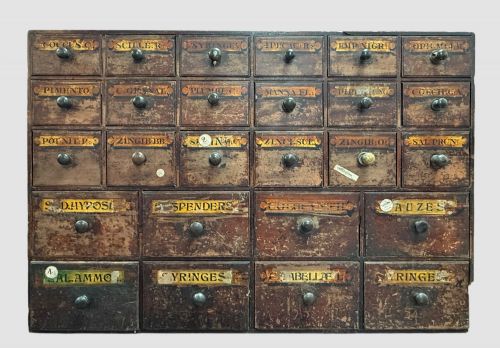
An antique chemist cabinet provides deep, multi-drawer pharmacy storage designed for sorting bottles, powders and medical paraphernalia. You will regularly encounter large banks of drawers alongside smaller countertop display boxes and wall-mounted shop fittings.
The pieces on this page span several centuries, reaching from George III items through the Victorian era into the 1920s and 1930s. Victorian commercial and industrial examples dominate the selection, shaped by the practical demands of nineteenth-century apothecaries and chemists.
Forms range from double and triple chemist drawers to bow-front corner cupboards and retail display counters. Each piece reflects the functional needs of historic shopfitting rather than domestic decoration.
How they were made
Cabinet makers built these sturdy pieces using timber and solid mahogany, often alongside pine for internal or secondary sections. Burr walnut and polished wood also appear on display boxes and countertop units, adding rich grain patterns to the outer surfaces.
Brass and iron hardware provides structural support and secure closures for doors and drawers. Glass panels feature heavily in display cabinets and countertops to showcase contents while protecting them from dust.
An eighteenth-century apothecary box turns up with no contents inside, leaving the ghost of old remedies locked in empty wooden slots.
What varies in quality
The architectural scale and timber selection dictate the upper tier of these pieces, where dense mahogany and polished burr walnut meet robust construction. Commercial shop fittings intended for heavy daily use display heavier joinery than smaller domestic apothecary boxes.
Intact original glass, solid brass handles and multi-tiered drawer arrangements separate utilitarian storage from finer retail display pieces. The presence of original paint finishes and authentic shop lettering elevates the historic character.
Kemps Pharmacy Chemist
The Antique Chemist Cabinet Glossary
- Apothecary box
- A portable wooden box fitted with internal compartments designed for carrying medicines and medical bottles safely.
- Shopfitting
- The trade and craft of manufacturing fixtures, counters and cabinets specifically fitted to commercial retail premises.
- Bank of drawers
- A large assembly of numerous small drawers built into a single housing for organising varied stock.
- Countertop display cabinet
- A glazed enclosure placed on top of a retail counter to showcase goods directly to customers.
- George III
- The period of British history spanning the reign of George III from seventeen hundred and sixty to eighteen hundred and twenty.
Antique Chemist Cabinet: Frequently Asked Questions
What is an antique chemist cabinet?
An antique chemist cabinet is a piece of commercial pharmacy furniture featuring multiple small drawers, cupboards or glass display sections. These units were originally built for chemist shops and apothecaries to store medicines, herbs and retail items.
Today, buyers seek them for their heavy construction, numerous drawers and distinct industrial or commercial aesthetic. They function well as storage furniture in kitchens, studies or living spaces.
How were apothecary boxes used?
Apothecary boxes served as portable medicine chests containing glass bottles, scales and chemical ingredients for doctors and travellers. They allowed medical practitioners to dispense treatments away from a fixed dispensary.
Inside, fitted wooden compartments kept fragile glass bottles upright and secure during transport. Many boxes also featured hidden drawers for documents or valuable instruments.
How do I live with chemist drawers?
Chemist drawers offer practical storage thanks to their many partitioned compartments which suit modern sorting needs. Placing a large bank of drawers in a hallway or kitchen provides deep capacity for household items.
Glazed display cabinets and countertop units work well for showing collections while keeping dust away. Their dark timber and brass details anchor a room with distinct historical character.
How do I tell Victorian pieces apart?
Victorian chemist furniture often displays dense mahogany, pine construction and robust commercial joinery typical of nineteenth-century shopfitters. Many pieces bear the hallmarks of apothecary use through multi-drawer banks and pharmacy labelling.
Earlier George III examples tend to be smaller portable boxes, whereas 1920s and 1930s items lean towards simpler display cabinets. Examining the wood types, brass hardware and drawer construction helps clarify the era.